"Cream Lao Sheng" 24 Years of Transformation, A Review of the History of Asian Dragons
[Autohome car history] A pure American car made by a Japanese brand has finally been produced in China, and then the Chinese name is used as the nickname given by Chinese owners 20 years ago. The one with such a twisted and dramatic life experience is FAW Toyota’s new flagship sedan, the Asian Dragon. A few old owners will pat their thighs when they hear the name, but many more will be at a loss. It’s okay, I’ll chat with you about the life experience of the Asian Dragon in this issue.
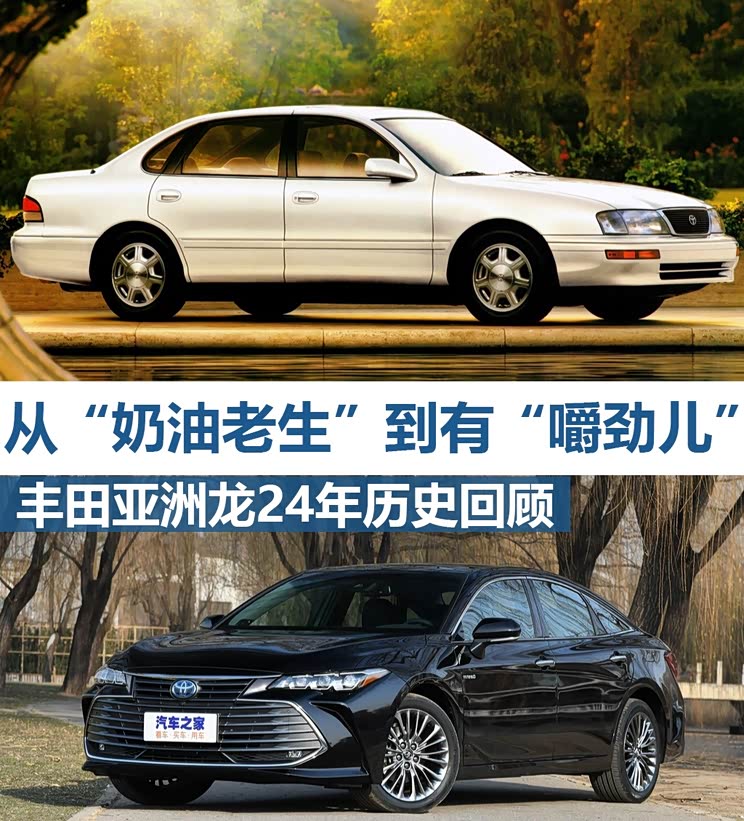
The name Avalon is derived from the island of Avalon, the country of elves in the legend of King Arthur’s epic. Legend has it that King Arthur was seriously wounded in a fierce battle with Mordred (nephew and biological son) and eventually died on Avalon Island. The island is also a sacred place in Celtic mythology and the ancient Druid religion, which was the ruling sect before the Christian occupation of England, and its power rivaled that of the king.
Interestingly, there are also some Toyota models whose names are related to rights, such as Crown and Camry, where Camry comes from the Japanese transliteration of, which means "crown".

The first generation: 1994-1999
The first generation of Asian dragons who realized that Americans like big space, high horsepower and atmosphere
The Avalon (hereinafter referred to as the Asian Dragon) is Toyota’s first model specially built for the North American market. It is positioned higher than the Camry and lower than the Lexus ES. It is Toyota’s flagship model in North America. Its birth is also part of Toyota’s luxury dream and a product that caters to the US market.
It is well known that Americans like "big cars", not only in size, but also in terms of power and atmospheric luxury. In the 1950s, after the end of World War II, America’s national power increased greatly, and cars also got bigger and bigger. By the time of the oil crisis in the 1970s, the length of a full-size car was even more than 5700mm. The United States built a large number of roads during the New Deal period of Roosevelt (1933-1941), and the living environment of citizens was generally comfortable. There is also a place for this kind of car.
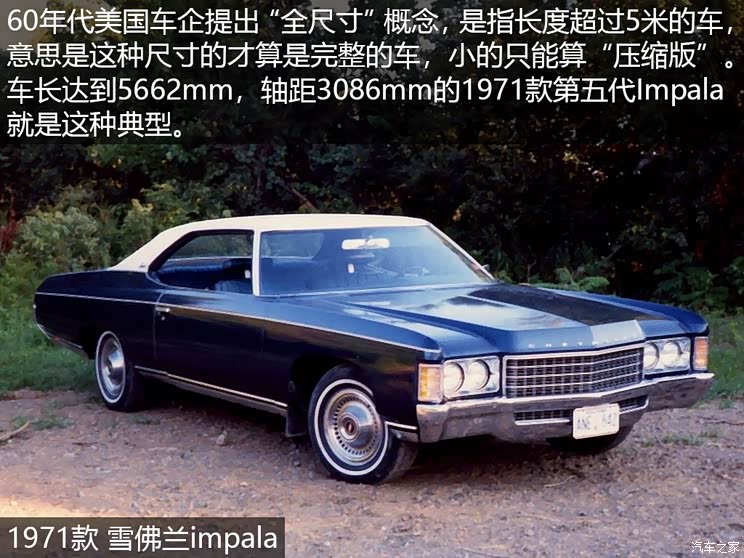
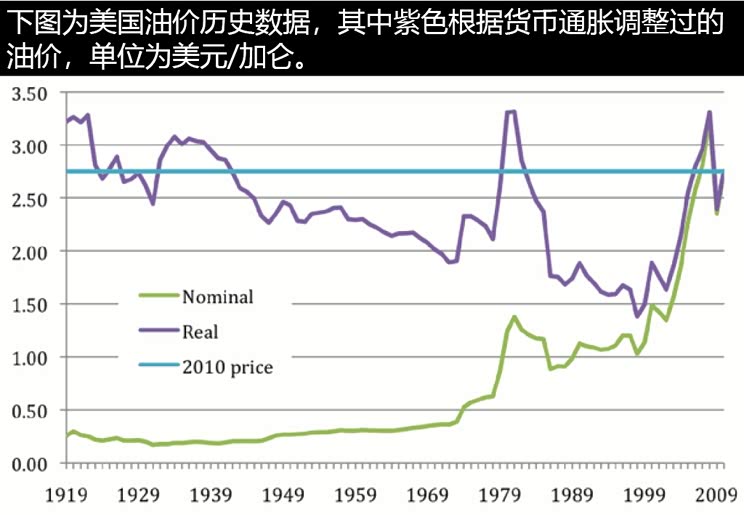
However, from the 1970s to the 1990s, Japanese cars entered the US market on a large scale, especially due to the oil crisis in the 1970s, which led to a decline in sales of full-size vehicles. Toyota and other Japanese brands rose rapidly with the excellent fuel economy and high cost performance of small and medium-sized vehicles, causing a huge impact on the US auto market.
In the late 1980s, Toyota had already established a foothold in North America, but with the decline in oil prices, full-size cars in the United States entered a period of great development, and European luxury brands also entered the American market. Toyota also hoped to get a share of the market, but at that time, the Toyota brand was still linked to civilian cars, and it was even more difficult to enter the luxury market. Later, under the promotion of Toyota Chairperson Toyota Eiji, Toyota invested a lot of energy in studying the preferences of American users, and finally launched Lexus in 1988, and soon established a foothold in the United States. Subsequently, the Toyota brand also tried to expand upwards.
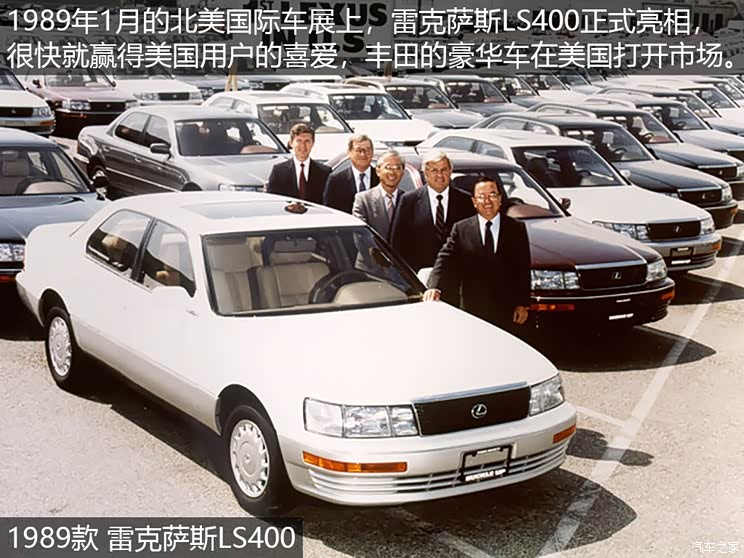
How did Toyota understand America?
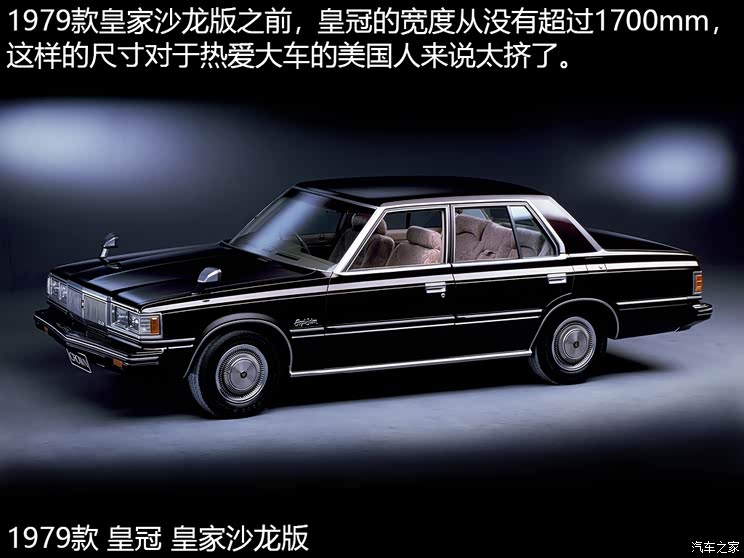
In fact, Toyota has been trying before. In 1955, the first generation of the crown was launched and began to be exported to the United States. However, the crown was not popular in the United States. One of the reasons was that the crown was too "small" in the eyes of Americans and the price was high. The crown only launched the Royal Salon version with a width of more than 1700mm in the sixth generation (1979-1983), and the width of the ordinary version did not soar to 1780mm until the twelfth generation (2003-2008).
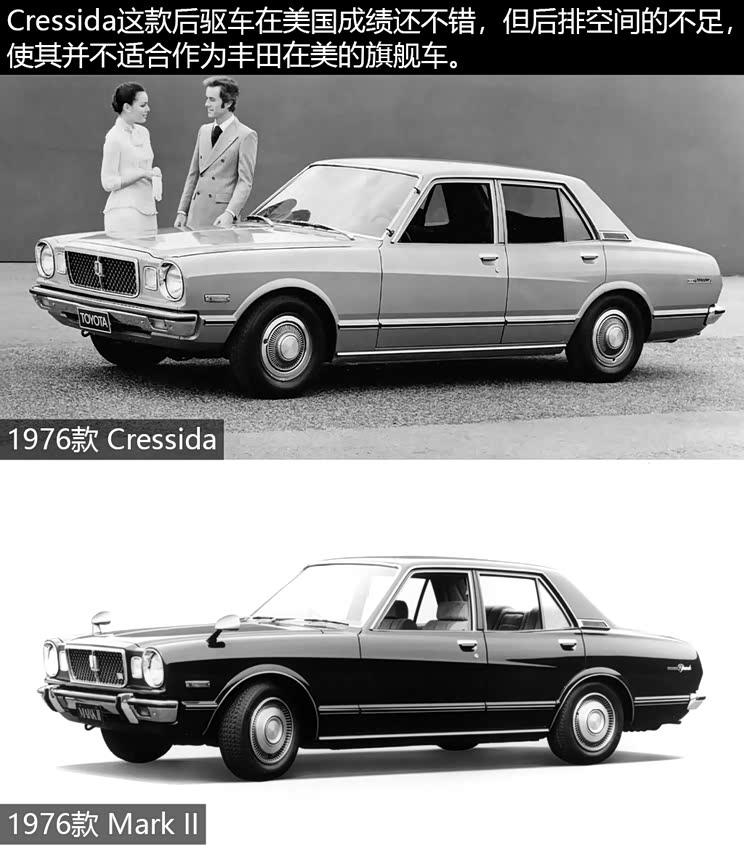
Dismal sales made the Crown hit a wall in the United States, causing Toyota to still have a product gap at this level. As a result, the third-generation Toyota Mark II (the predecessor of Ruizhi) came to the top, and the export version began to be sold in North America under the name Cressida (1976-1992). The Cressida has the advantages of comfort and quietness, rear drive handling, fuel consumption and reliability, but the disadvantage is that the rear space is insufficient and the seats are small, resulting in a decrease in rear comfort and a relatively small luggage compartment. By 1992, due to a series of factors such as its own product strength, the birth of Lexus and tariffs, the Cressida was delisted in North America, so Toyota’s product line appeared blank again.
Asian Dragon based on Camry Special Edition
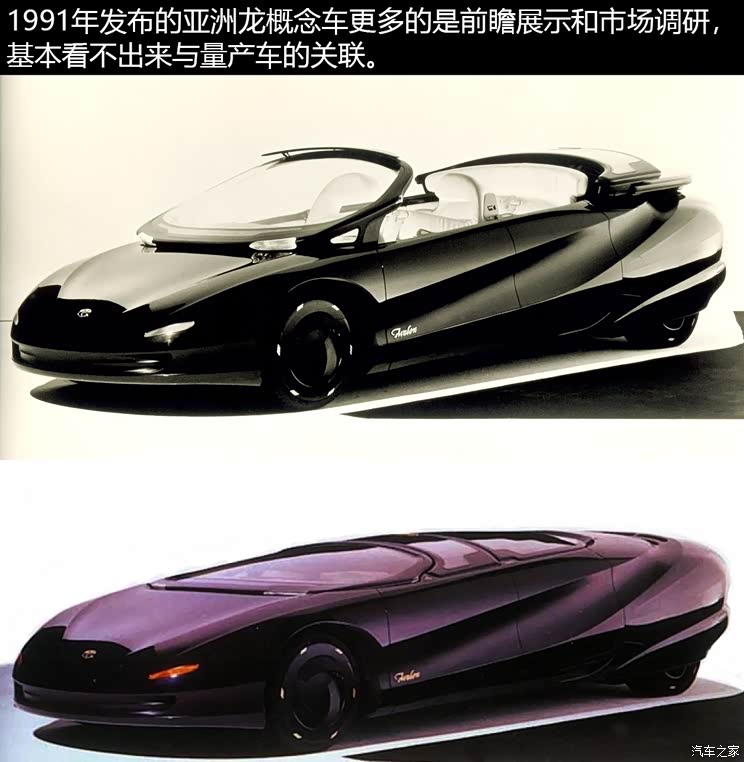
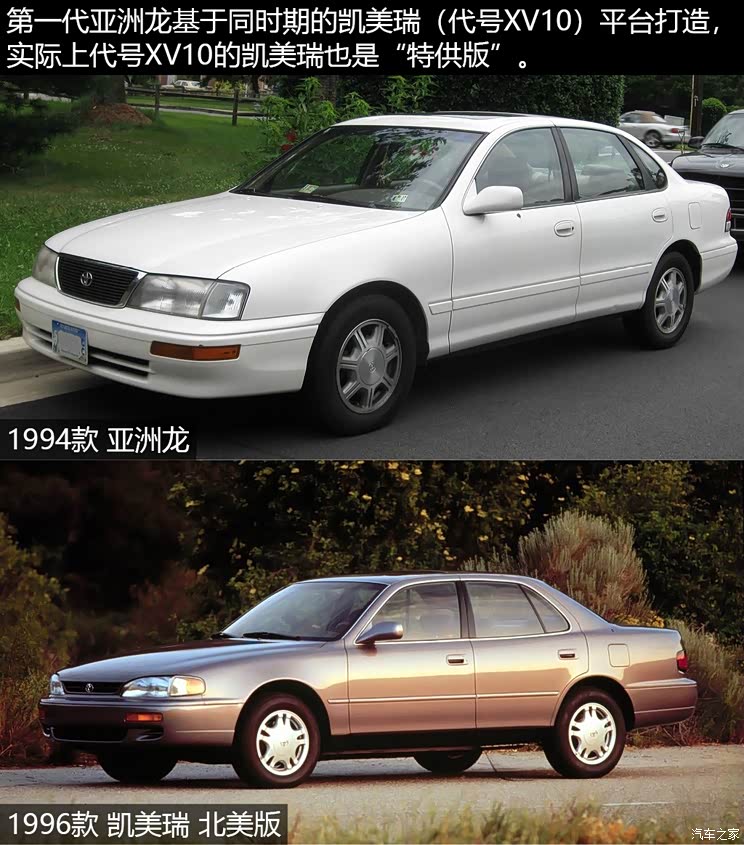
What Toyota needed in the North American market was a leisure flagship car. In 1990, Toyota launched the 299T plan. In 1991, it also released the Asian Dragon concept car at the Tokyo Motor Show, showing the plan to build a leisure flagship car. Four years later, the Asian Dragon made its debut at the Chicago Auto Show in the United States. At the end of that year, the production car was officially launched as the 1995 model. This was Toyota’s first "North American special car". The first generation of the Asian Dragon was based on the Camry (code-named XV10) platform of the same period. In fact, the Camry code-named XV10 was also a "special version".
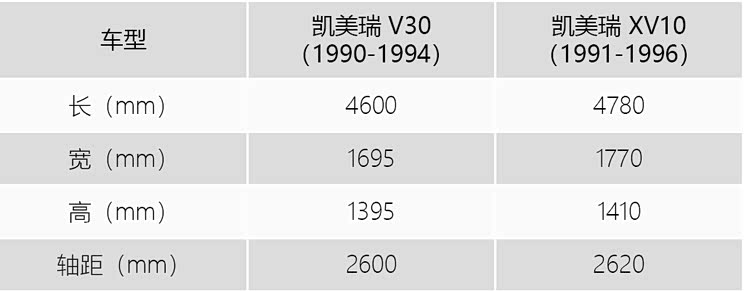
To talk about the Asian Dragon, we have to talk about the Camry first. There were two versions of the Camry at the same time, the standard version (codenamed V30, 1990-1994) and the wide-body version (codenamed XV10, 1991-1996). Due to the reduction of taxes and fees, the width (within 1700mm) and length (within 4700mm) of the standard version sold in the Japanese market were limited, but such a size obviously did not work in North America. Therefore, Toyota launched a larger wide-body version in 1991, providing 2.2L straight 4 and 3.0L V6 engines. In fact, the XV10 series represents the third generation of Toyota Camry in all markets except Japan. It is also from this generation that the Camry officially entered the mid-size car class from compact.
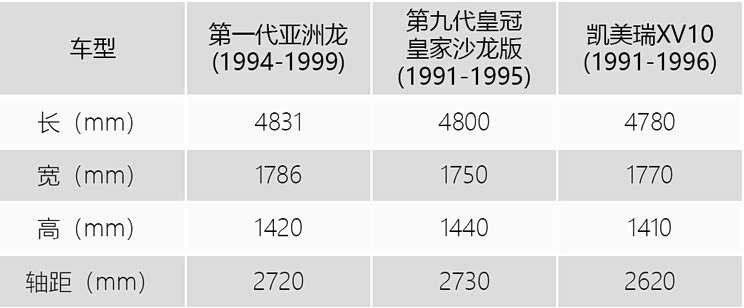
The large Camry received a very good market response. In 1992 and 1993, the Toyota Camry XV10 was twice named the top ten car of the year by Car and Driver magazine. With the success of Lexus and Camry, the birth of the Asian Dragon went much smoother. The first generation of the Asian Dragon based on the Camry XV10 was much "larger" in specifications, starting with its larger size. The length/width/height of the Asian Dragon was 4831/1786/1420mm respectively, and the wheelbase was 2720mm. The size was slightly improved when it was changed in mid-1997.
The Asian Dragon fills the position of the Cressida, but it is not a replacement relationship. Unlike the rear-drive Cressida, which is mainly controlled, the Asian Dragon focuses on luxury and comfort, with a larger size and a front-drive layout that allows it to have more interior space, but Toyota does not stop there. The Asian Dragon based on the Camry is not simply enlarged. There is a huge design change inside the vehicle, which is to turn the Camry’s ground gear into a pocket gear. What is the point of this? For space!
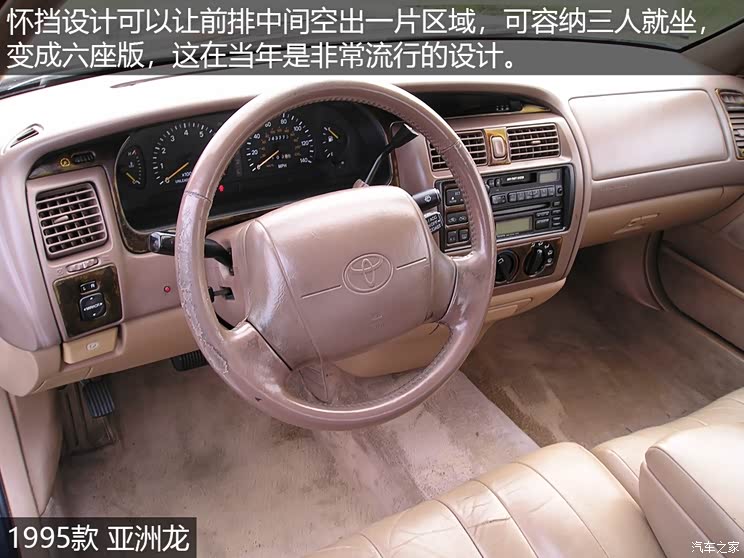
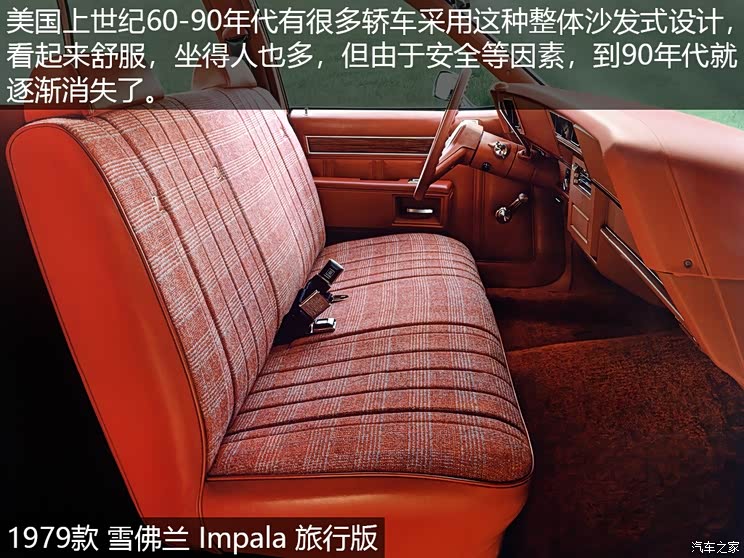
The Asian Dragon has a six-seat version, or 3 + 3 layout, with a front seat that is almost a full sofa for three passengers, or two heavier passengers. Obviously, if you use the ground block design, then don’t expect to sit in the middle, even if it is only two people riding, it will take up the width space. In the 1960s and 1990s, many cars in the United States adopted this design, especially full-size cars with more layout space, such as Chevrolet Impala, Buick Century. Large size and interior layout features, the Asian Dragon’s interior space reaches about 3426L.
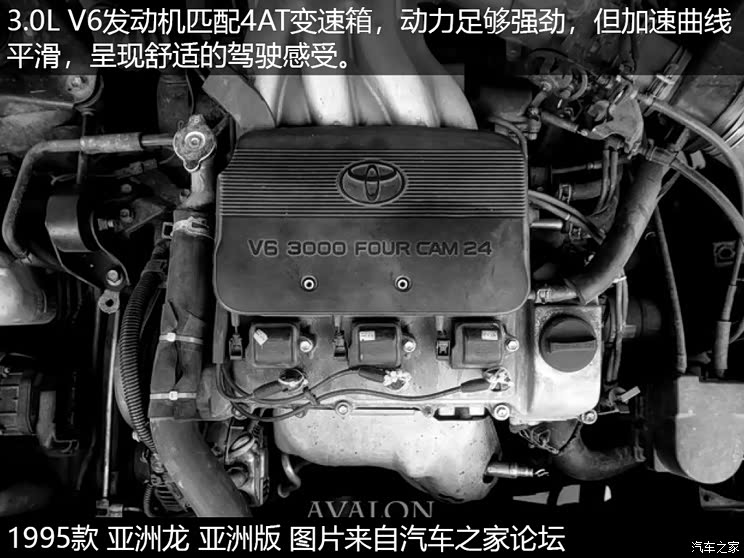
The other aspect of "big" is power. The original Asian Dragon is equipped with a 3.0L 1MZ-FE V6 engine with a maximum power of 192 horsepower and a peak torque of 285 N. m. By the mid-1997 model change, the maximum power was increased to 200 horsepower and the peak torque was increased to 290 N. m. This engine was called the industry’s first-rate V6 engine by the American automotive media at the time. With smooth, quiet and strong performance, it is very important for a sedan that focuses on comfort and luxury experience.
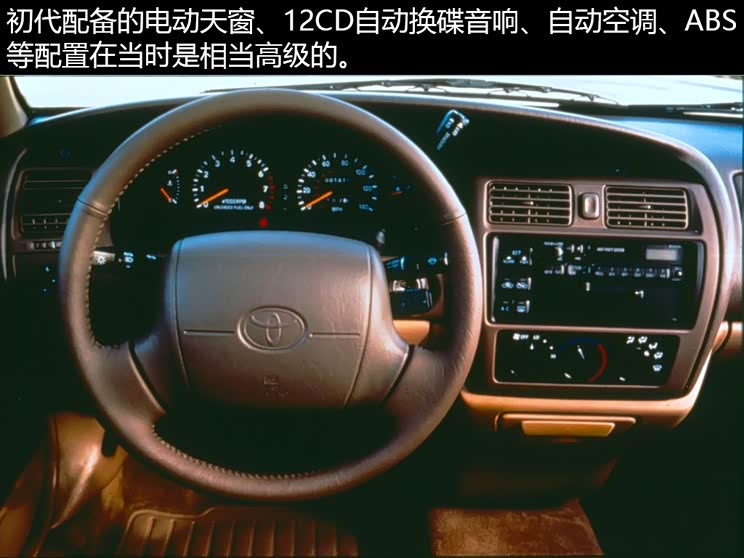
The configuration is also very good. The 1995 Asian Dragon low-end model has a radio, tape stereo, air conditioning, power windows, and fixed-speed cruise. The high-end model provides automatic air conditioning, aluminum alloy wheels, leather seats, and power sunroof. Consumers can also choose 7 speakers and a 12CD sound system. At the time, this configuration was quite luxurious. In terms of safety configuration, ABS was originally exclusive to high-end models. In 1997, it became standard, and in 1998, side airbags became standard.
exit
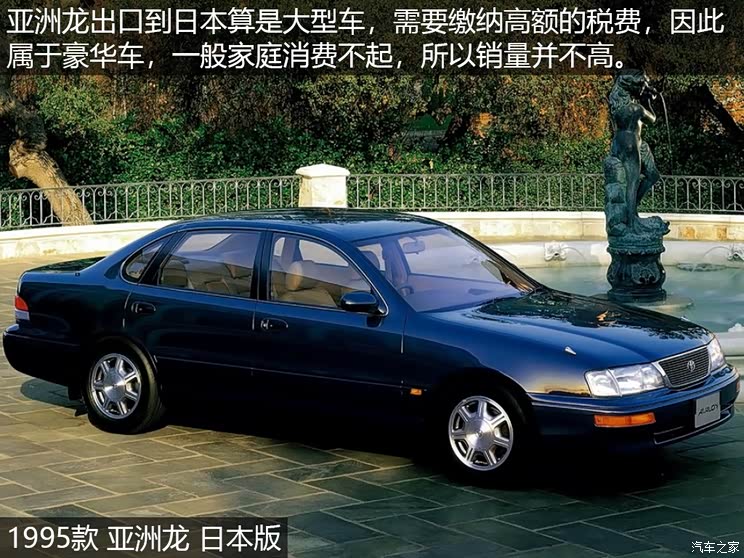
Although the Asian Dragon is a "North American special car", it is not only sold in North America. A year after the Asian Dragon was launched, Toyota imported it.Japanese marketAs we said earlier, the Japanese car market is biased towards "small cars". With the size and displacement of the Asian Dragon, it is a large car in Japan. According to regulations, it needs to pay high taxes and fees, so it is a luxury car in Japan, and the average family cannot afford it. In the Toyota product line at that time, the Asian Dragon was the second largest model after the Celsior and the Century. The former was a Japanese version of the Lexus LS, and the latter was equivalent to Toyota’s Rolls-Royce or Red Flag courtesy car. It was mainly used as a car for royalty, dignitaries and tycoons, and the average person could not afford it.
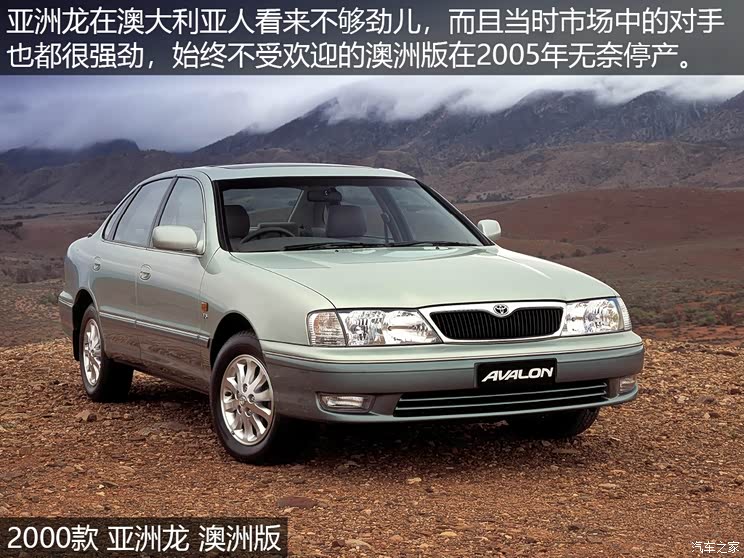
The Asian dragon was still thereAustraliaAfter the first generation of Asian Dragon was discontinued in North America, the old production line was packaged and shipped to Australia to continue production. In addition to supplying Australia, it also provided corresponding versions in New Zealand, Malaysia, Indonesia, and the Middle East. The Australian version was labeled "brand new" and went on sale in June 2000. But the Asian Dragon, which had been smooth sailing in the United States, hit a wall in Australia, and sales were very dismal. Australians with more spacious living environments prefer "big cars" than Americans, but as a front-drive car, the Asian Dragon was only available in Australia with a 3.0L V6 engine and only an automatic transmission version. At the time, competitors Ford Falcon and Houghton Commodore were not only larger, but also offered high-horsepower rear-drive cars with V8 engines, so Australians rated the Asian Dragon as "boring". Dismal sales made the original Asian Dragon unsustainable in Australia, and it was finally discontinued in 2005.
When it was first introduced to Australia, the Asian dragon was given a more localized name, called "Centaur". However, it was later discovered that the hospital ship that the Australian army was sunk by Japanese submarines in World War II was also named this name, so it had to be called the Asian dragon. However, it was renamed Mark II in 2001, and the shape was updated and renamed Mark III in 2003, but it has nothing to do with the Japanese Mark II series.
As we said earlier, the Asian Dragon is actually a nickname given to Avalon privately by the Chinese, and Toyota has never officially given it a real Chinese name for more than a decade. In fact,The Asian dragon has never been officially imported into the countryBut in 1996, there were already Asian dragons driving on Chinese roads.
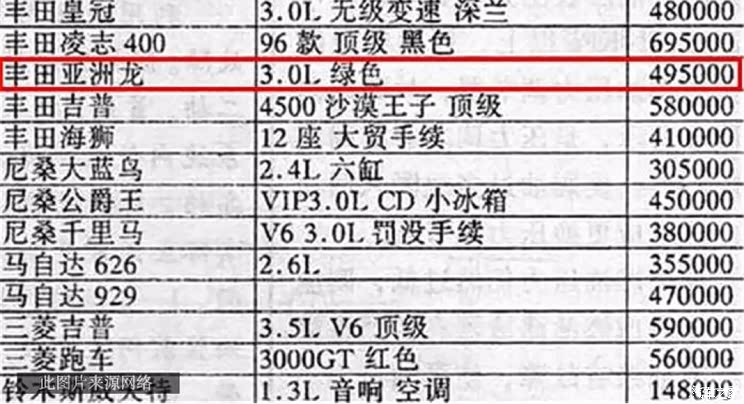
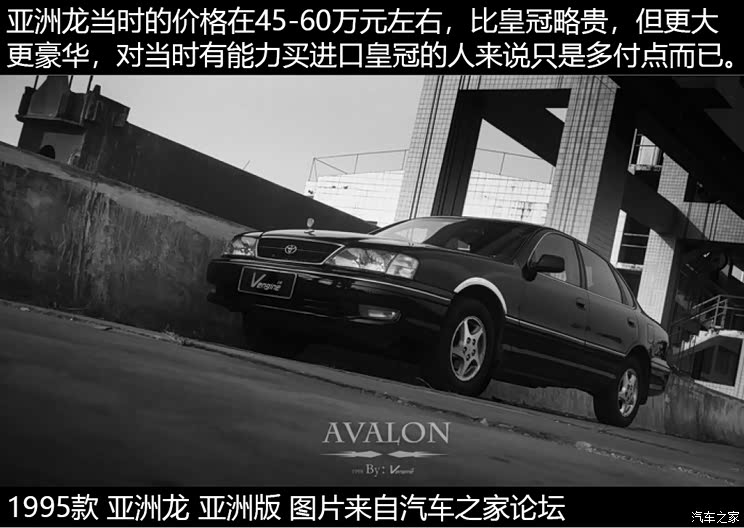
In the 1990s, the car import business in Guangdong was active, and there were also many Asian dragons among them. Cantonese people who experienced that era generally have an impression of it. However, the Asian Dragon mainly focuses on the North American market, and the Toyota Crown is more famous in Asia.