标签归档 西安桑拿网

通过admin

Once again, Huawei is far ahead. Can visual intelligence drive "hang" Tesla?

As we expected before, Huawei will never sit idly by in the face of the limelight.

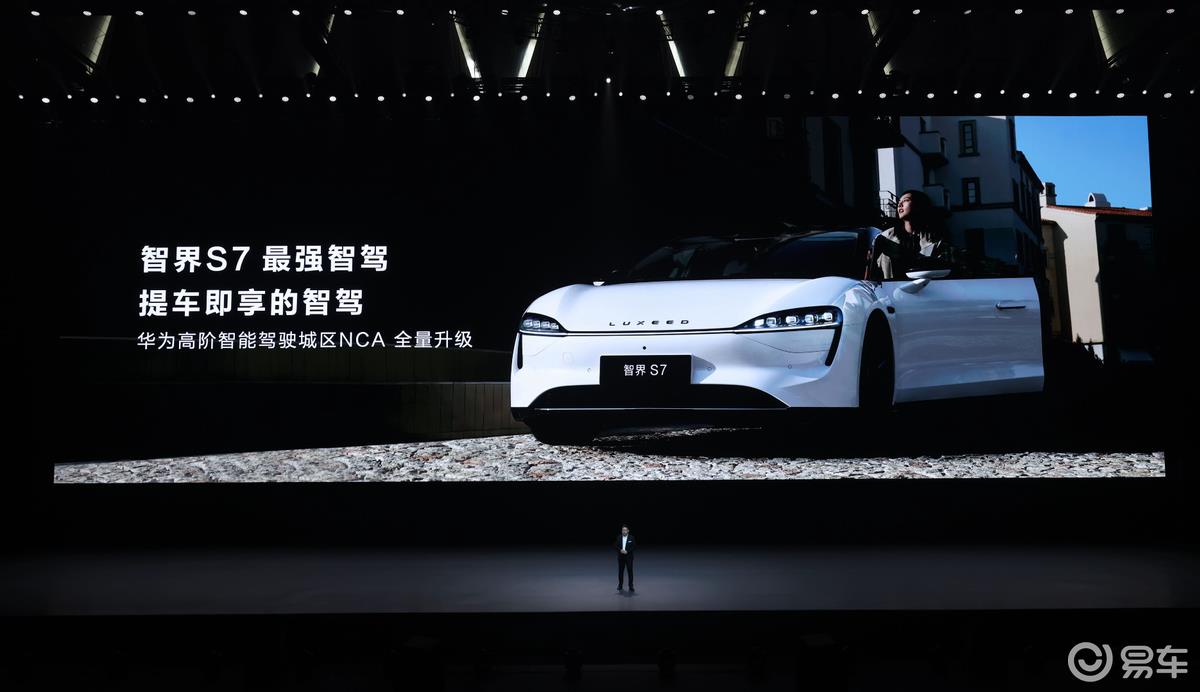
At the HarmonyOS Ecological Spring Communication Meeting held on April 11th, Yu Chengdong took out the products that had not been listed for a long time before and "listed" them again.

However, don’t think this is "fried cold rice", because this time, Yu Chengdong has made a big move again.

This is Huawei’sVisual intelligent driving scheme.

When it comes to visual driving, you may think of Tesla for the first time. After all, Tesla was the first enterprise to do smart driving development along this technical route.

Different from the current mainstream high-order intelligent driving scheme, this technical route can not rely on lidar. Only millimeter-wave radar and high-definition camera are used to achieve high-level automatic driving assistance.

The advantage of this technical route is that the cost of bicycle parts can be greatly reduced. Although the BOM cost of lidar has been declining in recent years, in order to play the role of sensing hardware, it needs a high computing power chip, and the overall cost is still high.

Yu Chengdong has said many times before that the high-order ADS scheme with laser radar in HarmonyOS will lose money if the price is below 300,000 yuan.

However, the visual scheme also has its own disadvantages. First, in some extreme scenes (such as heavy rain and fog, strong backlight), recognition may be wrong. Second, if we want to deal with the complex road conditions like downtown areas, we also need a very large amount of code and computing power to support it without relying on the pure vision scheme of laser radar.

In this regard, Tesla’s solution is to borrow the end-to-end AI big model to replace the traditional perception, description, prediction, planning and other modules, and hand over the driving decision to AI neural network. However, the highest level of FSD has not been able to land, and the strength of castrated EAP is almost interesting, so the recognition of this technical route in the domestic market is relatively low.

So how did Huawei do it?

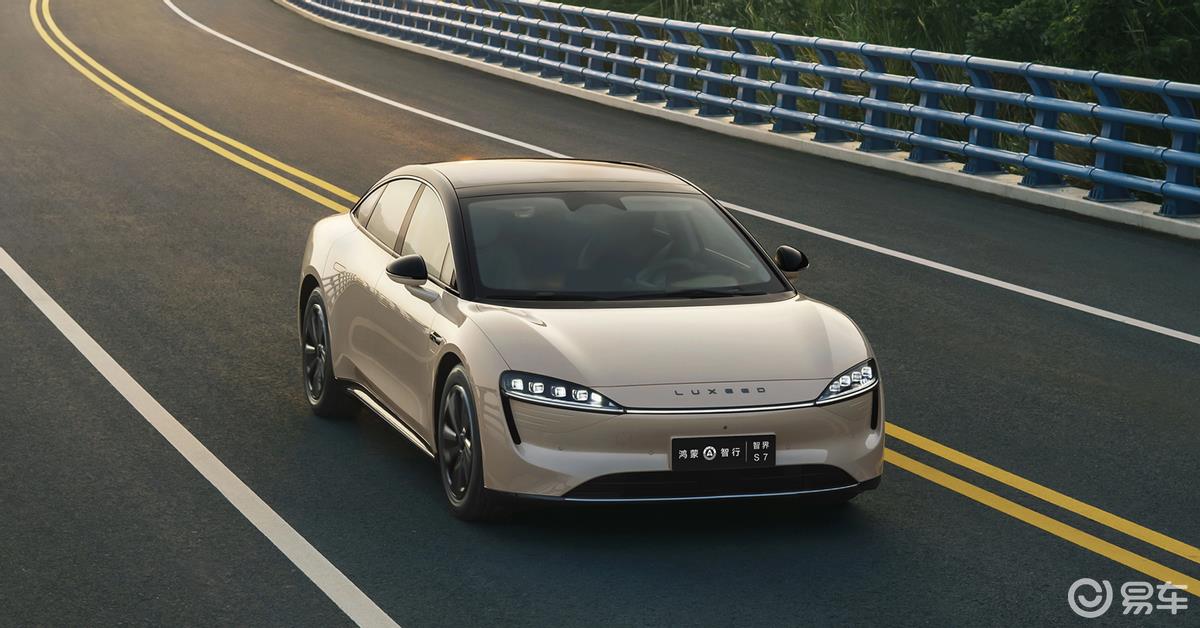
At this conference, the entry-level Pro model of Zhijie S7 showed Huawei’s thinking on visual solutions.

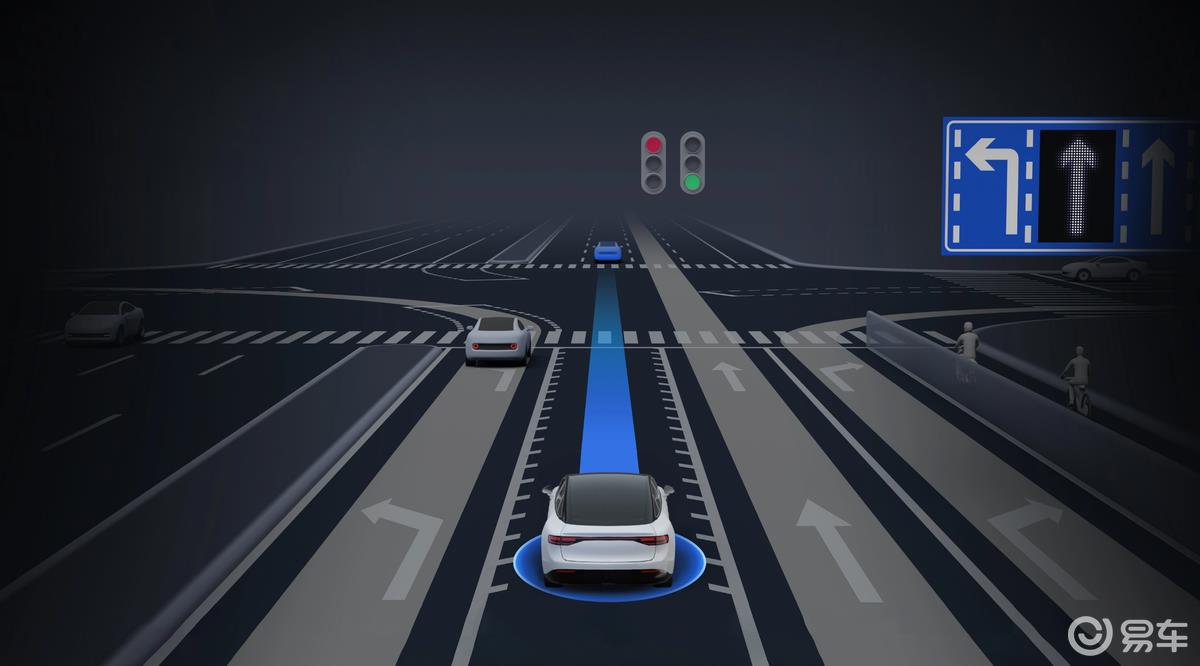
In hardware, Zhijie S7 Pro version uses 10 lateral and forward-backward sensing cameras, plus 3 millimeter-wave radars and 12 ultrasonic radars for fusion. The software part uses GOD general obstacle detection network and RCR road topology inference network. Functionally, it does not rely on high-precision maps to achieve high-speed navigation that can be opened all over the country.

In terms of hardware configuration, the perceived hardware gap between Pro version and MAX is only lidar. However, in terms of intelligence, the PRO version should be 48T, and the MAX version should be 200T.

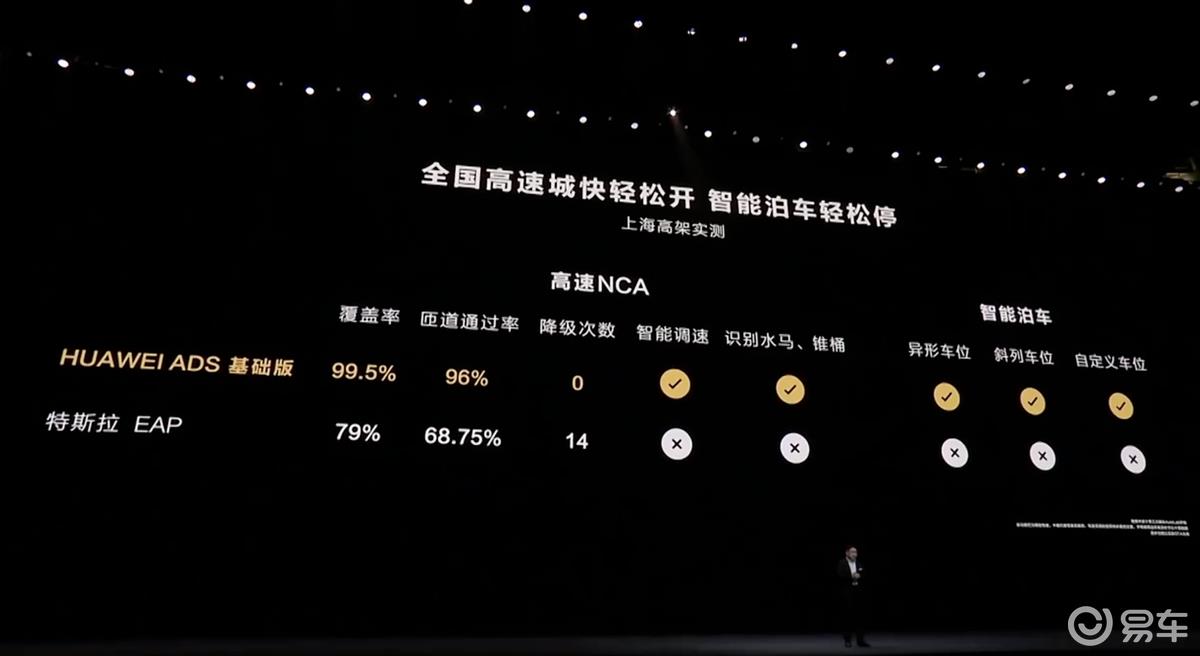
According to the media measurement, the effect of this scheme is still quite OK. Whether it is high-speed NCA or APA parking, the strength can "hang" Tesla’s EAP. Even compared with Huawei’s advanced intelligent driving system, the performance of this pure vision scheme can also maintain the strength of the first echelon in various high-speed navigation systems.

Considering the lower hardware cost of this scheme, if it is further popularized, the lethality will still be very terrible.

Kung fu is angry

In the face of the "second half" of the smart electricity revolution, Huawei once again showed us the strength of its "arsenal".

Although the visual intelligent driving scheme released this time is ostensibly a "replacement" of Huawei’s high-end ADS. However, if the technology is further mature, it is not excluded that Huawei’s smart driving will gradually turn to a purely visual solution.

通过admin

Memories kill! To the mobile phone designs we chased in those years: After reading it, I’m stuffed

  Many people say that this is an era of looking good. There are also many people who say that talent is the most important thing in this era.

  But what I want to say is that without good looks, who will pay attention to your inner self. This sentence also applies to the current mobile phone industry.

  In the mobile phone industry, a mobile phone without a good design may not attract your attention at all, and a good design is usually "borrowed" by manufacturers from each other.

  In this regard, the first thing we think of is Apple iPhone. If it hadn’t been for its emergence, we might still be in the era of "how can mobile phones look the same".

  Throughout the mobile phone industry, innovative designs have sprung up like mushrooms after a rain. Designs such as full-screen, ultra-narrow borders, retina, iris, and dual cameras have been "borrowed" by various manufacturers.

  However, there are also some mobile phone manufacturers who have always adhered to their own unique style. The classic designs of these manufacturers have not only become the object of imitation for other manufacturers, but also become the classic logo in the hearts of users. Today we will talk about the classic designs in those mobile phones.

  This is Nokia’s most classic design, and even Steve Jobs praised its beauty

  Although in the tide of smartphones, the former mobile phone overlord Nokia has long since lost its courage, as the earliest and most famous mobile phone brand in the mobile phone industry, Nokia has still brought us one classic product after another.

  Among them, there is such a machine, which is hailed as a classic of the generation, but the sales are not good; it has an excellent design, but it is dragged down by the system and does not go far. It is the Nokia N9.

  Released in 2011, the Nokia N9, with its droplet screen and colorful polycarbonate casing, was for a time the face of the electronics trend.

  The N9 is powered by the Meego operating system, which is also the first smartphone to use the Meego system, and the last phone from Nokia to use the system.

  At that time, Apple and other Android manufacturers patent war time. Nokia N9 turned out, really let everyone romance bright: the original large screen phone design can not follow the iPhone.

  Steve Jobs once said: "mobile phones (except iPhone) can do not like iPhone, Nokia N9 is a good example. Joe’s words are the biggest affirmation of the Nokia N9 design."

  Although the Nokia N9 has become a thing of the past, its innovative and cutting-edge design philosophy reflects Nokia’s capabilities and vision.

  The most classic design on HTC, even iPhone have borrowed

  Looking at any current smartphone, if you look closely, you can find Apple, HTC, or Samsung’s shadow in it, which is the big problem of smartphone homogeneity.

  The most popular design now is undoubtedly the three-stage all-metal back, which first appeared on the HTC One series.

  The two most famous phones are the HTC One M7 and the HTC One Max.

  Among them, the HTC One M7 launched in 2013 was the originator of the three-segment mobile phone. In that era, when many friends and businesspeople imitated the appearance of the iPhone mobile phone, HTC still adhered to itself and still adhered to the metal brushed design. The seamless connection between the round body, the frame and the back cover makes the whole machine feel very good.

  Another HTC One Max is the representative model of all-metal mobile phones, which was also released in 2013. The HTC One Max has an all-metal body, rear fingerprint recognition and a 5.9-inch 1080P display.

  This metal body antenna injection molding process is still the mainstream, and HTC has almost single-handedly created the industry standard. Although there are many latecomers, it has basically not jumped out of the HTC-style all-metal design framework.

  Sometimes sticking to your design is a good thing, but when the market feedback is not good, and you have been stubborn, then of course the consequences can be imagined. This sentence applies to HTC at the time.

  HTC’s stubbornness is mainly reflected in its criticized "multi-chin" design. For HTC, it has also been discussed internally. The stubborn HTC executives believe that this will affect the effect of the "HTC" brand, so not only did they cancel the physical buttons, but also let the HTC logo occupy a separate layer.

  HTC’s official explanation for this is that BoomSound is the main cause of double chin.

  Although the short-term sales of HTC A9 in 2015 temporarily relieved HTC’s urgent needs, it is clear that in that era of confluence, HTC’s market share is still declining.

  The high-end market cannot defeat Apple and Samsung, and the mid-to-low-end market cannot defeat Xiaomi, OPPO, Huawei and other manufacturers, so that the HTC brand’s presence in the mainland has become increasingly low.

  "Sony **** is good" is not a slogan, but a true craftsman spirit

  In the mobile phone industry, there was a manufacturer that had to go through dozens or even hundreds of "bankruptcies" every year. However, these public pressure did not make it go bankrupt. Instead, it made its fans hooked with one high-value product after another every year.

  For a long time, "****" has been synonymous with Sony, and "Sony **** is good" is also a slogan shouted by fans.

  This slogan shows that Sony’s contribution to the technology industry often exceeds that of many competitors, and it is also admired by many fans.

  In terms of the appearance design of mobile phones, Sony has also been adhering to itself. Basically, the general style of each generation is a square appearance style, with clear edges and corners, combined with the round middle frame design, plus the effect of matte glass, full of Japanese style, with a high degree of recognition.

  The first thing that makes me think of a more representative model is a mobile phone called LT18i launched by Sony in 2011. This mobile phone features a slim design, a metal brushed frame, and sharp edges around it, highlighting its domineering style.

  The perfect arc design on the surface of the fuselage has the arc of the "human body curve", and each arc is beautiful; a layer of piano paint on the surface makes the touch extremely comfortable. This design full of Japanese style is very recognizable.

  Among the fans of Sony mobile phones, female users make up a large part of the group, which has also made Japanese mobile phone manufacturers firmly target this group of people, and most of the products launched are biased towards female users.

  In the first half of this year, Sony’s Xperia XZ Premium National Edition was a product that made girls go crazy.

  This phone still uses the classic mirror design, continuing Sony’s usual square, tough style, although the appearance of the complained unchanged for ten thousand years, but Sony still insists on doing itself, the new product is still high value.

  It can be seen that Sony has been building one classic mobile phone after another on the basis of its unique design style over the years.

  In addition to the tireless pursuit of American models, Sony mobile phones are also constantly cultivating their internal skills to keep up with today’s young people’s pursuit of smartphone functions.

  BlackBerry’s full keyboard design has persisted

  There used to be a mobile phone that even US President Barack Obama had a soft spot for. For a while, its shape was not clear from the Nokia E series. Yes, this is the BlackBerry phone. In terms of feelings, it is definitely not inferior to Nokia. In terms of design, it is also definitely not inferior to Apple.

  In terms of design, the BlackBerry has always been an "outlier". Once the most fashionable mobile phone, it was loved by the public, especially business people, with its full keyboard button design.

  BlackBerry Passport is a full keyboard + touch model launched by BlackBerry in 2014. This model is as square as its name, like a passport. At the same time, the machine also retains the classic physical keyboard of BlackBerry mobile phones and adds touch sensing function. If the user swipes on it, they can also control the screen to swipe, which is very unique.

  However, at that time, BlackBerry was already a bit powerless towards the market, and even its target business group had already fallen into the arms of other camps.

  It is undeniable that in the era of large-screen touch, a large screen can indeed bring better display effects, but for those Weibo fanatics with a single thumb, the QWERTY physical full keyboard also has many advantages in terms of typing efficiency.

  The advantage of the full keyboard is that it greatly improves the efficiency of text input, and the fingers can be "danced" on the mobile phone, which makes many people feel very happy.

  For most business people and Weibo users, a physical full keyboard is obviously more popular.

  Although it is said that after entering the era of smartphones, due to problems with corporate strategy, BlackBerry’s smartphones have never been able to keep up with the trend, and eventually BlackBerry gave up the smartphone market.

  However, the release of the BlackBerry KEYone two days ago has brought many BlackBerry fans back to the classic all-keyboard era. Compared with many large touchscreen phones, the BlackBerry KEYone is a very niche product.

  But the dedication to classic design will make this full-keyboard phone find its own market, and it will also win the favor of business people.

  Meizu mBack waist round button, achieving an interaction that Apple has never achieved

  From the first generation iPhone, to now the seventh generation iPhone, Apple has only retained a physical button for returning to the home page, in the most should solve the problem, Apple can only add gesture operation on the screen to solve.

  Jobs once wanted to add physical buttons to the iPhone in order to improve the user’s control experience, but he failed to realize his wish.

  However, Meizu has come up with a better solution – mBack. Among the various innovative interaction patterns of today’s smartphones, there is no doubt that the oval "waist circular button" – mBack, which is full of creativity and warmth, and the feeling of "I can’t go back after using it", have long become the classic logo of Meizu mobile phones.

  Friends who are familiar with Meizu should know that as early as 2009, this "waist round button" had appeared on the Meizu M8, and it was hailed as the most innovative and brave design at that time.

  It was not until the release of the Meizu Note 2 in 2015 that mBack returned to the public eye, and this return has made this design quickly popular, not only applied to Meizu’s mobile phones, but also surprisingly, this classic mBack has appeared on other mobile phone brands.

  mBack integrates many functions into the Home button. Not only do we have the familiar functions of tapping back, pressing the Home button to return to the desktop, swiping left and right to call out multiple action sheets, etc.

  In addition, today, when fingerprint recognition has basically become popular, this waist-shaped Home button also integrates the functions of fingerprint unlocking and fingerprint payment. It can be said that Meizu has realized the three buttons of an Android phone with one button. Not only is it comfortable to use, but the appearance improvement is also one of its meanings.

  The surface of mBack seems to be the birth of Meizu’s continuous "competition" with the Home button, but behind it is the continuous exploration and innovation of user experience.

  Many people say that iPhone a Home is perfect, while Meizu is increasing the cost of user experience. When you really use mBack, simple interaction logic is enough to change you.

  Write at the end:

  Due to the limited space, there are still many classic mobile phone designs that I will not list here. I believe that many people will recall the mobile phones we have chased in the past after seeing the classic designs of these mobile phones.

  When smartphones have gone through the era of savage growth, there are fewer and fewer designs that can make our eyes shineThe design of mobile phones has undergone tremendous changes since its inception, and the future will continue to change. What kind of mobile phone designs will emerge in the future?

  Let’s talk about it.

通过admin

Lynk & Co 03 ++ will be available today with a 2.0T twin supercharged engine

BITECH On October 19, 03 ++ will be available today.The biggest feature of the new car is a 2.0T twin-supercharged engine, and the body is also lightweight.

In terms of appearance, Lynk & Co 03 ++ and cash.Lynk & Co 03 + is basically the same as a whole, but there are still differences in details. Among them, the middle net has been replaced with a new shape, and the grille is also equipped with a "350" logo. BelowThe front spoiler is also made of carbon fiber to further enhance the sporty feel.At present, the car only confirms the "Darth Vader" color scheme, and more color schemes may be launched for consumers to choose in the future.

The rearview mirror of the new car uses a new shape, which can better reduce wind resistanceAt the same time, the new car is also equipped with 19-inch all-black wheels and 6-piston brake calipersIn terms of body size, the length, width and height of the new car are 4697 * 1843 * 1456mm, and the wheelbase is 2730mm.

Come to the rear of the car, new carEquipped with a large spoiler and diffuser design, while using through taillights, and equipped with a bilateral total of four exhaust.In addition, Lynk & Co plans to launch two versions of the 03 high-performance version, a relatively basic version that takes more into account road driving. The other is more in line with track tuning, with a lighter body and better heat dissipation performance.

In terms of interior, the new car is not much different from the current model. Two large-size LCD screens with a multi-function steering wheel look full of technology. In terms of details, the new car also usesA large area is wrapped with wrapping material.

In terms of power, both models are equipped with Drive-E 2.0TD T6 EVO machinery+Turbo twin engine, newly developed8ATTransmission, maximum horsepower reached350PsThe peak torque is reached450N·mAmong03 + RacingThe fastest acceleration of 100 kilometers is4.89S, while03 + TCRVersion, you can sprint at full speed at Ningbo International Circuit5Circle, no decay in power.

Open the Easy Car App, search for "real 100,000 kilometers long test", and see the most realistic vehicle long test report.

Editor in charge: Wu Haotian

通过admin

Huang Jianxiang on "China Star Jump": Sports is the most authentic reality show

  Xinhuanet, Beijing, April 12 (Reporter Zhou Xin) Last weekend, two diving star reality shows were broadcast on local satellite TV one after another, which also caused heated discussions. Huang Jianxiang, who hosted Zhejiang Satellite TV’s "China Star Jump", said, "The reality show of diving stars we are now conducting is to convey a message to the audience: diving is a project that can lower the technical threshold and people of different ages and physical conditions can play. As long as you participate in it, there will be progress and gains."


  After covering many sporting events, Huang Jianxiang has been wondering for many years: what is sports, what is game, and why do English-speaking people always like to say "it’s a game"? According to Baidu search, the explanation of sport is "sports", which can be extended to "entertainment, recreation, game". Game is "competition, game, competition". Both are entertainment and games. But in the past, sports have always appeared on Chinese TV screens with the serious face of "pursuing higher and faster". This time, by hosting "China Star Jump", Huang Jianxiang has a new insight.


  "Sports is fun, it’s a process of constantly improving yourself compared to yourself. Jumping rope, throwing sandbags, fishing, climbing mountains, swimming, track and field, playing ball are all fun, and it’s all sports. Participating in sports itself is a thing that makes people feel happy." Huang Jianxiang said that the emergence of sports-element variety shows like diving reality shows is a natural thing, which makes the original content increasingly homogeneous TV shows a new bright spot.


  "Judging from the development trend of international reality TV shows, most of them start with singing and dancing and other talent shows, and slowly transition to skills, and finally to sports, and it is a diving event that Chinese people are good at. This makes me very happy as a sports media person," Huang Jianxiang said. "I don’t want to turn on the TV and there will be an overwhelming number of movies and TV dramas, singing, dancing, blind dates… It seems that only people who engage in literature and art can have dreams. Sports are also dreams. Even if they are not professional athletes, the pursuit of sports by ordinary people is also worthy of respect."


  In fact, sports itself is the most authentic reality show. There are rules, no director, no script, and you can’t do it all over again. No one knows what will happen in the next second and what the result will be. This is the most touching part of sports. Huang Jianxiang’s most profound memory is the commentary of the men’s double 3m board final at the 2004 Athens Olympics. "No one expected that a spoiler would suddenly burst out of the audience, and no one expected that the Chinese team that was far ahead would score zero points in the final jump, resulting in the gold medal being dropped. All this makes me feel that every game is the most authentic live reality show."


  "China Star Jump", which began broadcasting on April 6, and then "Star Diving Cube" by Jiangsu Satellite TV, have triggered various heated discussions, including some negative remarks, such as celebrities fighting for their lives and making a fool of themselves… Huang Jianxiang believes that the current reality show of diving stars only hopes to convey a message to the audience: diving can lower the technical threshold, and people of different ages and physical conditions can participate in it.


  "Diving is an extreme skill sport that must be trained and completed under the guidance of a professional coach. Safety measures must come first. No one will work hard for fun, and so do celebrities. They are very serious when training, and they pay more attention when they are officially recording the program, which inspires the competitive and crazy side of their personality." After watching a lot of star training, Huang Jianxiang did not agree with the star’s statement: "Celebrities are also ordinary people, and they have to’start from scratch ‘in their fields that they are not good at, which can relieve the mystery and alienation of many people about sports. Sports is not’you can only win, you can’t lose’, and there are not various restrictions. Sports are open to everyone."


  "We want sports variety shows like’Star Jump ‘to convey positive energy – as long as you participate in sports, you can have fun and enjoy it. Of course, different people can find different sports that suit them, and it’s not necessarily all diving," Huang Jianxiang said.

通过admin

Hangzhou clarifies the rights and interests of takeaway delivery staff: involving employment contracts, insurance, compensation, etc

  On April 18, the Hangzhou Municipal Bureau of Market Supervision, the Municipal Bureau of Commerce, the Municipal Bureau of Human Resources and Social Security, and the Municipal Public Security Bureau jointly held a press conference on the promulgation and implementation of the "Hangzhou Online Catering Takeaway Distribution Supervision and Administration Measures".

  Surging News learned from the press conference that Hangzhou is the first city in the country to promulgate regulations on the management of online catering takeaway delivery, and the "Measures" will be implemented in May this year.

  The surging news noticed that the "Measures" have a total of 28 articles, about one-third of which are about the protection of the rights and interests of the delivery staff, involving employment contracts, social insurance, and work salary rules.

  "As a new employment form, online delivery workers belong to a disadvantaged group in the online catering takeaway industry chain, so the protection of the legitimate rights and interests of online delivery workers is the key content of the Measures," said the relevant person in charge of the Hangzhou Municipal Market Supervision Bureau.

  The "Measures" make it clear that platform operators, catering providers and independent online delivery staff, food delivery operators and online delivery staff, who meet the conditions of establishing labor relations, shall conclude employment contracts according to law and participate in social insurance;If it does not fully comply with the establishment of labor relations, a written agreement shall be concluded to clarify the rights and obligations of both parties.Guarantee the legitimate rights and interests of online delivery personnel such as work remuneration, rest, and work safety in accordance with the law, and actively guide and support them to participate in social insurance at the place of employment as flexible employees.

  If the online delivery staff delivers meals through the online catering service platform but does not fully comply with the establishment of labor relations, the platform operator can participate in single-insurance industrial injury insurance for them, and the social insurance agency shall handle it in accordance with the relevant provincial and municipal regulations; encourage platform operators, catering providers and delivery operators to provide online delivery staff with occupational injury-related commercial insurance plans.

  Regarding labor compensation, the "Measures" make it clear that platform operators, catering providers and food delivery operators shall improve the rules for the work compensation of online delivery staff, formulate reasonable single distribution compensation and workload assessment requirements, clarify the time and method of payment of work compensation, and pay it in full on time. If online delivery staff deliver meals on statutory holidays, bad weather, night and other circumstances, platform operators, catering providers and food delivery operators are encouraged to increase the single distribution compensation or give appropriate subsidies.

  The relevant person in charge of the Hangzhou Municipal Market Supervision Bureau said at the meeting that the "Measures" also stipulate the management responsibilities of platform operators. "For example, for independent online delivery personnel, it stipulates the platform’s information registration, vocational training management and other responsibilities, and requires the platform to sign a written agreement with it, participate in insurance for it, etc. At the same time, the platform shall not induce or force independent online delivery personnel to register as individual industrial and commercial households to evade the above obligations. This is the first time in China that more specific regulations have been made on the management of independent online delivery personnel."

通过admin

Focus interview: Wan Li’s "driving" that affects the relationship between the two places

  CCTV News(Focus interview): On January 2, the city of Korla in Xinjiang received a sincere thank-you letter from Peixian County, Jiangsu Province, 4,700 kilometers away. The letter thanked Mansour Patar, 38, and Maimaiti Nurdong, 42, of Korla City, for their nearly 10,000-mile "free chauffeur" from Xinjiang to Jiangsu. The letter said: "This kind act of righteousness has almost crossed the whole of China, warmed this winter, and vividly explained the deep friendship between brothers and sisters of all ethnic groups." One east and one west, the journey is long, why is this "free chauffeur" so affectionate and dreamy?

  Zhao Xulei, a truck driver recovering at home in Peixian County, Jiangsu Province, is video chatting with Mansour and Maimaiti, who are far away in Korla, Xinjiang. They chat like brothers, but they didn’t know each other a few months ago.

  "My name is Mansour Pattal, I’m 38 years old, I live in Korla, Xinjiang, and I’m a truck driver," said Mansour Pattal.

  "I am a truck driver from Korla, Xinjiang," says Mr. Nurdon. "We are busiest from July to November. We pull boxes of grapes in July, grapes in August and cotton, cottonseed and husks in November. We usually go to Aksu, Kashgar and southern Xinjiang a little more."

  Last October, Zhao Xulei, a truck driver from Jiangsu Province, rushed to Xinjiang with his wife, Wang Cui, to join the cotton caravan during the cotton harvest season. During this time, he met local Uighur truck drivers Mansour and Maimaiti, and the three became good friends because of their similar temperaments.

  However, the accident suddenly happened to Zhao Xulei. On November 17, 2021, Zhao Xulei was hit in the head by an iron chain while unloading, and his eyes were seriously injured. His wife Wang Cui was very anxious. They had no relatives in Xinjiang, only Mansour and Maimaiti, who had just known each other for 11 days. With the idea of giving it a try, Wang Cui asked them for help.

  Zhao Xulei’s wife, Wang Cui, said: "I called Mansour. He arrived at the scene immediately and arranged for us to stay in the hospital. He also took me to the responsible party and the court.

  When we first met, our eyes were fine, and Zhao Xulei was also quite handsome. Suddenly, after more than ten days, our eyes could not be seen. We felt very uncomfortable, because we were friends. "

  With the help of two Xinjiang friends who were very affectionate and righteous, Zhao Xulei was rescued in time. More than half a month later, because his injury was too serious, his treatment encountered new difficulties.

  Liu Jie, an eye, nose and throat doctor at Korla Hospital of the Second Division of the Corps, said: "When he was brought in, the trauma to his left eye was very serious, and he could no longer see anything in his eye. After our treatment, his vision did not recover. We suggested that he go to a better hospital in Beijing for treatment."

  It is urgent to go to Beijing for treatment. In addition to the treatment fee, what worries Zhao Xulei is that the source of the family’s livelihood – the large truck bought with a loan – is still in Xinjiang, who can drive it back to Xuzhou?

  "He’s under a lot of pressure," said Mr. Nurdon. "He has a loan for this car, and he can’t pay it back if he stops. The key is that he has four people in his family and two children."

  Zhao Xulei said: "At that time, I also called the old watch in my hometown and wanted to ask him to go to Xinjiang. He said that the journey was too long, and he had never run that far by himself."

  "Zhao Xulei is also in a hurry to use money, and his living conditions are average," said Mansoor Patar. "He also spent a lot of money, more than 100,000 yuan at Korla Hospital."

  Zhao Xulei’s unfortunate experience made Maimaiti and Mansour anxious in their eyes. If a friend is in trouble, they have to help. They decided on the spot that they would help Zhao Xulei send the car back to Jiangsu no matter what.

  Zhao Xulei said, "I was very surprised. They directly said that we will drive your truck back, not a penny, but send it to you. When they said this, they were moved to tears.

  With the help of a good friend, Zhao Xulei, accompanied by his wife, went to Beijing for treatment with peace of mind. Mansour and Maimaiti also immediately began to prepare for this special "driving". This time it was a long journey, and the decision was made in a hurry, and the family was unaware of it.

  Mansour Pattal said: "I said a word, and my wife also supported me. After that, I called my family. After calling, I was worried that if she didn’t agree, my friend would be embarrassed."

  "I said of course I agree," said Mr. Mansour’s wife, Patiguri Kurban. "What if it’s not Zhao Xulei or you in this situation? Can I go and fetch you back by myself? Can you handle this by yourself? It’s okay, if you can help, please help, and then I asked him how the travel expenses were solved?"

  Mansour and Maimaiti’s family are not well-off. This is the time of year in Xinjiang when there are many goods and busy cars to make money. Not only do they not care about making money, but they also post money to send cars to Zhao Xulei. It is estimated that the cost on the road is 10,000 to 20,000 yuan, which is indeed a big burden for them.

  Because of the delivery to Wuxi, this trip spanned 10,000 miles. He and Maimaiti shared the insufficient freight. The two of them had an idea not to let Zhao Xulei, who was still recovering, add a penny to the burden. On December 9, 2021, they set off. In order to save money and time, Mansour and Maimaiti ate and stayed in the car all the way, using the instant noodles and naan they brought when they left to satisfy their hunger.

  From Korla, Xinjiang to Peixian County, Xuzhou, Jiangsu, running through most of China. In the early morning of December 17, 2021, after a long journey of 8 days and 8 nights, Mansour and Maimaiti finally delivered the car to the agreed location with Zhao Xulei: Xuzhou, Jiangsu. As agreed, the car was safely delivered to Zhao Xulei’s hometown. Mansour and Maimaiti fulfilled their promise, and then they went to the hotel to have a good night’s sleep.

  Mr. Mansour’s wife, Patiguri Kurban, said: "My husband said the car has been delivered safely and we should go back to Xinjiang. I said don’t forget that my birthday is next week, and my husband said he will be back on time for your birthday."

  Just as they were about to buy tickets back to Xinjiang, Zhao Xulei, who was being treated in Beijing, stopped them. Zhao Xulei has not yet healed his eye injury, but he is in a hurry to return to Xuzhou despite the doctor’s dissuasion.

  Zhao Xulei said: "They put their truck there and drove my car back. During this period of more than half a month, they also lost more than 20,000 yuan. After arriving at their hometown, they called to leave, and I said you can’t leave. We haven’t met yet, and the family hasn’t thanked them yet."

  "He said never to go back. It would be best to have a meal before leaving. His father, mother and friends all look at their Xinjiang friends," said Mr. Nurdon.

  Vote for me with a wooden peach, and repay it with Qiongyao. In order to thank the two righteous good friends, Zhao Xulei took them to see his parents.

  Patiguri Kurban said, "Zhao Xulei’s mother was so moved that she cried. She hugged my husband and his friend Maimaiti and said that you are also my son. My husband was very touched when he said this.

  Considering their first visit to Jiangsu, Zhao Xulei’s family repeatedly asked them to stay for a few more days to see the scenery of Jiangsu. Zhao Xulei also endured the pain of his eye injury and insisted on guiding them throughout the journey. During his stay in Xuzhou, Zhao Xulei was most worried about the two Xinjiang brothers not having a good time, while the Xinjiang brothers were worried about Zhao Xulei’s injury.

  Wanli car delivery by Zhao Xulei’s friends after the praise by the media reports, won widespread praise.

  Huang Houli, director of the Rong Media Center in Peixian County, Jiangsu Province, said: "After the Rong Media Center reported the incident, the county party committee and county government immediately sent a thank you letter and took out rewards from the Peixian Good People Fund to reward the two Uighur brothers for their kind deeds."

  On December 27, 2021, Mansour and Maimaiti returned to Korla. On December 30, Mansour fulfilled his promise to his wife and celebrated her birthday.

  The three brothers’ love that spans nearly 10,000 miles has now become the link between the two cities, and the story of ethnic unity and one family continues: on January 12, more than a dozen media from Jiangsu and Xinjiang joined forces to launch a live broadcast to help Xinjiang Ruoqiang red dates sell, and the Peixian Rong Media Center invited the injured driver Zhao Xulei to help on the spot. Zhao Xulei said: "The righteous deeds of the Xinjiang brothers have made me realize the family love that spans thousands of miles. I hope more people can learn about Xinjiang through us. Xinjiang not only has red dates, but also Korla fragrant pears, Aksu apples, Xinjiang cotton, etc., and there are many good people." Seeing the little things, all ethnic groups are tightly hugged like pomegranate seeds, hand-in-hand matchmaking, watching and helping each other, so that we can share a beautiful life.

通过admin

Detailed explanation of the four major highlights of Hongmeng OS! Huawei’s ambition is not just mobile phones, but "unified rivers and lakes"

  At the Huawei Developers Conference, held today in Songshan Lake, Dongguan, Huawei’s consumer business officially launched its new microkernel-based distributed operating system for all scenarios – Hongmeng OS.

  Yu Chengdong, CEO of Huawei’s consumer business, said in the main speech that in the traditional model of the past, the emergence of each new form of end point will be accompanied by the birth of new operating systems. "Whether it is in the PC era, the mobile Internet era, or the Internet of Things era that 5G is about to give birth to, different eras will give birth to different operating systems." Therefore, in the face of the upcoming era of full-scene intelligence, "there should also be corresponding operating systems." Yu Chengdong said bluntly: "With the advent of the era of full-scene wisdom, Huawei believes that it is necessary to further enhance the cross-platform capability of the operating system, including the ability to support full-scene, across multiple devices and platforms, and the ability to deal with low-latency and high-security challenges. Therefore, the embryonic form of Hongmeng OS has gradually formed. It can be said that the starting point of Hongmeng OS is different from Android and iOS. It is a brand-new microkernel-based distributed operating system for all scenes, which can meet the requirements of smooth experience of all scenes, architecture-level trusted security, seamless collaboration across end points, and multi-end point deployment at one time. Hongmeng should be born in the future."

  According to him, as early as ten years ago, Huawei began to lay out Hongmeng OS, and now with the continuous improvement of Huawei’s full-scene smart life strategy, Hongmeng OS will be the product of Huawei to meet the arrival of the full-scene experience era, play its lightweight, small and powerful advantages, take the lead in applying smart watches, smart screens, in-vehicle equipment, smart speakers and other intelligent end points, and strive to build a cross-end point integration sharing ecosystem, reshape a safe and reliable operating environment, and create a new experience for consumers.

  Four highlights of Hongmeng OS

  According to Yu Chengdong, the original intention of Hongmeng OS is to meet the high-standard connection requirements of full-scene intelligent experience, and Huawei has proposed a system solution with four major characteristics for this purpose.

  1. Distributed architecture for the first time for end point OS, enabling seamless collaborative experience across end points

  Hongmeng OS "distributed OS architecture" and "distributed soft bus technology" through the public communication platform, distributed data management, distributed scheduling capabilities and virtual peripherals four capabilities, the corresponding distributed application of the underlying technology implementation difficulty of application developers shield, so that developers can focus on their own business logic, like the development of the same end point to develop cross-end point distributed applications, but also enable end consumers to enjoy a strong cross-end point business collaboration capabilities for the use of scenarios to bring a seamless experience.

  2. Determine the natural fluency of the delay engine and high-performance IPC technology implementation system

  Hongmeng OS solves the problem of insufficient performance of existing systems by using two technologies: determined delay engine and high-performance IPC. Determined delay engine can allocate task execution priority and time limit in the system before task execution. High-priority task resources will be prioritized to ensure scheduling, and application response delay will be reduced by 25.7%. The small structure of Hongmeng microkernel greatly improves the performance of IPC (inter-process communication), and the process communication efficiency is 5 times higher than that of existing systems.

  3. Reshape end point device trusted security based on microkernel architecture

  Hongmeng OS adopts a new microkernel design, which has stronger security features and low latency. The basic idea of microkernel design is to simplify the kernel function, implement as many system services as possible in user mode outside the kernel, and add mutual security protection. Microkernels only provide the most basic services, such as multi-process scheduling and multi-process communication.

  Hongmeng OS applies microkernel technology to Trusted Execution Environment (TEE) to reinvent trusted security through formal methods. Formal methods are effective means to use mathematical methods to verify that the system is correct and free of vulnerabilities from the source. Traditional verification methods such as function verification and simulated attacks can only be verified in selected limited scenarios, while formal methods can verify all software running paths through data models. Hongmeng OS applies formal methods to end point TEE for the first time, which significantly improves the security level. At the same time, because the code volume of Hongmeng microOS kernel is only one thousandth of that of Linux macro kernel, its probability of being attacked is also greatly reduced.

  4. Support one development, multi-terminal deployment through unified IDE to achieve cross-end point ecological sharing

  Hongmeng OS relies on multi-end point development IDE, multi-language unified compilation, distributed architecture Kit provides screen layout controls and automatic adaptation of interaction, supports control drag and drop, and visual programming for preview, so that developers can efficiently build multi-end automatic running apps based on the same project, realize true one-time development, multi-terminal deployment, and realize a shared ecosystem between devices. Huawei Ark Compiler is the first static compiler to replace the Android virtual machine mode, allowing developers to compile high-level languages into machine code at one time in the development environment. In addition, Ark Compiler will support multi-language unified compilation in the future, which can greatly improve development efficiency.

  The past and present life of "Hongmeng" OS

  In 2017, Hongmeng Kernel 1.0 completed the technical verification.

  In 2018, Hongmeng kernel 2.0 was applied to end point TEE

  In 2019, Hongmeng OS 1.0 was completed, based on the open-source framework, in which Huawei self-developed in key modules, using distributed architecture and ARK compiler. Determine the delay engine, launch TEE microkernel formal verification, multi-end point development IDE (Beta), and currently Hongmeng system will be applied to smart screens.

  In 2020, Hongmeng OS 2.0 is about to appear, the kernel and application framework are self-developed, the general micro-kernel architecture, high-performance graphics stack are launched, multi-language unified compilation, multi-end point development IDE, meet the car standard, and applied to innovative domestic PC, watch/bracelet, car machine and other products.

  It is expected that by 2021, Hongmeng OS 3.0 will complete soft and hard collaborative optimization, vertical acceleration file system, software and hardware collaborative high-performance IPC, and be applied to audio headphones. After 2022, Hongmeng system will be applied to VR glasses and other devices.

  Explanation of terms

  What is a microsystem?

  The micro kernel is a stripped-down version of the kernel that provides the core functions of the operating system. It is designed to increase portability in a small memory space and provides a modular design to allow users to install different interfaces, such as DOS, Workplace OS, Workplace UNIX, etc. New operating systems such as IBM, Microsoft, the Open Software Foundation (OSF), and the UNIX Systems Laboratory (USL) have all adopted the advantages of this research.

  [Nanfang Network All Media Reporters] Xu Jun, Gao Xiaoping, Huang Shaohong, Sun Junjie

  [Trainee reporters] Huang Haobo, Zhang Shiting

通过admin

Apple iPhone 16

  IT Home December 13th news, foreign technology media MacRumors today released a blog post, sharing the relevant information of Apple iPhone 16 standard version models.

  IT House quoted the media report, Apple iPhone 16
The design and development of the standard version is still in the early stages, and Apple engineers call it "DeLorean", which may differ somewhat from the final retail version.

  design

  According to the internal information currently available, Apple has designed a number of iPhone 16 prototypes internally.

  The yellow prototype has an operation button, and the volume button has a coherent design, and the back has a camera island design similar to the iPhone X.

  The pink prototype is equipped with an operation button, a separate mechanical volume button; the black prototype is equipped with a larger operation button and a dedicated camera button.

  Camera Island Adjustment

  Apple has tested a variety of camera island solutions, and compared with the existing diagonal design, the new model attempts to be designed vertically to enhance device recognition.

  However, reports say Apple is experimenting with two different camera bump solutions:

  iPhone 12 style design, square camera island, but the camera adopts vertical scheme;

  iPhone X style design, using pill shape design.

  Relative to the iPhone 15, both designs have the same flash position, indicating that Apple does not plan to change the position of the flash.

  No tactile volume/power button

  IT House previously reported that Apple is advancing the project internally with "Project Bongo", with plans to redesign the volume and power buttons to bring new interactive experiences in terms of functionality and appearance.

  And Project Bongo
The volume and power buttons are changed from traditional mechanical buttons to tactile buttons, which detect pressure and simulate the pressing of physical buttons by using a vibration-generating haptic engine (haptic feedback).

  The feedback mechanism for the Bongo project to press the haptic button is as follows:

  Below the button is a bend sensor that measures the pressure applied to the button.

  The strain gauge detects a change in pressure, converts it into a change in resistance, and accurately measures the change.

  A signal is sent to the main logic board indicating that the button has been pressed.

  The main logic board issues power commands to the Bongo haptic engine

  Bongo’s haptic engine uses electromagnetic fields to generate vibrations

  Then haptic feedback is generated by vibration, and a slight upward movement towards the finger mimics the sensation of a physical button being pressed.

  The component has two strain gauges, one on each side of the button. The strain gauge detects a change in pressure and converts it into a change in resistance within the circuit. The change in resistance causes a change in voltage, and the potential difference between the two strain gauges is used to determine the position of the pressure origin (volume increase or volume decrease).

  Apple originally planned to use it on iPhone 15 Pro series models, but it was cancelled earlier this year due to a number of technical issues.

  The media said Apple did not continue to deepen the project, Apple iPhone 16 models will still be equipped with mechanical buttons.

  operation button

  The biggest change in Apple’s iPhone 15 Pro series is to cancel the mute pick and use the operation button instead.

  The iPhone 16 series models launched next year will also follow, using operation buttons.

  Apple is working internally on Project Atlas, but is trying to change the operation buttons from mechanical to capacitive.

  Add a new photo button

  Apple tried to install a new button on the right side of the iPhone 16, bringing a new capacitive camera button, codenamed Project Nova internally.

  Not much is known about Project Nova, which will be equipped with force sensors in addition to a "touch toggle" feature.

  In addition, the photo button is located in the same location as the millimeter wave cutout on iPhone models sold in the United States, so in iPhone 16, the millimeter wave antenna has been moved to the left side of the device.

  Continue to use Dynamic Island and USB-C ports

  Without any noticeable changes to the front of the iPhone 16, the opportunity continues with Dynamic Island, and the base model iPhone 16 is expected to feature a similar display to its predecessor, with no major differences. With
iPhone 15, iPhone 16 has a USB-C port on the bottom of the device.

  color

  In terms of color, early prototypes were available in three colors: yellow, pink, and midnight.

  summary

  iPhone 16 overall appearance will not be much adjustment, the main updates are:

  Vertical camera arrangement, possibly similar to iPhone 12

  New capacitive camera button

  Capacitive operation button

Editor: Qi Shaoheng

通过admin

Smart TV, no one survived

Since the birth of the electronic TV in 1927, the global sales crown at every stage has been a leader in new technologies. From CRT to rear projection, from plasma to LED, Sony, Panasonic, and Samsung have taken turns dominating the global TV market.

The TV industry has always been dominated by technology, following the law of technological innovation, technological maturity, and a natural decline in product prices from high to low.

Until Xiaomi TV appeared and bombarded the market with low prices, the market law was once broken. The market trend changed rapidly, and the idea of technological breakthrough was replaced by competition for low prices. Domestic brands were dragged into the quagmire of price wars, which also artificially increased the difficulty for future high-end.

Xiaomi’s entry into the TV industry is not just a product, but a model.

In October 2013, the first Xiaomi TV went on sale, and only 18,000 units were sold until the end of the year. The total sales volume of the domestic color TV market was about 47 million units that year, and the market share of Xiaomi TV was only about 0.03%.

At that time, China’s per capita disposable income was only 18,311 yuan, and the price was still the top consideration for most domestic consumers to buy TVs. In China, rising stars such as Hisense, TCL, and Skyworth have left behind the slightly outdated Changhong technology. Although Japanese and Korean high-end brands have no match in the global market share, they are difficult to maintain the forefront in the Chinese market.

In the hearts of many consumers, Japanese and Korean TV brands are truly high-end. Sony and Samsung entered the industry early, with global leadership in patents and technologies and strong brand power. They have also gained higher premiums from it.

At that time, the technology of domestic brands was still growing, and foreign brands were "high and low", leaving a huge gap in the market.

With the launch of Xiaomi TV 2, Xiaomi TV sales exceeded 300,000 in 2014, entering people’s attention at a growth rate of 16 times. Xiaomi Internet + cost-effective play is suddenly enlightened.

Based on deep customization, MIUI TV transforms not only rice noodles, but the entire traditional TV client base, as well as the "Internet surfing" family.

Ambitious Xiaomi, a TV industry recruit with neither technical expertise nor strong brand appeal, has chosen its usual low-priced approach without suspense.

The first generation of Xiaomi TV has a 47-inch 8.4mm narrow frame, selling for only 2999 yuan. At the press conference, the Xiaomi-style slogan reappeared: "The first TV for young people"; perhaps it was consumers who waited and saw the new brand, which led to the first generation of Xiaomi TV’s listing being cold, while the second generation of Xiaomi TV pushed the price of the 40-inch ultra-narrow frame smart TV to 1999 yuan. This time, Lei Jun quickly made many friends.

In 2013, Internet TVs accounted for less than 1% of the domestic market. In an era when the Internet was developing rapidly and the smart TV industry had a market gap, Xiaomi TV used the Internet model to slash product prices.

The Internet ecosystem can become the main channel for Xiaomi’s TV profits, and the demand for hardware profits can be minimized, which almost replicates the way its mobile phones play and is also the model that Xiaomi is accustomed to.

Opponents have difficulty building an Internet ecosystem that can rival Xiaomi in a short period of time, and there is a relative lack of profit points other than hardware. The reason why first-tier domestic brands such as Hisense and TCL were able to successfully bring Changhong down lies in the great progress of exclusive technology until it surpasses. Xiaomi does not use technology to crush the market, but uses extremely low prices to drag opponents into unfamiliar battlefields.

The price is the appearance, and the support point is the Internet ecology. With Xiaomi TV becoming the domestic sales champion in 2019, the Xiaomi model has become the object of imitation in the industry, and the product price has become the focus of attention in the industry.

This has also indirectly led to an increasing number of peers prioritizing technological research and development over lowering product prices.

A team of domestic traditional TV brands began to make up for their shortcomings, each building a TV OS ecosystem based on it, increasing their profit points, and finally further reducing their hardware prices.

The price war is intensifying, consumers and brands are fixated on product prices, but fewer and fewer people pay for technology, craftsmanship and quality, and TV products are gradually "fast food".

At the same time, due to factors such as the relatively high cost of hardware due to brand identity and configuration of cutting-edge technologies, and the lack of profit points other than hardware in the Chinese market, foreign big-name TVs are gradually marginalized in the domestic low-end market.

According to Aowei Cloud Network data, only two foreign brands, Philips and Sony, ranked 8th and 10th among the top ten domestic TV sales in 2019, with sales of only a few million units, about one-tenth of Xiaomi’s.

Xiaomi TV has not only dragged domestic competitors into a price war, but also allowed foreign brands to further tilt their focus towards the high-end market in China.

With the traditional domestic TV brand Internet ecology, online channel construction and other shortcomings made up, no one has an absolute advantage in this price war, and some "micro-exercises" have begun to prevail. Real and fake 4K, old architecture towing new machines and other mixed industry chaos are frequent.

To some extent, this is a manifestation of manufacturers’ cost compression to the extreme.

In Q3 2022, Xiaomi’s internet service revenue was only 7.10 billion yuan, only about 10% of total revenue, and hovered between 7 billion yuan and 7.30 billion yuan for the sixth consecutive quarter, apparently not helped by hardware growth.

Internet revenue, as a fulcrum for Xiaomi TV to maintain low prices, may not be as strong as expected.

Once imitating the Xiaomi model, no one has succeeded in turning the Internet ecosystem into a revenue driver, while technology research and development has regained attention.

Consumption is under pressure, and brands that once pursued cost-effectiveness have seen an upward demand. The tide of high-end products has swept in, and low-end products have gradually become a painless spray.

Millet-style inner roll once triggered domestic peers to "actively go down", and the price melee undoubtedly solidified the "taste" of some users, and the brand was difficult to get out of trouble for a while.

Nowadays, brands that are proficient in going down have to consider how to go up.

Going high-end also means entering the home court of foreign brands.

Before 2016, Samsung also actively deployed low-end products in the Chinese market. However, as the price war intensified, domestic brand prices further declined, and online channels were already weak. Coupled with the lack of ecosystem in the Tizen system, Samsung TVs gradually fell short of their capabilities and completely withdrew from the price war stage. Since then, they have ranked last in the Chinese market for a long time.

The price war has squeezed Samsung and Sony out of the low-end market, and also stimulated them to completely move towards high-end. The industrial chain behind them also forms a virtuous circle around high-end.

The high premium of high-end products brings higher profits to the industrial chain. Theoretically, the investment in R & D can also be higher than the industry average to create cutting-edge technologies and consolidate high-end positioning. This is the logic of the industrial chain of high-end brands.

The Xiaomi model is completely different. By reducing the price of hardware to the extreme, the profit of the industrial chain is also reduced, which indirectly suppresses the technological progress of the industrial chain.

The cost-effective model is inherently unsustainable, prompting brands to rise; consumption is under pressure, the market is shrinking overall, and it has become more urgent for brands to raise demand.

Omdia data shows that global TV sales in the first three quarters of 2022 were 143 million units, down 4.4% year-on-year. TrendForce released data late last year, expecting global TV shipments to 202 million units last year, down 3.9% from 2021 and the lowest in nearly a decade.

The overall shrinkage of the TV industry has become a foregone conclusion, and domestic brands with an absolute share advantage in the domestic market have not shown a similar one-sided strong performance in the global market.

In the first three quarters of 2022, Xiaomi TV ranked fifth in the world with a 6.5% market share, and Samsung led the global TV sales list with an absolute advantage of over 20% market share.

Obviously, the "three-star model" is better.

The novelty brought to users by TV intelligence has long been gone, and Internet expansion has become a regular standard. As mentioned earlier, Xiaomi, which got up early, and the domestic brands that followed suit, failed to change the situation of low Internet revenue, but instead suffered brand damage in the price war.

Another drawback of the Xiaomi model is the potential for quality control after extreme price compression.

In May 2022, Xiaomi TV was exposed that the screen automatically fell off, and it was launched twice in three days, which once attracted widespread attention. In recent years, problems such as black screen and main board have also been complained by many Xiaomi TV users, and there is even a joke on the Internet: If it is over-insured, it will be bad.

Brands that have participated in the price melee have also frequently encountered similar quality control problems, but some brands can improve the problem to a certain extent by relying on their own production lines. In the fully OEM model, the quality control initiative is divided into two, and the extreme price compression will undoubtedly make things worse.

The frequent occurrence of quality control problems is extremely unfavorable for the brand to rise, and it relies heavily on the integration of third-party resources, and only "micro-innovation" to maintain fast-paced product iteration is not very helpful for technological development.

Comparing the data of the past four years, it is not difficult to find that although the market as a whole continues to shrink, the top ten rankings of global market share have hardly changed. In other words, relying on cost-effective tactics to kill the four parties in China, it is difficult to "eat all the sky in one move" in the global market.

Xiaomi TVs, which have often won sales in the domestic market in recent years, have been suppressed by TCL and Hisense in the global market. In the first three quarters of last year, TCL ranked third with a share of 11.7%, and Hisense ranked fourth with a share of 10.1%, continuing to lead Xiaomi.

The exclusive technological breakthrough has become a stepping stone to the high-end market of Hisense and TCL.

TCL has made technological breakthroughs in quantum dots, Mini LED, etc. to develop new display technologies; Hisense is also a major promoter of Mini LED, and it is a leader in the field of laser TV, accounting for 49.5% of the global laser TV market share in the first half of last year.

In terms of price, the flagship product of Hisense Laser TV is close to 100,000 yuan, the flagship of 8999 yuan flat-screen TV is "only" 85 inches, while the price of Xiaomi’s 86-inch flagship ES Pro is 7999 yuan, and Redmi’s 86-inch EA Pro is 5999 yuan.

The launch of Redmi has not allowed Xiaomi’s own brand to rise confidently, but has instead made Xiaomi’s TV product line slightly bloated and confused.

Redmi A, X, and MAX series are relatively easy to remember, while Xiaomi’s own brand TV models include Transparent, Master, Quantum Dot, Mural, Digital, EA, and ES series. This "machine sea tactic" reveals the chaotic product thinking of Xiaomi TV.

Users are easily confused when purchasing, and even if they recommend it to others, they are prone to misremember the model. It can be said that their ability to distinguish and remember is being tested.

The product line confusion is just a symptom of the Xiaomi model. At most, Xiaomi is not well-prepared to rise, which has limited impact on its high-end.

However, Xiaomi users’ perception of the brand’s value and the "Xiaomi model" that has long relied heavily on the supply chain have led to a relatively lack of exclusive technology, which may drag down the high-end process of Xiaomi TV for a long time.

The aftershocks of the price war have affected the high-end TV industry, which is not special. Manufacturers with comprehensive capabilities have always been the protagonists.

Compared with the "Xiaomi model", the "Samsung model" easily wins because of its advantages in technology, brand, global channels, and long-term important role in the upstream supply chain.

Similarly, domestic leading brands such as Hisense and TCL also place great emphasis on comprehensive development. The difference is that the price war has directly stimulated the traditional domestic brands to make up for the shortcomings of the Internet ecosystem. Their low-end product lines already have a strong cost-effective foundation, while brands with exclusive technical routes are undoubtedly more prominent.

The high and low ends are strong enough, and in the context of consumption pressure, it is undoubtedly a two-handed preparation. The "Hisense, TCL model" seems to be more sustainable.

As products move towards high-end, brand temperament also needs to keep up. Although controversial advertising slogans catch the eye, they run counter to high-end, which is not conducive to growth. In the past four years, global TV sales have been solidified, and domestic brands may need to put more thought into improving their overall strength.

Just like the way it came, it relies on step-by-step technological accumulation rather than loud slogans.

通过admin

Ease the Heat and Drink Healthy – Market Research on Beverage Consumption Season

        The domestic soda brands that triggered the nostalgia trend are back in sight again; low-sugar and sugar-free drinks are sought after by consumers; coconut water has become a hit this year; new tea drinks are constantly up the ante market layout… How is this year’s summer beverage market lively! What are the factors driving these out-of-circle and hot? How are the new changes perceived by consumers happening? What direction will the next beverage market competition focus on?

  The traditional peak season for beverage sales has come to an end since October. Looking back at the summer just passed, the beverage products that cooled down the heat can be said to have "been in the limelight", and the sales volume has also increased rapidly. What is more interesting is that there have been many new trends and new trends in the beverage market in the rapid development. The reporter visited a number of market segments, trying to review the gains and losses of this summer’s beverage market.

  Nostalgic wind and fire domestic soda

  Soda is widely favored by consumers as one of the "tools" to relieve the summer heat. Judging from the consumption of soda this year, although Coca-Cola and Pepsi continue to occupy a strong position, domestic soda is also gradually "breaking the circle". According to Meituan data, as of the end of August, the instant retail sales of major domestic soda brands such as Shanhaiguan, Bawangsi, Second Factory soda, Arctic Ocean, Asian soda, Laoshan soda, Tianfu Cola, Zhengguanghe and so on increased by 47% year-on-year.

  Since the early 1990s, imported soda brands have been "top the chart" in the carbonated beverage market for many years, and still maintain a market share of more than 80%. But since last year, some domestic soda brands have found new ways in the cracks, and the starting point of "fate gear rotation" is the expansion of catering channels.

  With the vitality of food and beverage consumption this year, the sales of domestic soda have ushered in an upswing period. In restaurants, whether it is eating hot pot or ordering barbecue, a bottle of domestic soda has gradually become the first choice for consumers. Lao Luan, who runs a barbecue shop in Tiexi District, Shenyang City, Liaoning Province, said that the large-packaged glass soda of the Dayao brand is the most popular in the store. At present, the monthly sales volume of several hundred bottles is far higher than that of other traditional brands of soda. Lao Luan believes that affordability is the main reason why large bottles of soda sell well.

  There are not only big kilns, but also Bingfeng. As a local soda brand in Shaanxi, Bingfeng soda, Liangpi, and Roujiamo form the "Sanqin Package", which has become a must-have product in restaurants and supermarkets in the streets and alleys of the ancient city of Xi’an.

  In addition to focusing on local market demand, domestic soda is also expanding in the national market. As of the end of August, the sales of Asian soda in Guangzhou increased by 41% year-on-year outside the province; the sales of Laoshan soda from Qingdao increased by 39% year-on-year outside the province; the sales of Hongbaolai soda from the northeast in the Beijing market have been on par with the local market, with a year-on-year growth rate of 131%.

  The second factory soda from Wuhan held two press conferences during this year’s peak sales season. The first one focused on the local market, and the second one looked at the national market from the Beijing area. The relevant person in charge of the second factory soda told reporters that there is a great demand for domestic soda in the market. The second factory soda achieved sales of more than 20 million yuan in July and more than 30 million yuan in August this year. "Consumers like to add fruit juice, which has both high quality and cost-effective products," the person in charge said.

  Although domestic soda has begun to "break the circle", it still needs to climb over the hurdle in order to achieve better development. Industry insiders pointed out that compared with imported brands, domestic soda has limited funds, making it difficult to support the continuous promotion of brands and channels. As consumers iteratively update, domestic soda brands still need to seek new breakthroughs in corporate management and product quality.

  Sugar-free tea is in the limelight

  Compared with the domestic soda that is still seeking breakthroughs, the sugar-free tea market that has been quiet for many years has ushered in explosive growth due to the trend of "sugar reduction".

  Before the reporter’s visit, the last bottle of sugar-free Pu’er tea in the freezer was bought by customers. "Customers of all ages can buy sugar-free tea drinks," Mr. Zhang said. "The Pu’er tea flavors have been sold out, and there are still two bottles of jasmine tea flavors left, which can only be replenished tomorrow." Wang Yu, a consumer who keeps sugar-free drinks in his home fridge, summed up the reason for choosing sugar-free drinks as "I am afraid of being fat and want to drink some tasty water".

  As consumers become increasingly health-conscious and demand for healthy consumption grows rapidly, "sugar reduction" is gradually becoming the consensus in the global food consumer market. Changing consumer attitudes towards sugar intake are affecting the position of sugar-free beverages in the beverage market from the bottom up. In the beverage market, various products are also being designed to switch from high sugar to low sugar and no sugar.

  According to iiMedia consulting data, from 2015 to 2022, the market size of China’s sugar-free beverage industry will increase year by year, from 2.26 billion yuan to 19.96 billion yuan, and it is expected to reach 61.56 billion yuan in 2025. Especially sugar-free tea products are becoming a new trend in the sugar-free beverage market. Taking Nongfu Spring as an example, its revenue in the first half of 2023 was 20.462 billion yuan and profit was 5.775 billion yuan. Its tea beverage segment revenue reached 5.286 billion yuan, an increase of 59.8% year-on-year.

  "The sugar-free tea track still has huge room for imagination. At the same time, it also shows from the side that the Chinese beverage market has recovered well and is accelerating its development." The reporter found in the interview that this has become the consensus of many industry insiders.

  Looking back at the development of sugar-free tea, as early as 2004, the "King of Tea" brand under the unified subsidiary tried to test the sugar-free tea beverage market, and then a number of beverage giants including Coca-Cola, Nongfu Spring, Master Kong and others also entered this field one after another. But at that time, consumers preferred sugar-sweetened tea drinks mixed with sweet and fruity flavors, and the marketing activities of sugar-free tea products were difficult. Today’s popular "Oriental Leaf" has been ridiculed by netizens as "one of the five worst drinks" for a long time.

  After years of waiting, sugar-free tea has finally ushered in the development of "Dongfeng". The sugar-free tea product itself is in line with the tea drinking habits of domestic consumers, and the characteristics of zero sugar and zero fat make it more acceptable to consumers.

  In order to keep up with consumer demand, this year, major brands have also entered the sugar-free tea market, including Yuan Qi Sen Lin, Master Kong, Dongpeng, Yili, Panpan and other brands have launched new sugar-free tea series one after another. In addition to those "old acquaintances" in the beverage market, the sugar-free tea market has also attracted many new players. Taking the JD.com platform as an example, you can see that a number of new brands such as Tea, Tea, Rising Sun Forest, Dayido, Linlong Tea Room, and Keyang have entered the market.

  In the opinion of Qian Junjie, a commodity development expert at Dingdong Maicai, healthy and natural products have become the leading consumer in the beverage market, and this demand is rapidly being transmitted from first-tier cities to second- and third-tier cities. He told reporters that the average annual sales growth rate of sugar-free tea on the Dingdong platform is around 50%, and this data is expected to exceed 100% this year.

  The new tea drink continues to be "rolled in".

  Zhao Zhiqiang, from Hebei, has spent a month scouting the market in Tianjin to join a new tea brand that has recently become very popular. Before speaking to reporters, he had just missed a store in a shopping mall in Tianjin. "I went to check the location in the morning, but I didn’t expect to be told to rent it out in the afternoon." Zhao Zhiqiang said that the deposit for joining the brand has now been paid, but the specific store location has to be found by yourself. In the process of looking for a shop, Zhao Zhiqiang found that there are more and more new tea stores now. It is not easy to find a shop with the right location, flow of people and price.

  According to the "2023 New Tea Drinks Research Report" released by the China Chain Store Association and Meituan, as of August 31, the total number of new tea stores in operation was about 515,000, an increase of more than 36% from the 378,000 at the end of 2020.

  "Not only top brands, but also waist brands are opening up faster," Wang Hongtao, executive deputy secretary-general of the China Chain Store Association, told reporters. On the one hand, the recovery in consumption has brought an increase in demand, giving investors more confidence to participate in the new tea industry. On the other hand, brand companies have begun to adjust their business models and gradually open up franchise to promote the improvement of brand stores.

  At the end of last year, HEYTEA, the head brand of new tea drinks, announced the opening of franchise. According to media reports, the number of HEYTEA stores quickly reached 2,000 in the next six months, an increase far exceeding the total number of stores opened in the past few years. Not only HEYTEA, but more and more new tea brands have announced store opening plans during the year, and some brands have directly pointed to the "10,000 Store Plan".

  In early August, Bawang Chaji, a tea brand founded in the southwest region, announced that it began to enter shopping malls in the urban area of Beijing. According to the information released by the brand, from August 4th to 6th, the store sold a total of 11,230 orders, totaling more than 200,000 cups of milk tea.

  In addition to competing for the number of stores, tea brands also "roll in" prices. The "2023 Beverage Industry Spring and Summer 1000 + New Product Analysis Report" shows that from March to June this year, Meituan takeaway new product quantity price belt distribution, 13 yuan to 17 yuan accounted for 30%, followed by 17 yuan to 20 yuan accounted for 21%. It can be seen from the data that consumers are more sensitive to price, and cost-effective products will gradually become the mainstream of the market.

  At the end of August, Nayuki launched the "9.9 yuan drink fresh milk tea" activity, sounding the horn of a new round of price war for new tea drinks. After that, many brands followed suit one after another, and different brands’ products went from a weekly limited 9.9 yuan product, "rolled in" to a daily 9.9 yuan product.

  From the number of stores to the price of the products, what makes the new tea market so "involution"? According to the big data of Red Food, from 2015 to 2021, the market size of our country’s freshly made tea drinks increased from 42.20 billion yuan to 141.90 billion yuan, and the market size in 2022 was 142.30 billion yuan, an increase of only 0.3% compared with 2021. The slowdown in market size has exacerbated the intensity of "involution" among brands.

  At the financing level, capital has become relatively cautious about the entry of the tea track. According to the big data of the red meal, a total of 30 financing events were disclosed in the tea category in 2021, and the total amount of financing disclosed exceeded 12.50 billion yuan. In 2022, a total of 26 financing events were disclosed in the tea track, and the total amount of financing disclosed exceeded 4.50 billion yuan.

  Some industry insiders pointed out that after Nayuki went public in Hong Kong, the "second share of new tea drinks" has attracted much attention. In the past year, a number of new tea brands have been rumored to go public one after another. In the context of slowing down the overall financing of the market and fierce competition, especially in the lower-tier market, it is particularly important to seize this opportunity. In this process, it is even more important to rely on opening stores, reducing prices and other methods to rapidly expand scale and acquire more stock markets.

  Wang Hongtao also admitted that once a new tea company goes public, it will have a positive impact on improving its own development level and enhancing its ability to resist risks. At the same time, it will also increase trust and influence when expanding its scale.

  Coconut water and other popular products

  As one of the fastest-growing segments in the food industry, there are a lot of new categories and flavors in the beverage market this year. This summer’s beverage market has been on fire, and the "coconut wind" blowing from the coffee market is a typical example.

  In early 2021, Luckin Coffee launched the "raw coconut latte" product, which replaced the milk in the latte coffee with coconut milk, and the unique taste quickly became popular. Since then, "coconut flavor" has become one of the popular flavors in the beverage market. The reporter’s investigation found that this year, there are not only coconut milk with added coconut meat, original coconut water, thick coconut milk suitable for milk tea, but also functional drinks with added coconut water and coconut-flavored fruit and vegetable juice.

  Among the many "coconut flavor" products, coconut water products can be described as a fire. The "2022 China Beverage Industry Product Report" shows that the frequency of coconut use ranks first among the 40 tea brands sampled, 108 times more than the second-ranked strawberry; in the statistical sample, 92.5% of the brands have new coconut element products. Moreover, the domestic coconut water market has risen from 513 million yuan in 2018 to 780 million yuan in 2022, and it is expected to exceed 1 billion yuan in 2025.

  In Qian Junjie’s view, the natural properties of coconut water itself not only meet the healthy consumption needs of consumers, but also close to the consumption trend of "no sugar".

  According to media reports, the price of coconut water on the market varies, and the price of 330ml and 350ml coconut water is between 7 yuan and 15 yuan. Reporters checked the Tmall platform and found that the top 3 coconut water products are all originated in Thailand. Among them, the highest-selling product 12 bottles (350ml) sold for 78.9 yuan, showing that the sales volume has exceeded 400,000 bottles.

  Food industry analyst Zhu Danpeng said that after nearly five years of market cultivation, the coconut water category has entered a state of booming production and sales, and the consumption scene has entered an all-round diversification cycle. From the perspective of growth space, the entire coconut water category is relatively optimistic, and the coconut water category is worth looking forward to as consumption upgrades.

  The reporter noticed that, unlike coconut milk and coconut milk, coconut water raw materials are mainly coconut green. Some time ago, the topic of "coconut water prices skyrocketed by 4000%" was hot, and the important reason was that coconut green raw materials were in short supply, and old coconut water, which was originally a leftover material, was also purchased, causing prices to rise.

  In addition, at present, the overall output of coconut in our country is still unable to meet market demand, coconut water is highly dependent on external sources, and different regions also have an impact on the flavor of coconut water products. How to improve the layout of the coconut water industry chain is crucial to maintaining product quality and stable development of the industry.

  Packaged drinking water seeks differentiation

  China Beverage Industry Association data show that the output of packaged drinking water in 2022 is about 93 million tons, accounting for half of the entire beverage market output. Operating income returned to 100 billion yuan, and the rigid demand attribute of packaged drinking water became more and more obvious. In the beverage market, the large volume of packaged drinking water also showed the characteristics of price and scale competition this year.

  In terms of price, the average price of 550ml bottled water has risen from 1.66 yuan in 2005 to 2.32 yuan in 2020, indicating that the mainstream price band has been in the late stage of switching from 1 yuan to 2 yuan. Looking to the future, 2 yuan water is expected to remain the mainstream price range, "neck and neck" with 3 yuan water.

  The reporter visited and found that the price competition in the market of purified water and natural water of 1 yuan to 2 yuan is particularly fierce. On the JD.com platform, the same is about 550ml for 24 bottles, the price of Nongfu Spring is 33.9 yuan, Yibao is 34.9 yuan, Wahaha is 33.6 yuan, and Master Kong is priced at 24.9 yuan. Different products can also enjoy different price-break discounts. On the Wumart platform, the price of 12 bottles of the same content of ice dew, pure Yue, pure water music and other products is in the range of 7 yuan to 9 yuan.

  Some FMCG industry insiders told reporters that at present, 1 yuan water in the market is mainly for distribution products, emphasizing market share and basically pure water. 2 yuan water and 3 yuan water are represented by natural water and mineral water products respectively.

  According to the "2022 Mineral Water Consumption Trend Annual Report" released by JD.com Supermarket, natural water accounted for the highest proportion in the bottled water category in 2022, followed by mineral water accounting for 34%. It is worth noting that the sales growth rate of mineral water is 43% year-on-year, higher than that of other bottled water categories. Natural mineral water emphasizes that the origin is pollution-free, rich in minerals, trace elements, etc., to meet the rising demand for healthy consumption today, and is quickly becoming a new focus of bottled water competition. The reporter learned that more and more companies are beginning to label the origin of water injection on natural mineral water products to strengthen their own image. For example, "Luofu Mountains", "Changbai Mountain Water Source", "6000-meter Kunlun Mountain", "Tianchang Wetland Reserve" have become the promotional content of the brand.

  In Zhu Danpeng’s view, enterprises to develop high-end water market, on the one hand, because of the normalization of consumption upgrade, high-end water demand continues to increase. On the other hand, because the competition needs to form differentiation, the development of high-end water market helps to improve brand perception and operating profits.

  There is also large packaged water that continues to maintain a hot topic this year. It has become an important force for major water companies to expand their market volume and explore new growth curves. Some analysts believe that with the fixed household population and the gradual diversification of drinking water scenarios, large packaged drinking water has more advantages in safety and convenience than turnover bottled water. Sullivan data predicts that the compound annual growth rate of large packaged water in household scenarios will reach 17.5% in the next five years, and the compound annual growth rate in office consumption scenarios will reach 10%. This will help large packaged water to have a stable and strong growth momentum in the future and usher in better development. (China Economic Net reporter, Han Xiao)