标签归档 西安桑拿会所

通过admin

"Two Screens" Policy Knowledge Publicity on People’s Livelihood (II) —— Prenatal Screening and Prenatal Diagnosis

Birth defects, also known as congenital anomalies, refer to the abnormalities in morphology, structure, function, metabolism, behavior and other aspects caused by the disorder of baby’s development in the mother’s womb before birth, which can be caused by genetic and environmental factors. There are four common types: ① congenital malformation; ② Hereditary metabolic diseases; ③ Congenital disability; 4 mental retardation. China is a populous country in the world, and the incidence of defective infants is about 5.6%, which is an important cause of early abortion, stillbirth, congenital disability, perinatal and infant death.

Three-level prevention and control of birth defects is a comprehensive prevention and control system covering pre-pregnancy, pregnancy and postpartum stages. Prenatal screening and prenatal diagnosis belong to the category of secondary prevention of birth defects. Its purpose is to minimize the birth of newborns with serious defects such as severe illness, severe disability or fatal diseases. They make up for the primary prevention and further prevent and control the tertiary prevention, and play an important role in the birth defect prevention and control system.

I believe pregnant mothers have heard the names of "prenatal screening" and "prenatal diagnosis" many times. What are prenatal screening and prenatal diagnosis? What is the difference between the two? Let Xiaobian give you one together. ……

First, about prenatal screening

To put it simply, prenatal screening mainly uses some basic and simple methods to screen the fetus for birth defects and malformations, such as serological screening and medical image screening, so as to judge the probability of the fetus suffering from some birth defects or genetic diseases such as Down syndrome and open neural tube defects. Commonly used screening methods include:

(1) Down syndrome screening technology. Down’s syndrome screening technology is the most widely used prenatal screening method in clinic at present. It detects the concentrations of alpha-fetoprotein (AFP), chorionic gonadotropin (HCG) and free estriol (FE3) in maternal blood by extracting the peripheral blood of pregnant women at 15-20+6 weeks of pregnancy, and calculates the detection method of fetal risk coefficient with birth defects in combination with the gestational age, weight and age of pregnant women. The detection method is mainly aimed at the risk assessment of Down syndrome (trisomy 21), trisomy 18 syndrome and congenital neural tube defects. The detection method has the advantages of fast detection speed and low cost, but the false negative and false positive rates of this method are high, and the method fails to cover all the population, and there are many factors that affect the results (including the age and weight of pregnant women, diabetes, medication during pregnancy, etc.). Only the risks of Down syndrome, trisomy 18 syndrome and neural tube defects are predicted, and the number and structure of other chromosomes cannot give specific risk values, so there are strict requirements for pregnant women’s gestational age. The emphasis is on screening, and the screening results generally show low risk, critical risk and high risk. Screening out high risk does not mean that there must be some diseases in the fetus, and it needs to be further diagnosed by prenatal diagnosis technology.

(2) Non-invasive prenatal screening technology. That is to say, we often say that the detection of fetal free DNA in maternal peripheral blood is more sensitive and specific than screening for Down syndrome. Routine non-invasive three methods can screen 13- trisomy, 18- trisomy and 21- trisomy, while non-invasive PLUS developed in some hospitals can screen nearly 100 kinds of fetal chromosomal abnormalities. However, this technology still belongs to prenatal screening and its cost is high, so it can’t detect fetal congenital neural tube defects. If the test result is high risk, further prenatal diagnosis is needed to confirm the diagnosis. The advantage of this test project is that it can be tested after 12 weeks of pregnancy, and only 10 ml of venous blood of pregnant women is needed, and the results can be obtained in a few days. Because this method is non-invasive and painless, it can avoid the risk of abortion and infection caused by amniocentesis. However, it is not perfect. The disadvantages of this technology are: First, it can’t detect twins or multiple births, because it can’t judge which fetus the free DNA in pregnant women’s blood comes from; Second, if the mother’s own chromosome has problems, such as aneuploidy or chimera, then this technique is also not applicable; Third, if the pregnant woman has recently received allogeneic blood transfusion, the foreign DNA will interfere with the analysis results, and it is not suitable for this technology.

(3) Prenatal ultrasonic structure screening technology. At present, B-ultrasound examination is commonly used in clinic, which is the most widely used examination method in obstetrics. It is mainly used in: ① it can directly monitor the growth and development of the fetus and observe whether there are morphological abnormalities in the fetus, such as fetal neural tube development defects, skull abnormalities, visceral malformations, etc.; ② Confirm the gestational age, and calculate the risk of Down’s syndrome (DS) by risk calculation software, combining with serological screening markers; ③ Used to mediate chorionic sampling, amniocentesis and umbilical cord puncture; ④ The nuchal translucency (NT) and nuchal fold (NF) of fetus were detected. NT and NF are the most commonly used and effective indicators for ultrasound screening of Down syndrome. NT detection is mostly in the first trimester (10 ~ 14 weeks of pregnancy). When the thickness of transparent layer of fetal neck is more than 3 mm, DS high-risk pregnancy is considered. NF is mainly used for screening in the second trimester (16-24 weeks of pregnancy). When the fetal NF thickness is greater than or equal to 5 mm at 16-18 weeks of pregnancy, and the fetal NF thickness is greater than or equal to 6 mm at 19-24 weeks of pregnancy, it is considered as a DS high-risk pregnancy. Therefore, ultrasound, as a non-invasive examination method, has always played an important role in prenatal screening. It can not only detect fetal development, but also detect some serious fetal malformations and pregnancy complications. If abnormalities are found, further prenatal diagnosis and testing are needed.
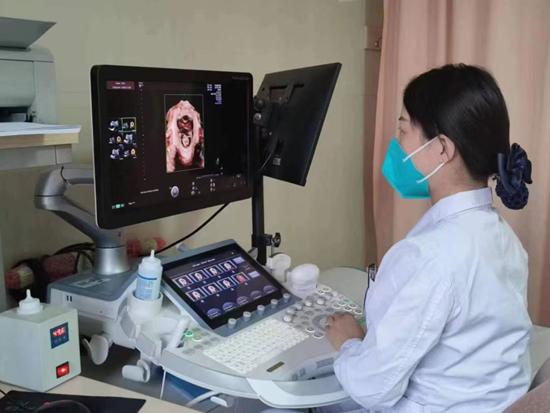
Second, about prenatal diagnosis

Prenatal diagnosis refers to the detection and diagnosis of the development status and diseases of the embryo or fetus through certain methods before birth, which is the key link to prevent birth defects.

Prenatal diagnosis is based on prenatal screening or aimed at high-risk pregnant women. Therefore, prenatal diagnosis can be used to further diagnose the disease. Karyotype analysis of amniotic fluid (chorionic villus or umbilical cord blood) cell culture is a traditional method, which is called the "gold standard" for prenatal diagnosis.

So what is chromosome karyotype analysis?

Fetal karyotype is mainly based on the development of amniocentesis, chorionic villus biopsy and umbilical vein puncture technology, and the analysis of fetal karyotype has become the most widely used technology for prenatal diagnosis. This technique has high diagnostic accuracy and high reliability in clinic, so it is the gold standard for prenatal diagnosis.

It is necessary to remind expectant mothers that although prenatal diagnosis technology in China has developed by leaps and bounds, cytogenetics technology, molecular biology technology and gene sequencing technology have continued to develop, at present, all technologies still have their limitations, and prenatal diagnosis technology cannot detect all fetal abnormalities.

Original title: "Two Screens" Policy Knowledge Publicity on People’s Livelihood (II)-Prenatal Screening and Prenatal Diagnosis "

Read the original text

通过admin

"cut interest rates" landed! Just now, the central bank released

Official website, the People’s Bank of China, announced today that in order to maintain a reasonable and abundant liquidity in the banking system at the end of the season,On September 29th, 2024, the People’s Bank of China carried out the reverse repurchase operation of RMB 182 billion by means of fixed interest rate and quantity bidding, and the operating interest rate was 1.50%, compared with 1.70% before..

The central bank issued a notice on September 27th, saying that from September 27th, the operating interest rate of 7-day reverse repurchase in the open market was adjusted from the previous 1.70% to 1.50%. The operating rates of 14-day reverse repurchase and temporary positive and negative repurchase in the open market will continue to be determined by adding and subtracting points on the operating rate of 7-day reverse repurchase in the open market, and the range of adding and subtracting points will remain unchanged.

On September 27th, the central bank did not carry out the 7-day reverse repurchase operation, but carried out the 14-day reverse repurchase operation of 278 billion yuan, with an operating interest rate of 1.65%. Therefore,Today is the official landing of the 7-day reverse repurchase operation interest rate reduction.

On September 24th, at the press conference held by the State Council Press Office, Pan Gongsheng, Governor of the People’s Bank of China, announced that the policy interest rate of the central bank would be lowered, and the 7-day reverse repurchase operating rate would be lowered by 0.2 percentage point.From the current 1.7% to 1.5%,Guide the loan market quotation interest rate and deposit interest rate to go down simultaneously, and keep the net interest margin of commercial banks stable.. Pan Gongsheng said that this policy interest rate adjustment is expected to drive the medium-term loan facility (MLF) interest rate down by 0.3 percentage points, and the loan market quotation rate (LPR) and deposit interest rate will also drop by 0.2 to 0.25 percentage points.

Earlier, Director Zou Lan of the Monetary Policy Department of the People’s Bank of China introduced at the press conference of the State Council Office on September 5 that the central bank had made it clear that the operating interest rate of the 7-day reverse repurchase was the main policy interest rate, and changed the bidding of the 7-day reverse repurchase from the original interest rate to the fixed interest rate and quantity bidding, which fully met the bidding needs of primary dealers. The interest rate is no longer the result of winning the bid, but is determined by the central bank according to the needs of implementing monetary policy; Quantity is no longer a means for the central bank to regulate liquidity, but is jointly determined by primary dealers according to the policy interest rate and their market judgment, which is conducive to enhancing the initiative of institutional liquidity management.

Source: CCTV Finance (ID: cctvyscj)

通过admin

Tianjin RAV4 Rongfang price reduction is coming! The discount 41,000, if you miss it, there will be no

Welcome to [Autohome Tianjin Promotion Channel], bringing you the good news that you can’t miss when buying a car. Currently, high-profile models are undergoing an unprecedented promotion in Tianjin. The maximum discount range is as high as 41,000 yuan, which means that consumers have the opportunity to buy this hot-selling SUV at a lower starting price, with a minimum starting price of only 135,800 yuan. To seize this car buying opportunity, be sure to click on the quotation form below to inquire in depth and strive for higher discounts. Don’t hesitate, act now to make your driving experience more affordable and exciting.

天津RAV4荣放降价来袭!优惠4.1万,错过就没有

With its modern and dynamic exterior design, RAV4 Rongfang shows a strong visual impact. Its front face adopts a bold air intake grille to create a sharp and delicate temperament, with smooth lines, showing the perfect combination of strength and elegance. The overall style is simple and powerful, whether it is on the urban street or off-road in the countryside, it can attract many eyes and show its unique personality charm.

天津RAV4荣放降价来袭!优惠4.1万,错过就没有

The car series RAV4 Rongfang presents an elegant body profile with its exquisite side design. The body size is 4600mm*1855mm*1680mm and the wheelbase reaches 2690mm, ensuring a spacious interior space and good driving stability. The careful layout of the front and rear wheelbases of 1605mm and 1620mm, combined with 225/65 R17 size tires, not only provides a comfortable driving experience, but also gives the vehicle a unique dynamic appearance. The streamlined side line design shows the harmonious unity of power and aesthetics, which is unforgettable at a glance.

天津RAV4荣放降价来袭!优惠4.1万,错过就没有

The interior design of RAV4 Rongfang focuses on practicality and comfort, and adopts a modern minimalist style. The steering wheel is made of plastic material, although it is not genuine leather, it feels stable and supports manual up and down and front and rear adjustment to adapt to the different needs of the driver. The center console is equipped with a 10.25-inch high definition touch screen, the operation interface is intuitive and easy to use, and the integrated multimedia function and navigation system are convenient for the driver to easily control during driving. The seats are mainly made of fabric material, and the seat cushion is soft and wear-resistant. The main and passenger seats provide front and rear, backrest and high and low adjustment to ensure the comfort of long-distance driving. The second row of seats supports backrest adjustment, while the seat reclining function is proportional reclining, which is convenient for loading large items and improves the flexibility of space. Overall, the interior of the RAV4 takes into account both practicality and cost, as well as the comfort of details.

天津RAV4荣放降价来袭!优惠4.1万,错过就没有

The RAV4 is equipped with a 2.0L L4 engine, capable of delivering a maximum power of 126 kW and 206 Nm of peak torque. This powertrain, combined with the CVT continuously variable transmission (analog 10th gear), ensures a smooth driving experience and high-efficiency performance.

Summarizing the evaluation of the owner, RAV4 Rongfang shows a strong visual impact with its atmospheric and tough exterior design. The sharp front and dynamic waistline, as well as the simple and generous rear, work together to create a unique and charming model. And its excellent body craftsmanship, whether it is detail handling or overall quality, fully reflects Rongfang’s persistence and pursuit of high quality. Undoubtedly, whether it is appearance or internal, RAV4 Rongfang has won the deep recognition of the owner and become a powerful partner in his driving life.

通过admin

Microsoft’s first AI PC is coming, so be wary of AI hardware’s "making up the number".

The PC market is very lively these days.

Apple released the first MacBook Air with M3 chip in the form of a press release, and declared that it was "the world’s best consumer laptop for AI" and ran into the AI PC track.

Since the birth of computers, Microsoft and Apple have been old enemies. In the AI era, the two giants pointed their fingers at Maimang. Microsoft and Apple have successively entered the $3 trillion club in terms of market value, and you are chasing after me. At the same time, Microsoft is determined to win the highest voice on AI PC. At the software system level, Microsoft has the trump card of OpenAI, and Copilot launched at the application level has become a global top-stream AI model application. Today, Microsoft’s first AI PC hardware is coming.

After being cut off by Apple, Microsoft’s first AI PC came.

According to the exclusive news of Windows Central, Microsoft will release a new generation of Surface Pro(Surface Pro 10) and Surface Laptop(Surface Laptop 6) on March 21st, 2024. As the first "AI PC" in Microsoft hardware, these two new Surfaces will be the first devices in the market to support Windows 11 "Next Generation AI", which shows that Microsoft attaches importance to these two new Surfaces.

1fcf5a8220231117041117.jpg

Image source: Microsoft

Although Microsoft has not announced the specific configuration of these two new computers, considering that Microsoft has repeatedly emphasized the AI performance of these two hardware, it is not difficult to guess the hardware configuration of these two computers:

As the benchmark of Microsoft notebook computers, Surface Laptop 6 and Surface Pro 10 will use the latest Core Ultra processor like other AI PC with high probability. Considering the memory requirements of NPU and Arc Graphic, Surface is expected to break away from the era of 8GB RAM and set 16GB memory as the initial configuration of Surface Laptop 6 and Surface Pro 10.

Considering the overall design idea of this year’s notebook computer, Surface Laptop 6 may also switch to a narrow border design, and follow the new specification of Microsoft, and change the Windows logo key on the right side of the keyboard to the Copilot key.

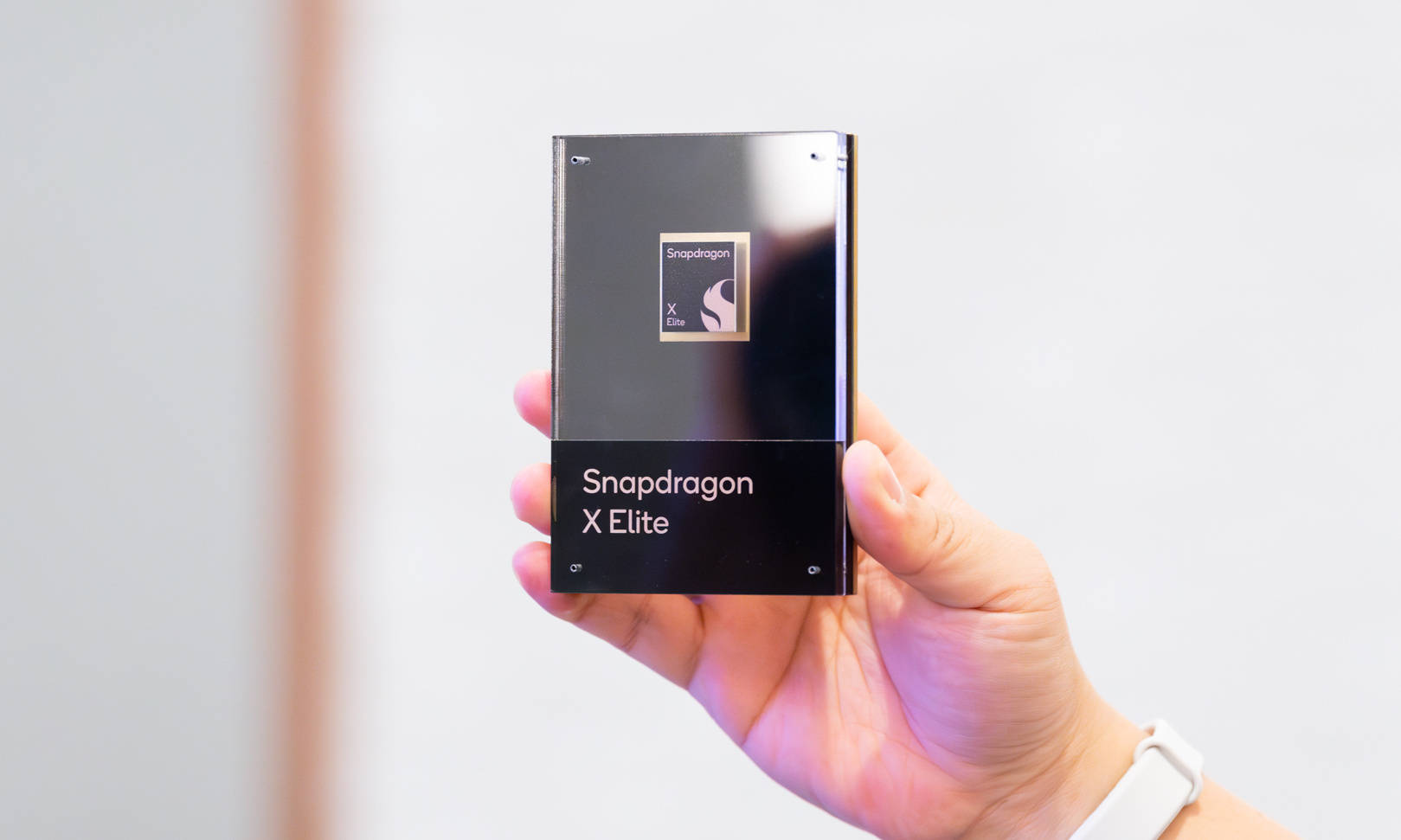
In addition, Microsoft also mentioned that these two computers will have "comparable performance to iPad Pro and MacBook Pro", and we can’t rule out the possibility that Microsoft will introduce ARM based processors into the Surface Laptop product line. In connection with Microsoft’s "platform" behavior for the X Elite processor during the Snapdragon Summit in 2023, it is not difficult to see that X Elite will also appear in the Surface series sooner or later.

a1ef00476d58403d8688734e3cd910d0.jpg@0-109-1619-971a.jpeg

Image source: Lei Technology

However, according to Qualcomm’s schedule, the X Elite version of Surface may not be available until the middle of the year. In the case that the ARM based system itself needs additional adaptation, can the X Elite version of Surface, which has lost its first-Mover advantage, overtake Ultra in AI applications? This question needs to be answered by Microsoft and Qualcomm.

If the release dates of Surface Pro(Surface Pro 10) and Surface Laptop(Surface Laptop 6) are really like March 21st, then we have reason to believe that Apple’s eagerness to release the MacBook Air M3 chip version may be a "cut-off". If it is released until the spring conference, Apple’s AI PC Virgo may "crash" with Microsoft’s original AI PC.

This reminds Xiao Lei of the way in which in 2023, a few days before the release of Vision Pro, the cheaper and more mature Quest 3 was first released. Afterwards, Andrew Bosworth, Meta CTO, said that the company "chose to release Quest 3 in June" based on consumers’ shopping habits instead of worrying about Apple’s competition-I believe you are a ghost. It can only be said that the business war of the giants is so unpretentious.

AI hardware is surging, and more and more people are making up for it?

On the other hand, even though X Elite and Ultra processors are fundamentally different in architecture, considering that both platforms have NPU for running local AI, Microsoft’s AI applications are still at the application layer at present, and Microsoft has mentioned on many occasions that its AI is a "mixed model" (local+online model), Lei boldly guesses here that the comprehensive performance of the AI applications launched by Microsoft in the future will not be much different between the two platforms.

Then the question follows: since most AI applications are still at the application layer at this stage, does it mean that as long as the PC can provide sufficient computing power and drive specific AI application layer use cases, this PC can be regarded as an AI PC?

Or in a more refined language: where is AI PC?

I know, this question looks very simple: the computer that can use AI is naturally AI PC. However, as far as the current progress of the AI industry is concerned, the development progress of hardware and software in the AI field does not match: as early as 2016, the AI model was applied to mobile phone images, and the AI technology applied to PCs can be traced back to Watson launched by IBM in 2011.

OpenAI, which became famous overnight because of ChatGPT, also used "traditional PC hardware" to develop an AI model that caused Internet giants to "panic". Can these HPC clusters that develop and run the latest AI models be called AI PC?

f4529fbde84c4324b2a7dfda00872a33.png@180-127-3152-1892a.jpeg

Image source: Microsoft

Different from the "5G mobile phone" and "game notebook" determined by hardware differences, all kinds of AI use cases that stay at the application layer decouple the "AI use case" from the "hardware" to a certain extent: AI use cases do not need to pay attention to the computing power from HPC cluster, Tensor or CUDA core, NPU or remote high-performance server, so long as the model can run smoothly, this device can be regarded as the so-called "AI device".

Obviously, this way of distinguishing "AI devices" depending on whether the device can run the AI model will bring many problems: brands no longer need to devote themselves to research and development, as long as they change the name of the machine learning algorithm around 2010, they can openly call themselves "AI devices".

Take mobile phone brands as an example. Some brands just rename the new features provided by Android system every year. What’s more, only the simplified model of speech recognition is imported into the device locally, and then all the instructions of users are thrown to the HPC cluster running the AI language model at the far end, and then they flaunt their AI capabilities.

This is also the reason why I have always hated the name "AI device": as long as the model is concise enough, any hardware with basic computing power can be called "AI device". When all devices can be called AI devices, "AI" will be completely reduced to marketing vocabulary like graphene, quantum and metauniverse.

This is obviously not the AI era we want to see.

AI hardware is imperative, what is the real AI PC?

In my opinion, if we really want to expand the influence of AI in digital products, we should replace AI model with AI use cases: shift the definition standard of whether it belongs to "AI hardware" from whether it owns exclusive hardware and runs AI model to "whether AI can bring new experiences".

On the mobile phone, we should no longer worry about whether the speech recognition function of the mobile phone input method uses a brand-new AI model, but focus on whether this "black box" (users don’t need to know the running logic behind it) can bring users a brand-new experience, such as learning users’ phonemes locally and answering calls for users with simulated user’s original voice.

We don’t need to pay attention to whether the AI model of a Wensheng graph is a device-side machine learning model or a remote server model. Instead, we pay attention to how this model can be integrated into the daily application of mobile phones in a functional way, such as automatically generating and replacing wallpaper according to the user’s text description.

Accordion-CopilotSales.jpeg

Image source: Microsoft

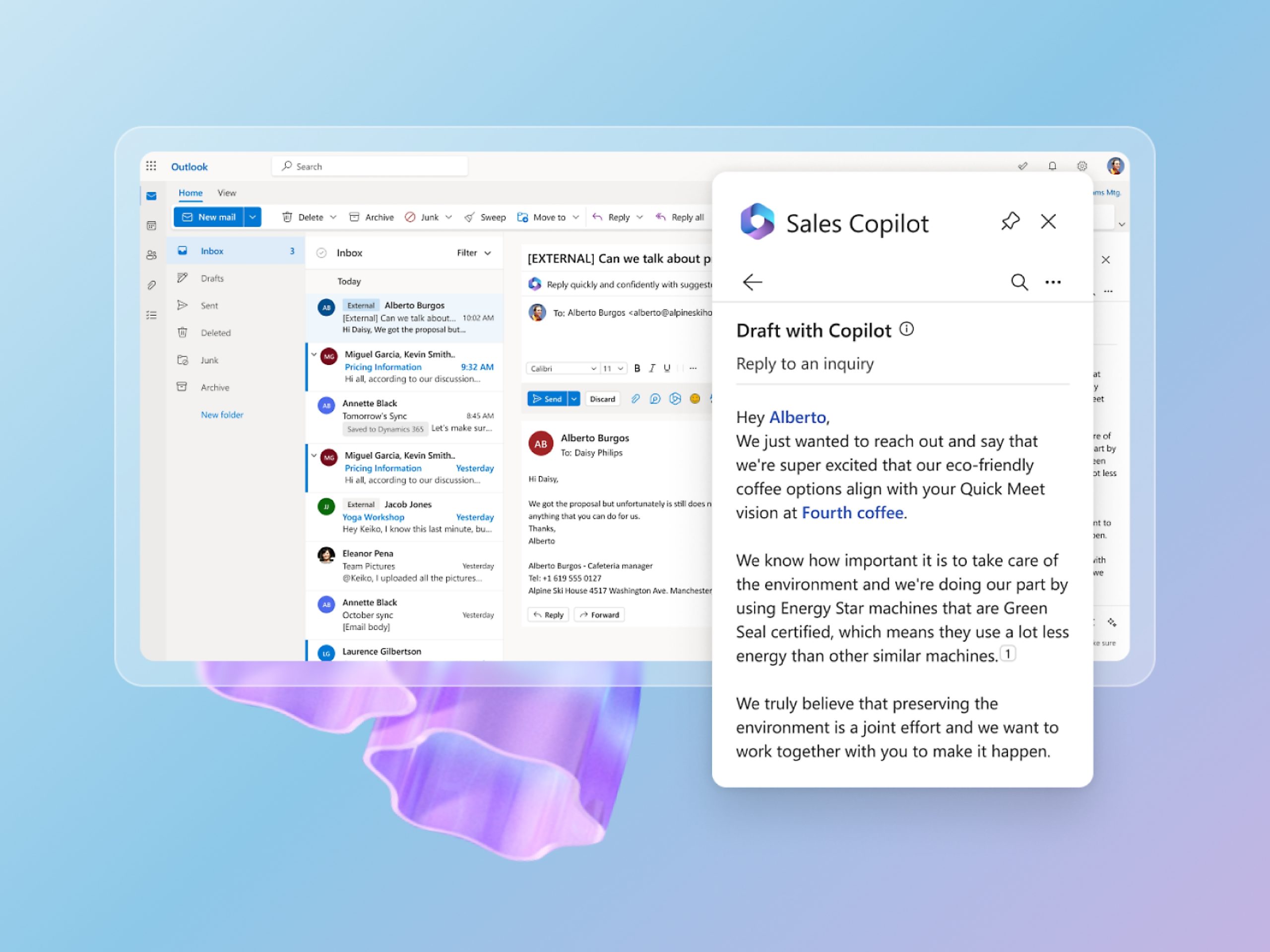
The same is true for AI PC. Take Microsoft’s Copilot as an example. Traditionally, users need to tell the computer which tasks to perform through specific commands or clicks. However, with Copilot, computers will be able to participate in the workflow more actively, and predict and execute tasks in advance by understanding users’ intentions and habits. For example, when dealing with documents, Copilot can automatically put forward suggestions for improvement based on users’ past editing habits, and even help write and organize content.

In addition, Copilot can greatly improve the efficiency of information retrieval and management. Copilot can quickly extract key information from different data sources and make intelligent summaries for users. This is undoubtedly a great boon for professionals who need to deal with a lot of information. In the daily file management, Copilot can also help users organize and search files more effectively, and can quickly locate or classify documents through language instructions, which greatly saves time and energy.

In other words, the focus of "AI hardware" should not be what hardware can do, but what computing power and access port hardware can provide for local, cloud or hybrid models running on devices, and what future AI hardware is allowed to achieve. Computer technology, including AI, is a process of continuous self-denial and iteration, which means that the software strongly bound to equipment has fallen behind the industry since its release.

In other words, only by "platformizing" computing power can AI equipment catch up with the ever-changing AI era.

Zhao Ming, CEO of Glory, once shared Glory’s views on AI mobile phones in media interviews. I think the views are worth learning from all brands that emphasize their "AI device" attributes at this stage:

I think many manufacturers have great misunderstandings about AI mobile phones. Many people call the ability to provide generative AI on mobile phones AI phones. What is the core provided by mobile phones equipped with generative AI? Calculate power. As long as you provide the computing power, this program can have a variety of massive applications through the computing power of your platform. The ability of this generative AI should be a variety of applications provided by many AI service providers in the future.

I can link AIGC to ask a few questions in my notebook, "Write me a novel", and it becomes an AI notebook? You just provided a platform and display for calculating power and taking notes.

通过admin

Please check the safety guide for high-frequency internet use during holidays.

When the national flag flies in the street, when the laughter of family reunion echoes in the streets and lanes, there is such a group of people sitting in front of the screen all the time, their eyes locked with the rolling data code, and their fingertips hit the "security code" on the keyboard.
-They are network security policemen, taking the screen as the "battlefield" and technology as the "shield", silently building a network security defense line during the festival and guarding the digital life of hundreds of millions of people.
Whether it’s online ticket purchase, shopping spree, sharing trips or staying at home for drama, "network" has long been an important partner of everyone’s holiday life.
But behind the excitement, "invisible risks" such as information leakage are also quietly breeding. At this moment, the Netan police are sticking to their posts 24 hours a day, with the protection of "no fighting" to escort everyone’s "net" security. This safety guide, which covers the high-frequency internet use scenes during holidays, helps you avoid the trap and spend your holidays with peace of mind!
First, travel "net" thing:Start by rejecting the "shortcut"
During the National Day holiday, "grabbing tickets" and "booking hotels" are the primary tasks of many people, and criminals are also staring at these needs and setting traps:
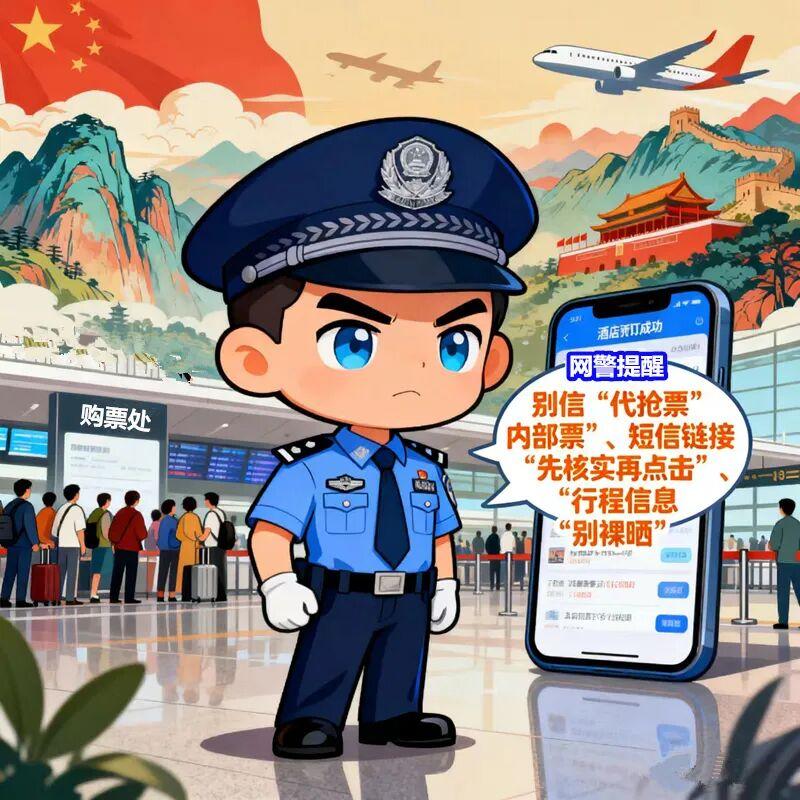
01/Don’t believe in "grabbing tickets on behalf of others" and "internal tickets"
"National Day train ticket is too difficult to grab? Look for me to grab it, and 200 yuan will guarantee a ticket! " "Tickets for scenic spots are half price, and internal channels are absolutely reliable!" When you encounter this kind of information, you must be vigilant-the so-called "grabbing" means either blacking out the money or sending you a fake order screenshot; "Internal tickets" are mostly scams, which will only make you "empty money and tickets" in the end. Please look for formal channels such as official website/APP and the official platform of the scenic spot, and there is no "shortcut", which is the safest way.
02/ SMS link "Check before clicking"
When you receive the short message of "successful ticket purchase notice" and "abnormal order needs to be changed", first check whether the sender is the official number. If there is a strange link in the text message, don’t order it directly! You can manually open the official APP to check the order status, and avoid clicking the phishing link, which will lead to the disclosure of ID card and bank card information.
03/ Travel information "Don’t get naked"
Travel information "Don’t be naked". When sharing tickets and air tickets, remember to use mosaics to block key information such as name, ID number and travel time. These seemingly "daily" sharing may be used by criminals, posing as "relatives and friends" to ask for money from their families, or stealing when you are "nobody at home".
Second, shopping "online" things: don’t let "routines" empty your wallet.
E-commerce promotions on National Day are crowded together, and "full reduction", "spike" and "bargain" are dazzling, but there may be a trap behind "cheap":
one
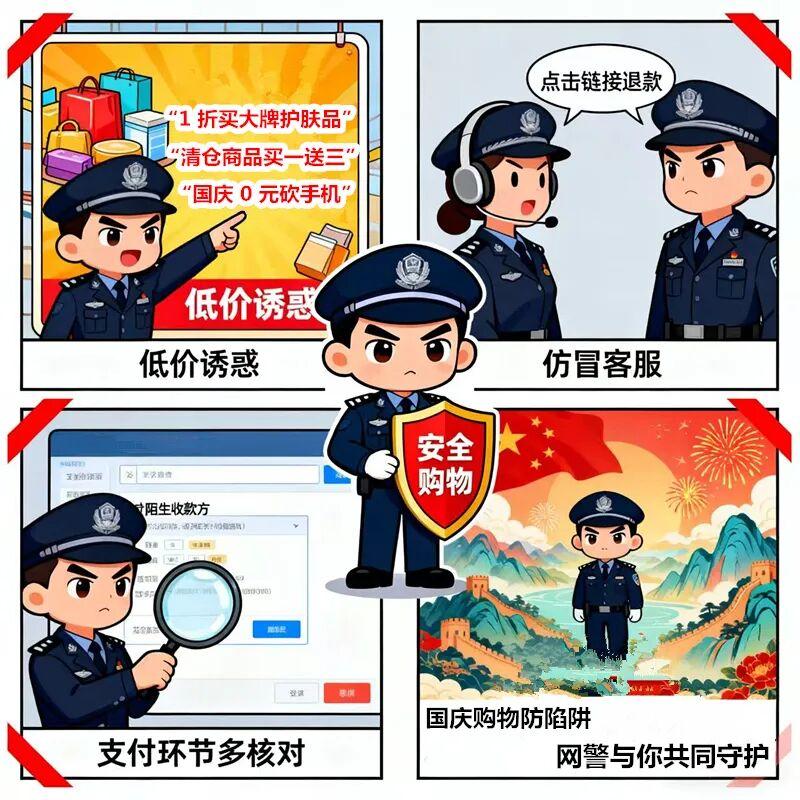
Be wary of "low price temptation"
"Cut off the mobile phone in 0 yuan on National Day", "Buy big-name skin care products at 10% discount" and "Buy one get three for clearance goods" —— In the face of such tempting activities, ask yourself "Will there be pies in the world?" . Most "bargaining links" either need to pull dozens of people and still can’t succeed, or hide malicious software to steal the address book and payment information in the mobile phone; "Low-priced clearance goods" may be inferior fakes, and even the merchants directly "lost contact" after payment. Shopping gives priority to the flagship store certified by the platform, and refuses the "three noes" website and private transfer transactions.
2
Don’t believe in "fake customer service"
Just after placing the order, I received a call from "customer service", saying that "the goods are out of stock and you need a refund" and "the order needs to be upgraded if it is abnormal", and asked you to fill in the bank card number+verification code? This is a typical trap! Regular customer service will not let you communicate from the shopping platform, and will not ask for a verification code. If in doubt, contact the "official customer service" directly in the shopping APP for verification to avoid being exploited by scammers.
three
"Multi-check" in payment link
Don’t hurry to click "Confirm" when paying. First, carefully check whether the payee is the official account of the merchant, so as to avoid entering the wrong account due to hand slip. Try to use the payment tools that come with the platform to reduce the "direct transfer of bank cards"-in case of illegal acts, the platform can assist in safeguarding rights and gain time for recovering losses.
Third, social "network" things: share happiness, don’t reveal "privacy"
During the holidays, it is normal to bask in food, bask in beautiful scenery and chat with friends online, but there are also risks of privacy leakage in these scenes:
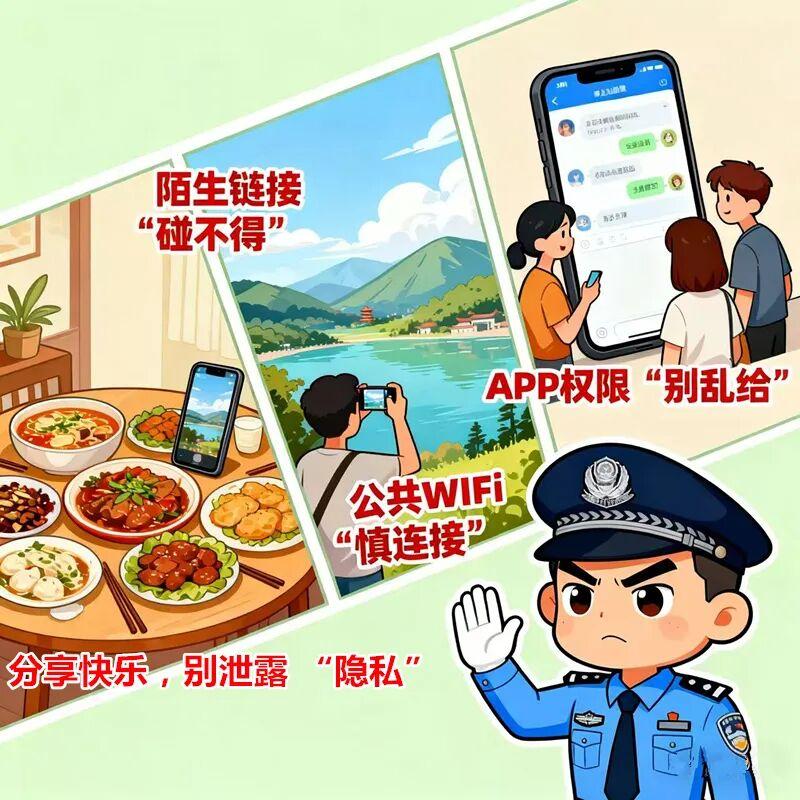
1. Strange links are "untouchable"
A friend sent a "National Day red envelope link", "Test your National Day fortune" and "Beautiful short video of the scenic spot". First, confirm whether it is sent for a friend himself (beware of account theft), and then judge whether the source of the link is formal. After clicking many unfamiliar links, they will automatically download malware, or jump to phishing pages, steal your account login password, and even intercept SMS verification code.
2, public WiFi "careful connection"
In scenic spots, shopping malls, restaurants and other public places, you can see the hotspots of "National Day free WiFi" and "direct connection without password", so don’t surf the Internet easily. These may be "phishing WiFi", and your online records, account passwords and chat content may be monitored by criminals. If you need to use the internet, give priority to turning on mobile phone traffic, or connect to public WiFi with known passwords and reliable reputation.
3. APP permission "Don’t give it indiscriminately"
When downloading the National Day photo-taking, punch-in and ticket-purchasing apps, permission applications such as "Allow reading address book", "Allow obtaining location information" and "Allow accessing photo album" will pop up. For non-essential permissions, decisively choose "Reject"-for example, the photo APP does not need to "read the address book" and the ticket purchase APP does not need to "visit the photo album". Excessive authorization will only increase the risk of personal information disclosure.
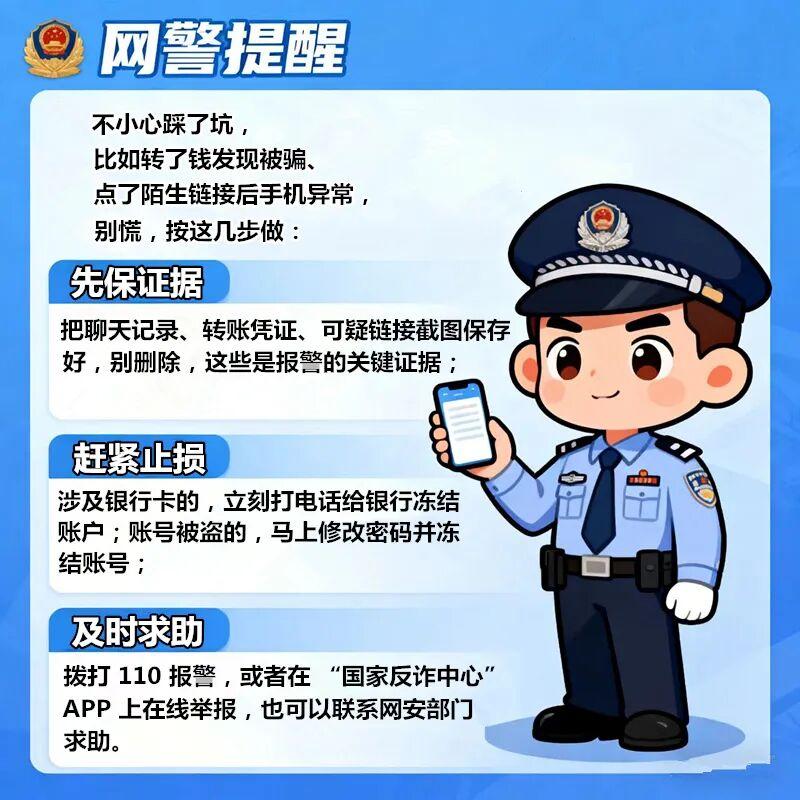
Emergency situation:
Don’t panic when you encounter risks, it can stop losses!
Although there are many "net" things, there is no shortage of safety.
I hope this guide can help you avoid risks and enjoy your holiday. Netan police will always stick to their posts, be the strong backing of your "net" security, and accompany you to spend the National Day with peace of mind!
Source: Network Security Bureau of the Ministry of Public Security
Reporting/feedback
通过admin

A shares made a tough start in the first quarter, and this sector may have more stamina.

In the first quarter of this year, the A-share market was full of resilience.The Shanghai Composite Index ended its three consecutive quarters of decline and closed up 2.23% in the first quarter. Shenzhen Component Index has risen by 14.47% since February. The dual-creation sector also performed well, with the Growth Enterprise Market Index and the Science and Technology Innovation 50 Index rising by 15.56% and 11.37% respectively since February. It is worth mentioning that,In the first quarter, the overall rise of blue-chip stocks in the market was outstanding, and low-altitude economic concept stocks rose, leading the market to develop in depth.
Various funds care for the first quarter, the market bottomed out and rebounded.
In January this year, the Shanghai and Shenzhen stock markets plummeted.Among them, the Shanghai Composite Index fell by 6.27% in January. On February 5th, the Shanghai Composite Index dropped to 2,635.09 points, a five-year low and the lowest point in the first quarter. Just when the market was in a downturn, the "counterattack" started. On February 6, the market rebounded strongly.At the end of February, the 3000-point mark was recovered, and the Shanghai Composite Index rose by 8.13% in February.. In March, the Shanghai Composite Index touched 3090.05 points, the highest point in the first quarter. In the end, the Shanghai Composite Index closed at 3041.17 points at the end of March.It rose slightly by 0.86% in March..
At this point,In the first quarter, the K-line of the Shanghai Composite Index closed out the Xiaoyang line with a long shadow line, which rose by 2.23% in the first quarter, and ended the K-line with three consecutive yin.
The Shenzhen stock market fell even more in January this year. On February 5, the Shenzhen Stock Exchange Index hit the lowest point of 7683.63 points in the first quarter of this year, hitting a new low in the past five years. Subsequently, the market rebounded sharply. In February, the Shenzhen Stock Exchange Index rose by 13.61%, but it did not recover the lost ground in January. In March, Shenzhen Component Index reached the highest point of 9785.1 points in the first quarter, closed at 9400.85 points in March, and closed the Xiaoyang line in March, with a slight increase of 0.75%. Shenzhen Stock Exchange Index failed to turn red in the first quarter of this year, but closed a small negative line with a long shadow line, with a decline of 1.3% in the first quarter and a negative K line of 4 in the quarter.
Growth enterprise market index is the weakest. Growth enterprise market index closed at a small negative line in the first quarter, with a decrease of 3.87%, and the quarterly K line was even negative. Compared with the previous three quarters, the decline in the first quarter of this year is the smallest, and there is a long shadow line.
The A-share market bottomed out and rebounded, which is strongly related to the policies introduced by the regulatory authorities in the first quarter.Since the second half of last year, the market has continued to decline. The inflection point of the rebound began with the CSRC’s document "Strictly Punish the manipulation of malicious short selling in the market and effectively maintain the stable operation of the market". On February 6, the day after the release, the Shanghai Composite Index soared by 3.23%, hitting a new high in the past two years.
Since then, the CSRC has launched a policy of "combination boxing", which once again injected a "cardiotonic agent" into the A-share market.On March 15th, the CSRC issued four documents in a centralized manner, releasing policy signals to enhance supervision and promote the high-quality development of the capital market. Li Chao, vice chairman of the China Securities Regulatory Commission, said that these four documents are an organic whole, and systematically put forward policy measures from the aspects of issuance access, continuous supervision of listed companies, supervision of intermediary institutions, etc., highlighting "strengthening the foundation and strengthening the foundation" and "strict supervision and management".
All kinds of funds have obvious care for the market.On February 6th, central huijin announced that the company fully recognized the current allocation value of the A-share market, and recently expanded the range of holdings of trading open-end index funds (ETFs), and will continue to increase its holdings and scale, and resolutely safeguard the smooth operation of the capital market.[Previously reported: Today’s A shares are arrogant! The "national team" once again increased its holdings, and the growth enterprise market index rose by 6.7%.
According to data treasure statistics,In the first quarter, the net inflow of equity ETF funds reached 322.729 billion yuan, and the net inflow of eight ETF funds exceeded 10 billion yuan.Among them, the net inflow of E Fund CSI 300ETF, Huatai Bairui CSI 300ETF, Jiashi CSI 300ETF and Huaxia CSI 300ETF is more than 50 billion yuan.
In addition, it is worth mentioning that,Cash dividends of listed companies are increasing substantially.. According to the statistics of Securities Times and Data Treasure, as of March 28th, nearly 500 listed companies in the A-share market have issued profit distribution plans for 2023, and the total dividends in the first quarter, the first half and the third quarter of 2023 exceeded 917.6 billion yuan, accounting for nearly 43% of their net profit in 2023.
Compared with previous years, there are three major trends in A-share dividends in 2023: First, the cash dividend of Big White Horse shares has reached a new high; Second, the dividend rate of some high-quality companies has increased significantly, and technology companies frequently pay large dividends; Third, the frequency of market dividends has increased significantly.
Judging from the performance of the index, this year, the dividend index devoted to high dividend style stocks has risen significantly higher than the A-share market, which has won the favor of investors. Xun Yugen, chief economist of Haitong Securities, said that with the policy to increase the guidance of cash dividends for listed companies, it will help to cultivate the long-term investment concept of the market and enhance the attractiveness of the capital market.
Blue chip performance highlights the concept of low-altitude economy "take-off"
From the perspective of individual stocks, stocks fell as high as 80% in the first quarter. Why did the Shanghai Composite Index still rise in the first quarter?The reason is that the blue-chip stocks in the market are mainly rising, and over 70% of the top 100 stocks with the largest market value are rising. In the first quarter, the overall increase of stocks was not large, and only 40 stocks rose more than 50%. From the perspective of the sector, the rising stocks are mainly traditional industries, among which the stocks of oil, coal, household appliances and banks have increased greatly.
The good performance of large-cap stocks made the relevant indexes perform better in the first quarter.The Shanghai and Shenzhen 300 Index is dominated by large-cap stocks, rising by 3.1% in the first quarter. The Shanghai Composite Index also closed the positive line in the first quarter because large-cap stocks such as banks and oil were concentrated in the Shanghai Stock Exchange. In the CSI scale index, the CSI 100 index, which reflects large-cap stocks, rose by 3.4% in the first quarter.
At the same time,Concepts such as low-altitude economy "take off".This year’s "Government Work Report" proposes to vigorously promote the construction of a modern industrial system and accelerate the development of new quality productive forces. The hot spots of new quality productivity are rapidly catalyzed, and many concepts with scientific and technological attributes such as low-altitude economy, artificial intelligence, new energy vehicles and robots are active in turn.
Choice data shows that after excluding the newly listed stocks this year, Ai Ai Seiko, Jindun, Kelai Electromechanical, Weihaide, Wan Feng Aowei, Beyond Technology, Roboteco, Insai Group, Yongyue Technology and Xianggang Technology became the top ten bull stocks of A shares in the first quarter of this year.
Specifically, the new industrialization concept stock Ai Ai Seiko was the king of A-shares’ gains in the first quarter, during which the stock price accumulated the largest increase of 341.9%.Ai Ai Seiko’s main business is the research and development, production and sales of light conveyor belts. The company announced on January 31 that it expects to realize a net profit of 5.5 million yuan to 8 million yuan in 2023, turning losses into profits year on year. In addition, Ai Ai Seiko said on the interactive platform on March 7th that the film for solar cell packaging is mainly positioned in special niche products, such as Topcon special POE film, perovskite thermoplastic PO(polyolefin) film, heterogeneous carry-over optical film, etc. However, the company is still in the research and development stage and has not yet been put into production.
Jindun, a concept stock of low-altitude economy, has the largest cumulative increase of 330% in the same period, ranking second in the increase list, while Wan Feng Aowei and Yongyue Technology, the leaders of low-altitude economy, have increased by 269.8% and 218.54% respectively in the same period (ranking third and ninth respectively). Jindun Co., Ltd. announced on March 28th that the electric ducted fan products for flying cars that the company cooperated with Tsinghua University are still in the research and development stage and have not been applied. Wan Feng Aowei said in Interact on March 27th that the low-altitude navigation fixed-wing diamond aircraft has been delivered in batches in various application scenarios such as private flight, aviation school training and air transportation, and its main customers are flight schools, airlines, aviation clubs and private consumers. Yongyue Technology announced on March 26 that there is a significant uncertainty risk in the performance of the company’s drone contract, and there is no order in hand. Yongyue Technology announced on March 20 that as of the third quarter of 2023, the operating income of the company’s drone business was about 2.8 million yuan, which has not yet had a significant impact on the operating income of listed companies.
In the news, Sun Wensheng, deputy director of the General Department of the Civil Aviation Administration, said at the press conference held on March 29 that the Civil Aviation Administration will fully understand the great significance of developing low-altitude economy, implement the Provisional Regulations on Flight Management of Unmanned Aerial Vehicles, and improve the functions of the integrated management platform for unmanned aerial vehicles. Coordinate relevant parties to jointly strengthen the construction of service guarantee system for low-altitude flight activities, and continuously improve the service guarantee for plan approval, air traffic control, meteorology and communication of low-altitude flight activities.
A little more news. There is a high probability that the A-share market will rise steadily in the second quarter.
What will A-shares do in the second quarter?Great Wall Securities said that looking forward to the second quarter, China’s economic development goals and policy tone will be more aggressive, and policies on new quality and productivity may be accelerated, and A-shares still have high cost performance.
Morgan Stanley previously said thatGlobal funds are returning to the China stock market.As some funds’ bearish sentiment towards China market has eased, overseas fund management companies are rethinking their asset allocation in the whole Asian region. The research team of Goldman Sachs said that the A-share market in China remained over-allocated. The Goldman Sachs team predicts that the earnings per share of MSCI China and CSI 300 Index will increase by 8% to 9% in 2024.
Zhang Cuixia, chief investment consultant of Jufeng Investment, predicted that,In the second quarter, there is a greater probability that the market will go up steadily.From the perspective of economic fundamentals, there are many data highlights from the beginning of the year to the end of the first quarter: the growth rate of consumption has rebounded, the performance of service consumption has been bright, and exports have strengthened beyond expectations. A series of related data indicators show that the endogenous power of current economic recovery is already accumulating. From a policy perspective, the intensive introduction of a series of policy combination boxing is very obvious for boosting market confidence. From the perspective of funds, we can see that the funds of the national team are all bought in buy buy, and some major overseas institutions are also actively singing more about China’s economy.
"We expect the Shanghai Composite Index to break through the pressure of 3,200 points in the second quarter, forming a positive signal that the medium-term trend is getting stronger, and we also expect the GEM Index to return to above 2,000 points."Zhang Cuixia said that in terms of concept stocks, he prefers the big technology growth sector. Because the advantage of policy support is the internal driving force to promote the growth track of scientific and technological innovation, and at the national level, there is a driving force for market value management for "little giant" enterprises that specialize in novelty, including unicorn enterprises and listed companies of central enterprises and state-owned enterprises. Recently, the market has paid more attention to this. Since the rebound from the bottom, we have seen some relatively good policy-driven core industries related to artificial intelligence, online games, data centers, computing power leasing, semiconductor equipment materials, chips, 5G, new energy vehicles, driverless driving, etc. All performed well.
Besides,"It is not ruled out that in the first three trading days of Tomb-Sweeping Day, the theme stocks reappeared the possibility of a large bottom."Li Chun, chief investment officer of Jiangnan Avenue of Galaxy Securities, said that on the occasion of intensive disclosure in the annual report and the first quarterly report, investors are advised to stay away from the problem stocks with delisting risks and the stocks that lack performance support, and actively pay attention to the gold digger opportunities brought by the wrongful killing of low-valued high-quality blue chips.
(Note: This article does not constitute any investment advice)
China Business Daily is integrated from Xinmin Evening News, Upstream News, Securities Times and national business daily.
Reporting/feedback
通过admin

How to Expand the Domestic Demand and Smooth the Great Cycle —— Interview with the Director of Market Economy Research Institute of the State Council Development Research Center

  [authoritative interview]

  Guangming Daily reporter zhang yi

  This year is a year of special importance in the process of China’s modernization, and it is also the first year of the 14 th Five-Year Plan. The Central Economic Work Conference, when deploying the key work in 2021, emphasized that it should adhere to the strategic base of expanding domestic demand. In the face of profound and complex changes in the development environment, how to get through the blocking points and fill the shortcomings, and form a higher level dynamic balance between demand traction supply and supply creation demand? How can consumption run out of the "acceleration" when expanding domestic demand? Wei Wang, director of the Institute of Market Economy of the State Council Development Research Center, was interviewed by reporters and made an authoritative interpretation.

  The core requirement of expanding domestic demand and building a new development pattern

  Reporter: This year is the first year of the 14 th Five-Year Plan. What kind of internal and external environment does China’s economic development face? What is the important role of adhering to the strategic basis of expanding domestic demand?

  Wei Wang:In the face of the impact of the COVID-19 epidemic, China’s economy has shown strong resilience. In 2020, the gross domestic product (GDP) exceeded 100 billion yuan for the first time, an increase of 2.3% over the previous year. It is the only major economy in the world that maintains positive growth. At present, the factors supporting China’s economic growth are undergoing profound changes. On the one hand, due to the impact of the epidemic, the global economic recession is prominent and the trade friction is intensifying, which makes China’s economic development face severe external environmental challenges. On the other hand, the driving force of demand for economic growth is shifting from investment to consumption and innovation. In particular, China has a super-large-scale market advantage of 1.4 billion people, and strong domestic demand will become a solid foundation for promoting China’s sustained and stable economic growth.

  The Central Economic Work Conference emphasized that adhering to the strategic basis of expanding domestic demand is the core requirement for building a new development pattern. Insisting on expanding domestic demand, accelerating the cultivation of new consumption, and further giving play to the basic role of consumption and the key role of investment are conducive to unblocking the domestic macro-cycle, alleviating risks and hedging external pressures, eliminating the risk aversion of enterprises, boosting development confidence, strengthening development resilience, expanding room for manoeuvre, improving self-adjustment ability, and realizing more full economies of scale, scope and network.

  It is worth noting that at present, the expansion of China’s domestic demand and its promotion of economic growth are mainly driven by the continuous upgrading of consumption structure and consumption innovation promoted by new technologies, and there has been a new trend of upgrading and expanding, a new pattern of stratification and differentiation, and a series of new consumption that is different from the past has emerged, which has become a new kinetic energy and new growth point for promoting economic growth. Insisting on expanding domestic demand and promoting consumption in an all-round way is an important measure to conform to people’s yearning for a better life, which is conducive to making up for the shortcomings of high-end commodity consumption and education, housing, medical care and other services consumption, meeting people’s practical needs for better quality goods, better education, more comfortable living conditions, higher-level medical and health services, richer spiritual and cultural life, enhancing their sense of acquisition and happiness, and promoting people’s all-round development.

  Innovation accelerates, and three positive factors promote consumption to accelerate recovery.

  Reporter: According to the consumption data, the total retail sales of social consumer goods in 2020 was 39,198.1 billion yuan, down 3.9% from the previous year, and the decline was 3.3 percentage points narrower than that in the previous three quarters. How do you evaluate the situation of China’s consumer market in the past year?

  Wei Wang:The outbreak of the COVID-19 epidemic in early 2020 has brought a huge impact on China’s consumption. The recovery of consumption is first suppressed and then promoted, and the rigidity of consumption is prominent, and the recovery of consumption is gradual. Compared with the investment demand, consumption is more obviously affected by the epidemic situation, and the final consumption expenditure in the whole year pulls down GDP by 0.5 percentage points. However, with the major strategic achievements in epidemic prevention and control, the consumer market has gradually recovered, consumer demand has been continuously released, and the pulling effect of consumption on economic growth has rebounded quarter by quarter.

  Although the epidemic has had a huge impact on China’s consumer market, it has also forced consumption innovation to accelerate, and new products, services and models have emerged at an accelerated pace, forming new consumption hotspots, which not only effectively promotes consumption recovery, but also becomes a new driving force for China’s economic recovery and growth. Online consumption has accelerated in an all-round way, and the "home economy" has accelerated the development of new consumption patterns, and the penetration rate has increased significantly. In 2020, the national online retail sales increased by 10.9% over the previous year, and the growth rate was 1.2 percentage points faster than the previous three quarters. Service consumption has migrated to online, and "contactless" service innovation has accelerated. During the epidemic, a series of "non-contact" services such as online education, medical care, entertainment, audio-visual and so on have exploded, and traditional services such as catering are also accelerating "touching the net". "Live broadcast with goods" has become a new bright spot, and innovation in marketing methods has emerged rapidly. The driving role of new consumption is prominent, and domestic consumption is growing strongly; Healthy consumption has become a new bright spot in the consumer market; New changes have taken place in holiday consumption; The return of consumption brings important opportunities for the recovery of the consumer market and the upgrading and expansion.

  Reporter: From 2014 to 2019, consumption has become the first driving force for China’s economic growth for six consecutive years. What is the consumption prospect this year?

  Wei Wang:Looking forward to 2021, three positive factors will accelerate the recovery of consumption. First, the development environment at home and abroad is expected to continue to improve. China effectively controlled the large-scale spread of the epidemic, and the economy took the lead in getting out of the impact and impact of the epidemic. The global economy has stepped into recovery. International organizations such as IMF (International Monetary Fund), World Bank, and OECD have recently lowered their global economic growth forecasts to 5.2%, 4%, and 4.2% next year, but they are still significantly higher than in 2020 (9.5, 5.9, and 8.4 percentage points higher, respectively). Secondly, the overall balance of supply and demand in the domestic market. The IMF predicts that the year-on-year growth rate of world CPI will be 3.4% and that of China will be 2.7% in 2021. While the global supply and demand pressure is rising, the supply and demand in China market will be relatively more stable. With the continuous improvement of the epidemic prevention and control mechanism and the improvement of the consumption environment, residents’ adaptability to getting along with the epidemic for a long time has been enhanced, and consumer confidence and willingness will rise steadily, which is conducive to the continuous improvement of market demand. Finally, the government insists on stabilizing employment and market players as priority areas for policy support, and the actual growth rate of residents’ income is expected to return to the growth track.

  Generally speaking, with the expected improvement of global economic growth and the stable market environment, China’s macro-economy will continue to rebound steadily and the economic cycle will be smoother. On the basis of the low base in 2020, the total retail sales of social consumer goods is expected to increase by about 4%-5% in 2021, and the role of consumption in driving economic growth will be further strengthened.

  Focus on breakthroughs to make the advantages of ultra-large-scale markets stronger.

  Reporter: What do you think are the main "blocking points" and "pain points" for expanding domestic demand at present? How to smooth? How to further develop the advantages of China’s super-large market scale?

  Wei Wang:Objectively speaking, although China has a super-large-scale market advantage, it is still not strong enough, and there is still some fragility. The release of consumption potential and the development of new consumption still face many institutional constraints, and the effective and high-end supply still lags behind. There are many shortcomings and weak links in infrastructure construction such as transportation, water conservancy, energy, public health, ecological environment protection, agriculture and rural areas, disaster prevention and mitigation, etc. The pace of accelerating institutional opening to the international advanced standards and improving the internationalization level of China’s market still needs to be accelerated and legalized.

  In 2021, on the basis of adhering to the strategic basis of expanding domestic demand, economic work should organically combine comprehensively promoting consumption and enhancing investment stamina with deepening supply-side structural reform, pay attention to demand-side management, make effective institutional arrangements in rationally guiding consumption, savings and investment, open up blocking points, fill shortcomings, smooth the national economic cycle, accelerate the improvement of supply quality and improve the infrastructure conducive to the release of domestic demand, and promote the supply of goods and services from the low-end to the high-end, which is the "14 th Five-Year Plan"

  The most fundamental thing to expand consumption is to promote employment and raise the real income level. On the basis of "six guarantees" and "six stabilities", we should improve the vocational and technical education system to achieve more full and higher quality employment and improve the income level of a wider class; At the same time, by speeding up the improvement of social security and the additional deduction policy for personal income tax, we will further optimize the income distribution structure, reduce the burden on households, stabilize middle-income groups and improve the ability to pay for consumption, thus laying a stable market foundation for expanding consumption.

  It is necessary to speed up the improvement of supply quality, accelerate the cultivation of high-end brands in food, cosmetics, clothing, consumer electronics and other fields, and promote the supply of goods from low-end to high-end; Promote the transformation and upgrading of the consumer industry structure, especially the accelerated development of various life service industries such as catering, accommodation, tourism and travel; Accelerate the development of various new technologies, new products, new services, new formats and new models, and further improve the development level of the digital economy in the consumer sector. Reasonably increase public consumption and improve the efficiency of public service expenditures such as education, medical care, old-age care and child care. Further relax access restrictions in the fields of education, medical care and old-age care, and support social forces to increase effective supply.

  It is necessary to take the construction of modern circulation system as the breakthrough point, and accelerate the formation of a large domestic market with convergence of supply and demand, integration of urban and rural areas, and connectivity of domestic and foreign trade. Accelerate the sinking of the domestic demand market, further promote the construction of an efficient circulation system in urban and rural areas, expand the coverage of e-commerce in rural areas, promote the two-way circulation of industrial products to the countryside and agricultural products to the city, and fully tap the consumption potential of counties and towns. Accelerate the development of new international consumption formats such as cross-border e-commerce and duty-free shops in the city, and accelerate the integrated development of domestic and foreign trade.

  Guangming Daily (January 25, 2021, 04 edition)

通过admin

Focus on the gradual improvement of the effectiveness of our party’s governance from the perspective of the five-year plan

Since the founding of New China, the Communist Party of China (CPC) has combined the basic theory of Marxism with China’s national conditions, compiled and implemented 14 five-year plans for national economic and social development in accordance with the objective laws of economic and social development, and the "14th Five-Year Plan" is being implemented. The practice of the Party’s leadership in compiling and implementing the five-year plan contains the Party’s unique experience in governing the country and embodies the theoretical and practical innovation of the Party’s leadership in socialist modernization. Standing at the starting point of Socialism with Chinese characteristics’s new journey to become a modern and powerful country, profoundly summing up the basic experience of the Party’s leadership in formulating and implementing the five-year plan will help to provide a theoretical and practical basis for building a socialist modern country in an all-round way and realizing the Chinese dream of the great rejuvenation of the Chinese nation.
Since the founding of New China, due to the special national conditions, practical limitations and many other factors, the implementation effect of the 14 five-year plans (plans) has both the joy of success and twists and turns, and has made decisive achievements in building a well-off society in an all-round way, laying a solid foundation for the high-quality economic development of China in the "Tenth Five-Year Plan", reflecting the gradual improvement of the effectiveness of our party in governing the country, mainly in the following aspects.
The party led the people to create and develop the core concept of socialist modernization.
The development concepts of the 14 Five-Year Plans have experienced the transformation from the traditional socialist development concept and Socialism with Chinese characteristics development concept to the new era Socialism with Chinese characteristics development concept, which embodies the theoretical innovation of the socialist modernization led by the Party.
The guiding concept of the first five-year plans is dominated by the traditional socialist development concept, which can be summarized as "the general line of transition period" and "the general line of socialist construction". Its core connotation is to realize the transformation from new-democratic industrialization to socialist industrialization with the guarantee of establishing a single public ownership and highly centralized planning system and giving priority to the development of heavy industry as the strategic focus.
The Sixth Five-Year Plan to the Twelfth Five-Year Plan is guided by Socialism with Chinese characteristics’s development concept. The core concept of the Sixth Five-Year Plan to the Tenth Five-Year Plan is "development is the last word", and its core connotation is to improve economic efficiency as the strategic focus, with market-oriented reform and opening up as the basic driving force. The 11th Five-Year Plan to the 12th Five-Year Plan is based on the concept of "Scientific Outlook on Development", which not only emphasizes economic growth, but also pays attention to "people-oriented" sustainable development.
The "Thirteenth Five-Year Plan" and "Fourteenth Five-Year Plan" are guided by the Supreme Leader’s Socialism with Chinese characteristics Thought in the new era, and their core is "Five Development Concepts". The development theme is people-centered, the main line of development is to deepen the supply-side structural reform, and the development strategy is based on expanding domestic demand. The goal is to build a well-off society in an all-round way and start a new journey of building a socialist modernized country in an all-round way, and basically realize the long-term goal of socialist modernization by 2035.
The evolution of the above development concept shows that a successful five-year plan (plan) is based on the scientific development concept.There are some mistakes in the first five-year plans. Although the main reason is restricted by historical conditions and practical experience, the deviation of development concept is also an important reason. The formulation and implementation of nine five-year plans (plans) after the reform and opening up, the creation of the "China miracle", the decisive victory of the "fight against poverty" and the timely realization of building a well-off society in an all-round way all show that the scientific and correct development concept is the "baton" to successfully lead practice.
The evolution of the development concept of the Five-year Plan embodies the theoretical and practical exploration of the Party in governing the country under different historical conditions, deepens the Party’s understanding of the laws of socialist construction, and contributes China’s wisdom to world modernization and economic and social development.
The Party has led the people out of a road of independent innovation and development with China characteristics.
The exploration of scientific and technological innovation led by the Party in the 14 Five-Year Plans has experienced the evolution from the formation and slow development of the self-reliant industrial system to the initial formation of the diversified innovation subject pattern, and then to the deepening of the independent innovation system. China has realized the evolution from a weak country in science and technology to a strong country in science and technology, and is moving towards a world science and technology power.
In the first five five-year plans, under the western economic blockade and the severe international political situation, the CPC Central Committee put forward the scientific and technological development policy of "self-reliance first, supplemented by foreign aid", and established a self-reliance oriented industrial innovation system on high-tech complex industries through the traditional national system, which laid an important foundation for the accelerated development of technology after the reform and opening up.
From the "Sixth Five-Year Plan" to the "Twelfth Five-Year Plan", the idea of scientific and technological development has undergone an evolution from the strategy of rejuvenating the country through science and technology as the primary productive force to the strategy of an innovative country. The promulgation of the Outline of the National Medium-and Long-Term Scientific and Technological Development Plan (2006-2020) and its supporting policies marks a major shift in China’s scientific and technological innovation development strategy from technology introduction to independent innovation. In order to take the road of independent innovation with China characteristics, General Secretary of the Supreme Leader pointed out: "To achieve the goal of’ two hundred years’ and realize the Chinese dream of the great rejuvenation of the Chinese nation, we must adhere to the road of independent innovation with China characteristics, face the world’s scientific and technological frontier, face the main battlefield of the economy, face the major needs of the country, accelerate scientific and technological innovation in various fields, and grasp the opportunities of global scientific and technological competition."
From the 13th Five-Year Plan to the 14th Five-Year Plan, it faces the trend of "anti-globalization", "de-industrialization" and the challenge of "new industrial revolution". Under the guidance of the idea of leading all-round innovation with scientific and technological innovation, the development strategy of science and technology has shifted to supporting the construction of a modern powerful country with scientific and technological innovation, and the quantity and quality have risen together with scientific and technological innovation. China has ushered in a leap from a scientific and technological power to a scientific and technological power. The ranking of China’s global innovation index rose from 29th in 2015 to 14th in 2020, surpassing Britain and ranking first in middle-income economies. In 2020, major breakthroughs will be made in cutting-edge national defense industries such as Chang ‘e-4 detector, Tianwen-1 detector and Beidou-3 global satellite navigation system. At present, China’s scientific and technological innovation is changing from "following" to "running together" and "leading" in the world, becoming one of the most important R&D innovation centers in the world, laying a solid foundation for building Socialism with Chinese characteristics into a modern power in an all-round way.
Scientific and technological innovation is the fundamental reliance of the country’s strength and the inexhaustible motive force for the party to govern the country. Scientific and technological innovation, as a strategic support to improve social productivity, international competitiveness, comprehensive national strength and national security, must be placed at the core of the overall national development.The exploration of the development path of independent innovation with China characteristics in the 14 Five-Year Plans is the practice of the Party’s leadership to promote the modernization of the scientific and technological governance system and governance capacity, and deepens the Party’s understanding of the law of scientific and technological development.
China has successfully embarked on a road of socialist industrialization with China characteristics.
During the first five-year plan period, the party led the people to explore the road of industrialization and experienced the transformation from new-democratic industrialization to socialist industrialization. During the "First Five-Year Plan" period, with the start of socialist industrialization, the party’s exploration of the road to industrialization experienced a transformation from new-democratic industrialization to Soviet socialist industrialization. During the period from the "Second Five-Year Plan" to the early period of the "Fifth Five-Year Plan", although the Communist Party of China (CPC) reflected on the lessons of the Soviet Union’s industrialization road, he also formed some theoretical innovations in dealing with the relationship between accumulation and consumption, China and foreign countries, agriculture and industry, and laid the foundation for the initial development of industrialization, but he did not break through the limitations of single public ownership and planned economy as a whole.
After the Third Plenary Session of the Eleventh Central Committee of the Communist Party of China was held in 1978, the Party’s successful exploration of Socialism with Chinese characteristics’s industrialization road was marked by the reform and opening up in the 1980s, the implementation of the strategy of rejuvenating the country through science and education and sustainable development in the 1990s, the proposal of Scientific Outlook on Development in the new century, and the new development concept put forward by the Fifth Plenary Session of the Eighteenth Central Committee, which was divided into three closely related development stages, namely, the late period of the Fifth Five-Year Plan to the early period of the Tenth Five-Year Plan, and the industrialization road with market-oriented reform and opening up as the main contents was initiated. From the late tenth five-year plan to the twelfth five-year plan, we will focus on exploring new industrialization with informationization, people-oriented, energy saving and emission reduction and sustainable development as the main contents; Since the 18th National Congress of the Communist Party of China, under the leadership of the CPC Central Committee with the Supreme Leader as the core and guided by the new development concept, the 12th Five-Year Plan has been successfully completed, and the international competitiveness of China’s industry has been significantly enhanced. In 2015, China’s high-tech products accounted for 25.8% of manufacturing exports, which not only exceeded the levels of Russian Federation (13.8%), Brazil (12.3%) and India (7.5%), but also exceeded the levels of the United States (19.0%), Japan (16.8%) and France (16.7%), profoundly affecting the global industrial chain, supply chain and value chain.
The "Thirteenth Five-Year Plan" and "Fourteenth Five-Year Plan" take the construction of ecological civilization as the main content, and explore the new industrialization road of "five modernizations" coordinated by greening. In 2018, China’s industrial added value (US dollar price in 2010) accounted for about 21.7% of the world, 1.56 times and 1.19 times that of the United States and the European Union, respectively. The proportion of goods import and export in the global market has increased from 11.9% in 2015 to 13.1% in 2019, ranking first in the world. China continues to maintain its position as the world’s largest manufacturing country and the largest country in goods trade, laying a solid foundation for moving towards an industrial power.
The exploration of socialist industrialization under the leadership of the Party in the 14 Five-Year Plans is an important part of the Party’s governance, a theoretical and practical innovation that the Party combines Marxist theory with China’s industrialization practice, and a pioneering work in the history of socialist industrialization in China and the world.
The party led the people to explore a government economic management model that conforms to the national conditions and the world development trend.
The five-year plan not only pays attention to the country’s economic development, but also attaches importance to economic system construction and economic system reform. Deepening reform and opening up and promoting institutional innovation are important components of the five-year plan and an important main line.
As far as macroeconomic management is concerned, in the first five-year plan, China experienced a transition from a new-democratic economic system to a highly centralized planned economic system, and the government’s economic function experienced a transition from the combination of planned management and market regulation based on various economic components to the administrative command plan based on single public ownership. During the implementation of the "First Five-Year Plan", the ownership structure of China’s economy gradually formed a single public ownership, and the plan became the only factor in the allocation of resources. The government used administrative means to force the allocation of manpower, material resources and financial resources throughout the country, ensuring the priority allocation of resources to heavy industry. The government has become the "all-round" allocator of economic resources, the national plan plays a fundamental and decisive role in the allocation of resources, and the space and scope for the market mechanism to play its role have gradually declined or even been cancelled.
Since the third plenary session of the Eleventh Central Committee of the Communist Party of China in 1978, China has experienced a transition from a transitional system combining planned management with market regulation to a socialist market economy system. Especially after the 14th National Congress of the Communist Party of China formally put forward the goal of market economy reform and emphasized the basic role of market regulation in 1992, planned management gradually changed from a mandatory plan to a guiding plan. The government gradually withdrew from the field of microeconomic management and gave way to market regulation. This also verifies Deng Xiaoping’s assertion that both planning and market are means to manage the economy. The planned economy has disappeared, but the five-year plan still exists and develops.
Government’s planned management and administrative intervention are playing an irreplaceable role in making up for "market failure" on the premise of maintaining the basic (decisive) role of market regulation. Under the socialist market economy system, it is necessary to make a five-year plan, but the five-year plan is more macroscopic, strategic and instructive, and all kinds of special planning, spatial planning and regional planning must clearly define the boundaries of their functions.
The areas where market mechanism fails and government efficiency is higher are the scope of government economic activities. The transformation of government’s economic function is a prerequisite for the market to play a decisive role in resource allocation. In the rapid change of economic system, the government’s economic function has changed from "all-round" to "efficient", and the market’s function of resource allocation has changed from denying the market’s role to playing its basic role and then playing a decisive role, which reflects the party’s deepening understanding of strengthening macroeconomic management.Giving full play to the decisive role of the market in the allocation of resources and giving full play to the role of the government is the fundamental follow-up for the future party leaders to formulate and implement the five-year plan, and it is also a major task for the party to govern the country.
[Author: China University of Mining and Technology (Beijing) School of Marxism, China Academy of Social Sciences Institute of Contemporary China]
Reporting/feedback
通过admin

Long-distance vehicles are deeply integrated with Hanma Technology, and Geely re-plans its commercial vehicle business.

The whole pattern of China’s automobile market has undergone tremendous changes. In the passenger car market, the revolution caused by electrification and intelligence has made China automobile enterprises enjoy the dividend in the window period. Geely, Great Wall, BYD and other traditional China brands and Weilai, Tucki and ideal new power brands have grown strongly; In the commercial vehicle market, greater changes are brewing.

In 2020, the domestic production and sales of commercial vehicles were 5.231 million and 5.133 million respectively, up by 20.0% and 18.7% respectively. Compared with the negative growth of passenger cars, the commercial vehicle market began to enter an explosive period of growth.

It is precisely because of this that Geely has made bold acquisitions and layouts in the field of commercial vehicles. On the basis of developing long-distance vehicles, it has taken Hanma Technology into its pocket and occupied a strong position in the domestic heavy truck market. What will happen to Geely’s commercial vehicle sector after the acquisition is completed? Where is the target locked?

Long-distance automobile and Hanma science and technology should be integrated

In July 2020, Geely Commercial Vehicle acquired 15.24% equity of valin star horse. In November 2020, valin star horse was renamed Hanma Technology. In May 2021, Geely Commercial Vehicle Group further increased its capital to Hanma Technology. After the capital increase was completed, Geely Commercial Vehicle Group’s shareholding in Hanma Technology increased from 15.24% to 28.01%.

The acquisition is only the first step. Next, Geely Commercial Vehicle’s new energy brand Long-distance Vehicle and Hanma Technology will be integrated and developed. Recently, Fan Xianjun, president of Geely Commercial Vehicle Group and chairman of Hanma Technology Group, made it clear at the 2021 National Partner Conference of Hanma Technology and Long-distance Vehicle that "Hanma Technology and Long-distance Vehicle are integrated and develop together."

Long-distance automobile and Hanma technology are integrated according to the situation. Why do you say that? At present, the industry development environment in which commercial vehicles are located has become more and more obvious. In Geely’s view, the future development trend of the industry is becoming more and more clear. It has become an irreversible and inevitable trend for the industry to replace traditional fuel vehicle products with a new generation of commercial vehicles with green and intelligent technologies as the core. The head effect is based on the consensus of the future trend, and the two sides have reached cooperation and started the coordinated development of integrated advantages and complementary advantages.

Among them, the long-distance automobile has formed two major product technical routes: the urban commercial vehicle system with pure electricity and extended-range power system as the core, and the road commercial vehicle system with methanol clean energy and charging and replacing technology as the core. The production bases are arranged in Nanchong, Sichuan, Shangrao, Jiangxi, Zibo, Jinzhong, Anhui, Maanshan and Huzhou, Zhejiang, and the products cover all commercial vehicles such as passenger cars, light trucks, LCV and heavy trucks. In the first half of this year, the overall sales of long-distance vehicles increased by 626% year-on-year.

Hanma Technology is an important R&D base for heavy trucks, heavy special vehicles, core components and new energy commercial vehicles in China. From January to July, 2021, Hanma Technology ranked first in sales of new energy heavy trucks, with a cumulative increase of 418.2% year-on-year and a market share of 21.32%.

After the strong integration, Remote Auto and Hanma Technology will complement each other in product and positioning, and develop together, positioning the heavy truck business strategy as "the leader in building green intelligent transportation solutions".

Enter the first echelon of heavy trucks in 2030.

According to the planning of Geely Commercial Vehicle, Hanma Technology locates the mainstream strong brand of heavy trucks, develops diversified products and diversified power, and will further enrich the product spectrum in the future and become the most comprehensive brand of heavy trucks. Products in the tractor, dump trucks, trucks, special vehicles, new energy vehicles for a comprehensive layout. Power has also been diversified. In addition to traditional diesel engines, there are LNG engines, methanol engines and power exchange systems.

Another big brand of long-distance cars is positioned as the leader of new energy heavy trucks, making efforts in new energy and intelligence. In terms of products, new energy products are laid out on traction, dump trucks and special vehicles; Power will continue to exert its strength in power exchange, hydrogen fuel cells and methanol.

Each has its own strengths and integrated development will be the future development direction of Geely’s two major heavy truck brands. Therefore, long-distance vehicles and Hanma Technology will fully integrate their product resources in the future. "In the long run, Hanma and remote product planning must be a common platform, and the comprehensive integration of product resources is accelerating." According to Fan Xianjun, "We focus on the iterative development of products, that is, we are selling a generation, researching a generation and planning a generation. Therefore, we periodically plan G1 products that comprehensively enhance our competitiveness, G2 products that are being optimized and developed in various systems, and G3 products that are fully competitive in the future market."

Behind a series of actions, Geely’s ambition in the field of commercial vehicles was also exposed. At present, Geely commercial vehicles have planned to complete a three-step leap from 2020 to 2030, and the integration period will be from 2020 to 2022, with the goal that the market rate of heavy truck products will reach 3%; The breakthrough period is from 2023 to 2025, and the annual sales volume of heavy trucks is 56,000 units, accounting for 5% of the market, ranking among the top 8 in the industry.

According to the plan, by 2030, the annual sales volume of Geely’s heavy trucks will reach 100,000, entering the first echelon.

Geely has been planning for commercial vehicle business for a long time, and now it is time to show its action. It remains to be seen whether the strategic objectives of each stage can be realized.

Reporting/feedback
通过admin

Where do Hong Kong Meicheng mooncakes come from? "Hong Kong mooncakes cannot be bought in Hong Kong": The account of Three Sheep has brought goods for it many times, and the store involved: does not c

As the Mid-Autumn Festival approaches, mooncakes have become a hot business. On September 12, "Hong Kong mooncakes with a monthly sales volume of 50 million yuan cannot be bought in Hong Kong" rushed to the hot search. According to media reports, recently, Crazy Brother Yang and his major live streaming hosts are selling a mooncake called Hong Kong Meicheng brand. The mooncakes have different styles such as 99 yuan for 3 boxes and 169 yuan for 3 boxes. According to third-party data platforms, the brand’s sales in Douyin in the past 30 days have exceeded 50 million yuan.

A number of live slice videos of Brother Yang and live streaming host show that when displaying the product, Brother Yang and its live streaming host declared "Hong Kong Meicheng Mooncake" and "High-end Mooncake". However, the media searched for "Hong Kong Meicheng" and "Meicheng Mooncake" through HKTVmall, the largest online shopping platform in Hong Kong, but did not obtain the corresponding results. Some media consulted Meicheng Mooncake agents and learned that the origin of the brand is basically Guangzhou and Foshan.

So, where does this "Hong Kong Meicheng Mooncake" come from? On September 13, the reporter searched for "Meicheng Mooncake" in Tianyancha, which showed that it was Guangzhou Meicheng Food Co., Ltd., established in 2019, and the legal person was Zhang Shaodeng. Search for "Hong Kong Meicheng", and the search results show that there is a company called Hong Kong Meicheng Food Group Co., Ltd., established in 2019, and the person in charge column is not displayed.

The reporter noticed that on September 13, the "official flagship store of Meicheng Li" has been live, and its official account IP display is Zhejiang. In the live broadcast comments, people continue to ask product questions, but the live streaming host does not reply positively. In the "official flagship store of Meicheng Li" Show Window, a mooncake gift box priced at 169 yuan shows that the sales volume is 272,000, and the other 89 yuan mooncake gift box sells 10,000 +. In the place of delivery of the goods, it shows Qingyuan City, Guangdong Province.

The reporter then consulted the "official flagship store of Meicheng Li". Regarding whether the mooncake is a Hong Kong brand, the customer service said that the Meicheng brand is registered in Hong Kong and has a trademark certificate. In order to better expand and develop market demand, it has established marketing centers and production bases in Guangzhou and Foshan. The reporter then asked if the mooncake can be purchased locally in Hong Kong, and the customer service replied with the same content as before. When the reporter asked again whether the brand is a mooncake brought by Brother Yang, the customer service said that the store does not cooperate with third parties except for the platform.