标签归档 西安桑拿论坛

通过admin

K Financial Report | NIO (Part 1): Sales revenue has risen, not only is there no profit, but the loss is even greater

The more cars are sold, the higher the income, but when can the loss stop?

On the evening of April 2, NIO disclosed its delivery performance for March and the first quarter. The next day, NIO’s Hong Kong stock price rose by 2.14%, but it fell by 7.63% and 5.6% respectively in the following two trading days. Its US stock price fell for three consecutive trading days.

Coincidentally, when NIO disclosed its 2022 earnings and February sales in early March, the first feedback from NIO’s dual-stock was equally optimistic. So how did NIO perform in March and the first quarter? What about its performance in 2022?

The first quarter of the first quarter met expectations, and the sales volume was "among the best"

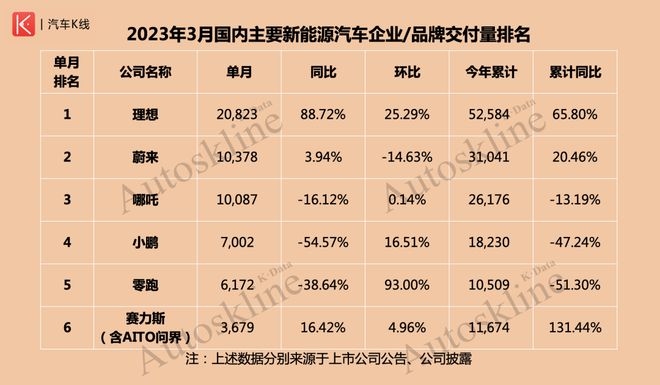
Data show that in March, NIO deliveries were 10,400, an increase of 3.94% year-on-year, down 14.63% month-on-month; among them, 3203 high-end smart electric SUVs were delivered, and 7175 high-end smart electric cars were delivered. In the first quarter of this year, NIO deliveries were 31,000, an increase of 20.46% year-on-year.

In terms of industry level, whether in March or the first quarter, among several new power car companies, NIO’s performance can be regarded as "among the best". In addition to being led by Li Auto, Nezha, Xiaopeng, Zero Run, etc. were all left behind by NIO. It is worth mentioning that the ideal sales volume in March was twice that of NIO.

However, once upon a time, the throne of the new power delivering the championship has been firmly occupied by NIO. Whether the future NIO can regain the championship throne is uncertain, but it seems unlikely this year.

This can be seen from the annual sales target and current sales performance of NIO and Ideal 2023: the former’s goal this year is 250,000 vehicles, the first quarter sales of 31,000 vehicles, to complete the annual sales target of 12.4%; while the latter’s goal is between 250,000 – 300,000 vehicles, the first quarter sales of 52,600 vehicles, to complete the annual sales target of 21.04% -17.53%.

From the current data performance, NIO has suffered a lot.

It is worth noting that although NIO has achieved its sales target for the first quarter of this year, it can only be said to be a near miss.

According to NIO’s previous expectations in the 2022 annual performance report, its delivery volume in the first quarter of this year will be between 31,000 – 33,000 vehicles, an increase of about 20.3% -28.1% year-on-year. It can be said that NIO completed the delivery task in the first quarter.


"The image is from the NIO announcement."

In addition, NIO expects revenue guidance for the first quarter of this year to be 10.62 billion – 11.54 billion yuan, an increase of about 10.2% -16.5% year-on-year. But there is no clear guidance for earnings expectations.

However, it may be reasonable. After all, NIO, which saw a 33.97% year-on-year increase in sales in 2022, has not achieved profitability despite a significant increase in revenue. Instead, its losses have further expanded.

Sales revenue has skyrocketed, so why are there more losses?

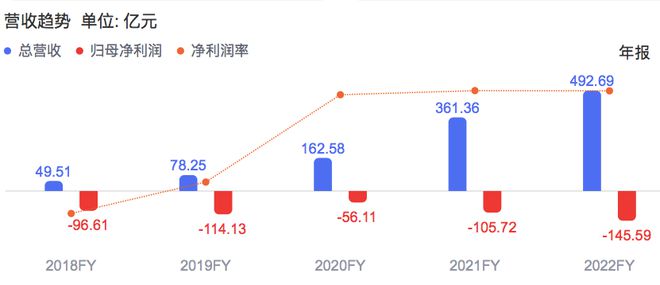
According to the financial report disclosed by NIO, in 2022, NIO sales reached 122,500 vehicles, an increase of 33.97% year-on-year; revenue reached 49.269 billion yuan, an increase of 36.34% year-on-year.

From the perspective of sales and revenue data, both have reached new highs, and NIO’s performance last year seems to be good. However, in the face of both sales and revenue growth exceeding 30%, NIO’s overall profitability not only did not rise, but its losses further expanded.

The financial report shows that NIO’s net profit attributable to the parent last year was a loss of 14.559 billion yuan, 10.572 billion yuan from the loss in 2021, an increase of 37.71% year-on-year.

At the same time, NIO’s bicycle net profit also changed from a loss of 115,600 yuan in 2021 to a loss of 118,900 yuan in 2022. That is, in 2022, NIO lost nearly 120,000 yuan for every car sold.

In addition, NIO’s net loss reached 14.437 billion yuan last year, compared with the net loss of 4.017 billion yuan in 2021, and the loss expanded by 2.6 times.

The question is, sales are rising and revenue is increasing, so why are you losing more and more money? Where is the money being spent?

From the financial report, the two largest expenses of NIO are sales costs and research and development expenses, which alone cost nearly 55 billion yuan, directly exceeding revenue.

Specifically, in 2022, NIO’s sales cost reached 44.125 billion yuan, an increase of 50.5% year-on-year. This is not unrelated to last year’s "expensive electricity" and the large-scale laying of replacement stations, charging stations, charging piles, etc., which has become a direct cause of dragging down NIO’s profitability.

In 2022, affected by the skyrocketing price of lithium carbonate, battery costs skyrocketed simultaneously, which also caused the cost of new energy vehicles to rise sharply, which in turn led to a sharp drop in automotive gross profit margins. According to the financial report, NIO gross profit margin has dropped from 20.1% in 2021 to 13.7% in 2022.


"The image is from the NIO announcement."

NIO’s R & D expenses last year were as high as 10.836 billion yuan, up 136% year-on-year from 4.592 billion yuan in 2021, accounting for nearly 22% of revenue. Whether it is from the investment amount or the proportion of revenue, it can be regarded as a big deal in the automotive industry, which shows NIO’s emphasis on R & D.

You know, Li Auto and XPeng Motors invested 6.78 billion and 5.215 billion yuan in research and development last year, respectively, while accounting for 14.97% and 19.42% of revenue respectively.

To sum up, NIO’s sales revenue has increased, but it still loses money "for a reason", but for a for-profit company, this is obviously not "reasonable", but exposes its lack of cost control and profitability.

So, is the NIO that loses money really bad? Please continue to pay attention to "Automotive K Line", and we will look for answers in the next article of the NIO 2022 financial analysis article.

The text is original by [Car K Line], some pictures are sourced from the Internet, and the copyright belongs to the original author. The article of this number may not be reproduced without authorization, and violators will be investigated. At the same time, the content of the article does not constitute investment advice to anyone. The stock market is risky, and investment needs to be cautious.

通过admin

How can one person manage 2,000 acres of land?

On the big screen, each field has its own exclusive information and digital code, and can learn about planting information and the latest situation of crop growth and environment in real time. It can also give production operation plans based on soil, weather, and crop growth data through artificial intelligence algorithms, so as to achieve accurate implementation.

This is the "three-yuan farm intelligent system" developed by the Chongqing Shuyun Smart Agriculture Science and Technology Academy of China Agricultural University (hereinafter referred to as "Shuyun Science and Technology Academy"), which has been rooted in Chongqing for more than four years, and has brought changes to Chongqing Banan Shengtian Village, Dianjiang Biqiao Village, Rongchang Shabazi Village, etc.

One person can easily manage 2,000 acres of land

In Shengtian Village, the 2,000-acre grain and oil base here is very "smart" because it has a smart grain and oil planting management system. From planting seedlings on cultivated land, spraying irrigation to harvesting, the whole process only needs a computer and a system to realize remote management.

From the large-screen data monitoring page, you can not only see the distribution of fields and the planting area of various crops, but also monitor the real-time picture of each field, as well as the temperature, humidity, and moisture content of the soil at different levels.

"After the crops are harvested, the relevant products can also be standardized and traceable on this system, ensuring the quality and safety of agricultural products." Zhu Feng, the relevant person in charge of the grain and oil base, introduced that each batch of products can see the environmental data of its origin and production process through the QR code. For consumers, the whole life process of agricultural products is completely transparent.

The digital landscape is clear on the screen. Photo by interviewee

The digital landscape is clear on the screen. Photo by interviewee

It is understood that to ensure the standardization of the quality of agricultural products, the teachers and students of Shuyun Science and Technology Institute introduced the concept of industrial ERP management, developed farm management Enterprise Resource Planning, condensed the "three-yuan farm intelligent system", and standardized production management of the whole process. The field is equipped with multiple sets of Internet of Things devices, including sensors, weather stations, cameras, edge computing devices, etc., which turn the situation in the field into data, and digitize the farm to a large screen at the first time. One person can manage more than 2,000 acres of land. At present, the technology has been applied in more than 10 farms in Chongqing.

Book agricultural machinery homework like "online car-hailing"

During the spring ploughing season this year, Jietingyan, a villager in Helu Village, Shilong Town, Banan District, experienced the efficiency and convenience of "one-click order" for agricultural machinery services for the first time. "After I placed an order on the online platform, someone replied to me in a few minutes, and the machine came to the field to work the next day!"

Agricultural industry Internet platform "Yunjian". Photo provided by respondents

Agricultural industry Internet platform "Yunjian". Photo provided by respondents

The online platform on which Jietingyan placed the order is the "Yunjian · Agricultural Industry Internet Platform" (hereinafter referred to as "Yunjian"). During the research process, the teachers and students of Shuyun Science and Technology Academy designed and cooperated with enterprises to develop the "Yunjian" platform for agricultural materials, agricultural machinery, agricultural technology and other issues reported by farmers, mainly providing production, marketing, and other industrial chain services.

Among them, "Yun Agricultural Affairs" gathers most of the agricultural machinery socialization service teams in the region, and farmers can book agricultural machinery operations and full hosting at any time like "online car-hailing"; "Yun Agricultural Materials" provides agricultural materials collection and distribution services, which reduces the cost of agricultural materials; "Yun Production" provides planting and breeding digital management tools; "Yun Experts" can ask experts agricultural technology questions online or request on-site guidance.

In addition, there are more than 10 agricultural services such as "Yun Adoption" and "Yun Service" to jointly empower the regional agricultural industry.

At present, the platform has settled in 24 service organizations and more than 200 pieces of agricultural machinery information in Banan District, and nearly 130 agricultural machinery operators provide operation services on the platform. Since its launch, a total of 34,307 mu of operation area (including high-standard farmland) has been released, and the order amount is more than 3.3 million yuan.

通过admin

Geely Galaxy L6 is listed, refreshing the value standard of A-class sedan

China Economic News Network (Liu Chenxi)On September 16, Geely Galaxy L6 was officially launched, launching 60km pure electric battery life AIR version, PLUS version and 125km pure electric battery life PLUS version, MAX version and starship version, a total of five models, the national unified retail price is 115,800~ 1 49,800 yuan, will also enjoy seven car purchase gifts. AsGeelyA blockbuster strategic model that practices the concept of "building an intelligent boutique car for everyone", Geely Galaxy L6 comes standard with four "firsts": Acupuncture is only the entry standard, the proportion of thermoformed steel in the whole vehicle far exceeds the same level, safety first! 1.5TD Raytheon hybrid engine, the world’s first in mass production thermal efficiency! 247 km/h fastest car is far ahead, performance first! Xingrui Smart Computing Center, the first in China’s manufacturing computing power! ItsforAThe premium sedan market sets new benchmarks in safety, performance, energy efficiency, comfort, and intelligence,Is currently15The smartest boutique in the 10,000-class sedan market.

In terms of security that new energy users are most concerned about, Geely Galaxy L6 does not do "test-oriented" security, but ratherProtect the vehicle indiscriminatelyEvery passengerSafety. ItsThe Aegis battery safety system installed has successfully passed all-round, no dead ends,Safety far beyond the national standardTest.includeThe most difficult and demanding battery acupuncture test in the industry,Battery pack seawater corrosion immersion test,Three-sided drop whack test,External fireTest.Positive and negative bottom scraping test,120 ℃The limit temperature difference test, etc.averageTo achieve no smoke, no fire, no leakage, no explosion, the battery safety far exceeds the same level.


Image 1 Source, Geely Galaxy L6


New energy vehicle safety should not only focus on batteries, but also on vehicle safety. It is understood that Geely GalaxyL6With the high safety afforded by the e-CMA intelligent electric hybrid native architecture that far exceeds the same level, the vehicle body is made of 72% high-strength steel.Exceeding a number of similar products.

In terms of formaldehyde volatiles, according to the test report of China Automotive Research, Geely GalaxyL6After experiencing40 ℃High temperature exposure2After an hour, the amount of formaldehyde evaporated in the car was only per cubic meter0.05G, much lower than the national standard per cubic meter0.08 g

In terms of energy saving and performance, Geely Galaxy L6 has also achieved the industry-leading level. Empowered by the new generation Raytheon Electric Hybrid 8848, Geely Galaxy L6 has the longest comprehensive battery life of the same class under WLTC conditions of 1370km. According to recent measured data, its fuel consumption for 100 kilometers of power loss is only 3.61L, and it only takes 6.3s to accelerate 100 kilometers. The top speed is a record of 247km/h "the fastest electric hybrid car".

Compared with the 1.5L self-priming engine and single-speed transmission generally equipped in the same class of cars, the 1.5TD Raytheon electric hybrid engine standard in the Geely Galaxy L6 series has a thermal efficiency of up to 44.26%, and is equipped with a 3-speed variable frequency electric drive DHT Pro.Ensure that the vehicle does not stall at full speedFar ahead of the single-speed transmissionFuel economy and high power performance

In addition, the native 29100N · m/deg torsional stiffness of the e-CMA intelligent hyperelectric architecture, as well as the combination of front McPherson and rear four-bar independent suspension, allowed Geely Galaxy L6 to achieve a speed of 80km/h in the wetland elk test, far exceeding its class.


Image 2 Source: Galaxy L6


The Geely Galaxy L6 is also comfortableNew standards in cockpitThe whole series is equipped with the only "marshmallow seat" in the same class as standard. The seat cushion is filled with a 15mm comfort sponge, the backrest is filled with a 20mm memory sponge, and the rear seats are also filled with a 270 ° wrapping soft touch +30° back tilt angle design, andlargest in the same class1000MmRear legroom, bringThe main driver is supported enough, the co-driver is soft enough, and the rear sofa offers a differentiated and comfortable experience.

In terms of intelligent experience, Geely Galaxy L6 has become a new generation of AI intelligent benchmark with the combination of intelligent cockpit and AI large model. The whole series comes standard with the strongest Qualcomm 8155 chip of the same level, supplemented by the advanced computing power of Geely Star Smart Computing Center, the Galaxy N OS intelligent operating system not only has a silkier touch, but also can realize visible speech, voice second response, and a richer software ecosystem. Geely’s self-developed map navigation, happy digestion music and other 42 commonly used apps and Mini Programs are all standard. With the help of the artificial intelligence model, Geely Galaxy L6 is also equipped with the first generative AI product in the automotive industry – Wow wallpaper, as well as AI voice interaction, AI music MV, AI children’s picture book, AI voice interaction outside the car, etc., allowing users to achieve seamless interaction inside and outside the car.

What’s more worth looking forward to is that the two versions of Geely Galaxy L6 Starship and MAX will push the "Galaxy Butler Sentinel Mode" to users through OTA at the end of the year, which can realize 24-hour 360 ° real-time monitoring of vehicles in the parking state, and push reminders to users when necessary.


通过admin

Four cost-effective speakers/audio recommendations with excellent sound quality! Take your music experience to the next level!

In modern society, technological progress has promoted people’s continuous improvement in quality of life, especially in the demand for diverse music experiences. In order to meet the different needs of various groups, a variety of products have emerged on the market. This article will select four hot-selling speaker products in the current market for you.

First up is Xiaomi’s Xiao Ai speaker Pro, which has powerful functions in its obsidian shape. Data shows that more than 3 million users have purchased this product, and thousands of people buy it every day. This speaker is equipped with Bluetooth gateway function, which can easily control traditional home appliances and smart devices, making your daily life more convenient.

Next up is Baidu’s flagship product. In addition to the basic audio playback function, it has a built-in 360-degree full-view camera, which supports practical functions such as infrared night vision and video calls. In addition, you can operate it remotely through a mobile app, making it ideal for home life. Statistics show that as many as 200,000 people have chosen this product.

Let’s take a look at one of our familiar brands – Redmi. Equipped with an 8-inch high definition display, it can present a rich and vivid picture. At the same time, it can also provide various functions such as intelligent interaction and massive song resources, especially for children who love listening to music. According to statistics, more than one million people have purchased this product.

Finally, I would like to recommend to you the main work of the Rambler – the M30 computer stereo. With the support of the latest generation of Bluetooth 5.3 technology, its sound quality is quite outstanding. The unique design combines the cool RGB light effect, which is eye-catching. According to statistics, more than 200,000 people have bought it.

All in all, the above four speaker products have their own characteristics. Whether you are looking for a smart speaker that can remotely control home appliances, or a product that prefers a large-size touchscreen, or a computer stereo that cares about high fidelity sound quality, you can find a satisfactory choice from them. I believe this article will allow you to understand these products more deeply, so as to make the best choice that best meets your needs.


dcdv.zol.com.cn
True

https://dcdv.zol.com.cn/846/8469118.html
Report
1920
In modern society, technological progress has promoted people’s continuous improvement in quality of life, especially in the demand for diverse music experiences. In order to meet the different needs of various groups, a variety of speaker products have emerged on the market. This article will select four hot-selling speaker products in the current market for you. The first is Xiaomi’s Xiao Ai speaker Pro, which has an obsidian-like shape.
通过admin

Detailed explanation of the four major highlights of Hongmeng OS! Huawei’s ambition is not just mobile phones, but "unified rivers and lakes"

  At the Huawei Developers Conference, held today in Songshan Lake, Dongguan, Huawei’s consumer business officially launched its new microkernel-based distributed operating system for all scenarios – Hongmeng OS.

  Yu Chengdong, CEO of Huawei’s consumer business, said in the main speech that in the traditional model of the past, the emergence of each new form of end point will be accompanied by the birth of new operating systems. "Whether it is in the PC era, the mobile Internet era, or the Internet of Things era that 5G is about to give birth to, different eras will give birth to different operating systems." Therefore, in the face of the upcoming era of full-scene intelligence, "there should also be corresponding operating systems." Yu Chengdong said bluntly: "With the advent of the era of full-scene wisdom, Huawei believes that it is necessary to further enhance the cross-platform capability of the operating system, including the ability to support full-scene, across multiple devices and platforms, and the ability to deal with low-latency and high-security challenges. Therefore, the embryonic form of Hongmeng OS has gradually formed. It can be said that the starting point of Hongmeng OS is different from Android and iOS. It is a brand-new microkernel-based distributed operating system for all scenes, which can meet the requirements of smooth experience of all scenes, architecture-level trusted security, seamless collaboration across end points, and multi-end point deployment at one time. Hongmeng should be born in the future."

  According to him, as early as ten years ago, Huawei began to lay out Hongmeng OS, and now with the continuous improvement of Huawei’s full-scene smart life strategy, Hongmeng OS will be the product of Huawei to meet the arrival of the full-scene experience era, play its lightweight, small and powerful advantages, take the lead in applying smart watches, smart screens, in-vehicle equipment, smart speakers and other intelligent end points, and strive to build a cross-end point integration sharing ecosystem, reshape a safe and reliable operating environment, and create a new experience for consumers.

  Four highlights of Hongmeng OS

  According to Yu Chengdong, the original intention of Hongmeng OS is to meet the high-standard connection requirements of full-scene intelligent experience, and Huawei has proposed a system solution with four major characteristics for this purpose.

  1. Distributed architecture for the first time for end point OS, enabling seamless collaborative experience across end points

  Hongmeng OS "distributed OS architecture" and "distributed soft bus technology" through the public communication platform, distributed data management, distributed scheduling capabilities and virtual peripherals four capabilities, the corresponding distributed application of the underlying technology implementation difficulty of application developers shield, so that developers can focus on their own business logic, like the development of the same end point to develop cross-end point distributed applications, but also enable end consumers to enjoy a strong cross-end point business collaboration capabilities for the use of scenarios to bring a seamless experience.

  2. Determine the natural fluency of the delay engine and high-performance IPC technology implementation system

  Hongmeng OS solves the problem of insufficient performance of existing systems by using two technologies: determined delay engine and high-performance IPC. Determined delay engine can allocate task execution priority and time limit in the system before task execution. High-priority task resources will be prioritized to ensure scheduling, and application response delay will be reduced by 25.7%. The small structure of Hongmeng microkernel greatly improves the performance of IPC (inter-process communication), and the process communication efficiency is 5 times higher than that of existing systems.

  3. Reshape end point device trusted security based on microkernel architecture

  Hongmeng OS adopts a new microkernel design, which has stronger security features and low latency. The basic idea of microkernel design is to simplify the kernel function, implement as many system services as possible in user mode outside the kernel, and add mutual security protection. Microkernels only provide the most basic services, such as multi-process scheduling and multi-process communication.

  Hongmeng OS applies microkernel technology to Trusted Execution Environment (TEE) to reinvent trusted security through formal methods. Formal methods are effective means to use mathematical methods to verify that the system is correct and free of vulnerabilities from the source. Traditional verification methods such as function verification and simulated attacks can only be verified in selected limited scenarios, while formal methods can verify all software running paths through data models. Hongmeng OS applies formal methods to end point TEE for the first time, which significantly improves the security level. At the same time, because the code volume of Hongmeng microOS kernel is only one thousandth of that of Linux macro kernel, its probability of being attacked is also greatly reduced.

  4. Support one development, multi-terminal deployment through unified IDE to achieve cross-end point ecological sharing

  Hongmeng OS relies on multi-end point development IDE, multi-language unified compilation, distributed architecture Kit provides screen layout controls and automatic adaptation of interaction, supports control drag and drop, and visual programming for preview, so that developers can efficiently build multi-end automatic running apps based on the same project, realize true one-time development, multi-terminal deployment, and realize a shared ecosystem between devices. Huawei Ark Compiler is the first static compiler to replace the Android virtual machine mode, allowing developers to compile high-level languages into machine code at one time in the development environment. In addition, Ark Compiler will support multi-language unified compilation in the future, which can greatly improve development efficiency.

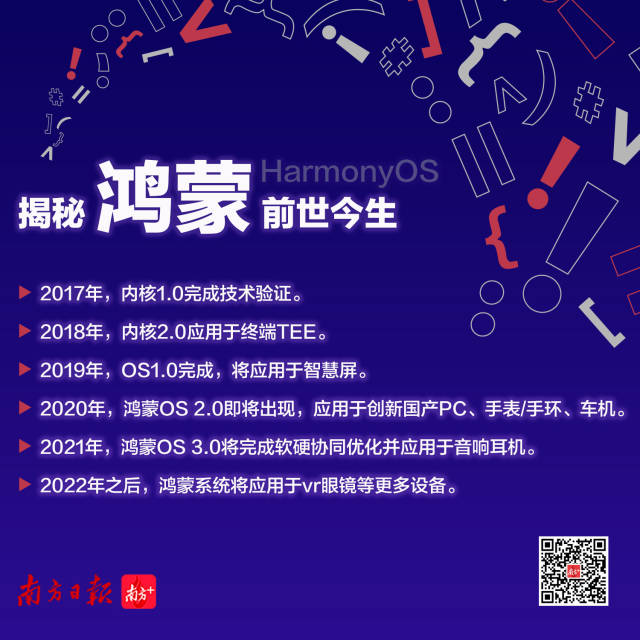
  The past and present life of "Hongmeng" OS

  In 2017, Hongmeng Kernel 1.0 completed the technical verification.

  In 2018, Hongmeng kernel 2.0 was applied to end point TEE

  In 2019, Hongmeng OS 1.0 was completed, based on the open-source framework, in which Huawei self-developed in key modules, using distributed architecture and ARK compiler. Determine the delay engine, launch TEE microkernel formal verification, multi-end point development IDE (Beta), and currently Hongmeng system will be applied to smart screens.

  In 2020, Hongmeng OS 2.0 is about to appear, the kernel and application framework are self-developed, the general micro-kernel architecture, high-performance graphics stack are launched, multi-language unified compilation, multi-end point development IDE, meet the car standard, and applied to innovative domestic PC, watch/bracelet, car machine and other products.

  It is expected that by 2021, Hongmeng OS 3.0 will complete soft and hard collaborative optimization, vertical acceleration file system, software and hardware collaborative high-performance IPC, and be applied to audio headphones. After 2022, Hongmeng system will be applied to VR glasses and other devices.

  Explanation of terms

  What is a microsystem?

  The micro kernel is a stripped-down version of the kernel that provides the core functions of the operating system. It is designed to increase portability in a small memory space and provides a modular design to allow users to install different interfaces, such as DOS, Workplace OS, Workplace UNIX, etc. New operating systems such as IBM, Microsoft, the Open Software Foundation (OSF), and the UNIX Systems Laboratory (USL) have all adopted the advantages of this research.

  [Nanfang Network All Media Reporters] Xu Jun, Gao Xiaoping, Huang Shaohong, Sun Junjie

  [Trainee reporters] Huang Haobo, Zhang Shiting

通过admin

Basically solve the elderly and foreign visitors to Beijing payment problems before the end of April cruise taxi cash payment barrier-free

  "Capital Window" released on March 26, in order to better meet the elderly, foreign visitors to Beijing and other groups of diverse payment service needs, "Beijing on the Further Optimization of Payment Services to Improve the Convenience of Payment Work Implementation Plan" recently issued, requiring by the end of April 2024, to achieve the cruise taxi cash payment barrier-free; by the end of June 2024, in the city’s three-star (inclusive) above the hotel, 3A (inclusive) above the tourist attractions to add a number of payment service facilities; by the end of December 2024, the basic solution to the elderly, foreign visitors to Beijing and other groups payment pain points difficult problems.

  The implementation plan is divided into 22 key tasks in five aspects, and the main responsible departments are clarified. Continuously improve the bank card acceptance environment and enhance the coverage of card payment, it is required to continuously improve the convenience of using bank cards for the elderly, foreign visitors to Beijing and other groups, and support the use of bank cards for public utility payment, medical care, tourist attractions, shopping malls and other convenient service scenarios. Relevant departments should focus on food, housing, transportation, tourism, shopping, entertainment, medical and other scenarios, and in accordance with the principle of "sufficient and necessary", determine the list of key merchants in large business districts, tourist attractions, tourist resorts, night culture and tourism consumption agglomeration areas, cultural expo venues, cultural and entertainment venues, hotels, transportation hub sites, medical institutions and other key places, and promote the inclusion of merchants in the list. The coverage rate of overseas bank card acceptance end points (POS machines) continues to increase.

  The convenience of bank cards in the transportation sector should also be further improved. Relevant departments should speed up the transformation of the software and hardware of bank card acceptance equipment, promote the realization of contactless payment in key travel scenarios such as subways, and provide "one-card" sales and refund services in key places such as Beijing Capital International Airport and Beijing Daxing International Airport.

  Continuously optimize the use of cash environment, in accordance with the law to ensure cash payment, the implementation plan proposes that the relevant departments should guide banking institutions to actively promote the network service senior-friendly transformation, reasonable retention of artificial cash counters, the establishment of the elderly payment business handling green channel; based on the elderly payment service needs, and constantly enrich all kinds of senior-friendly payment scenarios.

  According to the implementation plan, the city will further optimize the deployment of self-service teller machines (ATMs), increase the coverage of ATMs that support overseas bank card withdrawals, continue to optimize foreign currency exchange services, and standardize cash collection and payment work, especially to guide shopping, catering, accommodation, tourism and other people’s livelihood, and foreign-related business entities to publicly commit to receiving cash, and provide cash in sufficient quantities and different denominations according to the business volume, so as to guide the taxi industry to use change as a service standard.

  The implementation plan also points out that to promote the solution of the problem of cash "ticket purchase difficulty" and "travel difficulty", in parks, sports and fitness venues, tourist attractions, cultural centers, libraries, museums, art galleries and other places, keep manual ticket purchase windows to support cash payment.

  In terms of vigorously promoting mobile payment, optimizing account services, and strengthening publicity and promotion, the implementation plan has put forward a number of requirements, such as optimizing the mobile phone number business process for foreign visitors to Beijing, broadening processing channels, providing good international roaming services, and providing basic support for mobile payment and other services.

通过admin

Cancel taxi operating royalties in many places, or force them to reduce "molecular money"

Cancel taxi operation royalties in many places or force them to reduce "molecular money"

  Data map: Citizens prepare to board a taxi at the taxi waiting point of Beijing West Railway Station. Photo by Hou Yu, China News Agency

  China News Service, Beijing, March 26 (reporter, Li Jinlei) Taxi reform is blossoming at the local level, and exploration is moving forward. China News Service (WeChat official account: cns2012) reporter noticed that Shenzhen, Suzhou, Wuxi, Changzhou, Xuzhou, Nanchang, Nanjing, Ningbo, Jinhua, Hangzhou, Yiwu, Wuhan and other more than 10 cities have successively cancelled the paid use fee for taxi operation rights, and implemented free use of taxi operation rights.

  The free use of taxi operating rights has become a trend

  In October last year, the Ministry of Transport issued the "exposure draft" on deepening reform and further promoting the healthy development of the taxi industry, proposing to gradually implement restrictions on the period of operation rights and free use. All new taxi operation rights shall be used free of charge, and the main business entity shall not be changed. Local governments shall not introduce new policies on the paid use of operation rights. Where the paid use of operation rights has been implemented, the city people’s government shall consider factors such as fair competition in the market, formulate a scientific and reasonable transition plan, and gradually cancel the paid use fees.

  Recently, Shenzhen proposed to implement the reform of the taxi industry and realize the free use of operating rights, which attracted attention. China News Service reporters found that in addition to Shenzhen, since this year, Suzhou, Wuxi, Changzhou, Xuzhou, Nanchang, Ningbo, Jinhua, Yiwu and other cities have also implemented the free use of taxi operating rights.

  Among them, since January 1, 2016, Ningbo and Jinhua have cancelled the collection of paid use fees for urban taxi operation rights, and Yiwu has also cancelled them all. Nanchang also made it clear in February that it will stop collecting paid use fees for taxi operation rights from this year, and will refund the paid use fees for taxi operation rights actually collected in advance after January 1, 2016.

  Since March 1 this year, Suzhou City, Wuxi City, Changzhou City (excluding Jintan District), and Xuzhou City in Jiangsu Province have stopped collecting paid use funds for taxi operating rights, and implemented free use of operating rights.

  Earlier, Hangzhou, Nanjing, Wuhan and other cities have introduced policies to stop collecting paid use fees for taxi operation rights from 2015. Among them, Hangzhou also made it clear that the operation rights of taxis are 6 years each.

  Liu Xiaoming, director of the Department of Transport Services of the Ministry of Transport, said at a press conference during the National Two Sessions this year that the taxi reform has a very clear direction, that is, the right to operate taxis should be free of charge and limited, with the aim of enabling taxi services to enter a virtuous circle and to obtain the right to operate with high-quality services.

Data map.

  Data map.

  Or will force companies to reduce "portion money"

  "I work an average of at least 10 hours a day, the first eight hours are to earn’some money ‘, and the extra two hours are really my income," a taxi driver in Beijing Yinjian told China News Service.

  Under the background of the impact of the network "special car", the number of passengers and the decline in income, whether the "part money" can be reduced is a particularly concerned issue for the majority of taxi drivers. So, does the cancellation of the paid user fee for operating rights mean that my brothers and sisters don’t have to pay "part money" anymore?

  In fact, this is not the case. The paid royalties for operating rights are collected by the government from companies, and they are only part of the "part money". Liu Xiaoming revealed that although the standards and items of "part money" vary from place to place, on the whole, it includes vehicle depreciation, insurance, maintenance fees, driver’s basic salary, social insurance, business management costs, taxes, profits, and the allocation of operating rights royalties.

  However, after the cancellation of the paid use fee for the operation right, the burden of the taxi company will be reduced, and the "part money" will have room to decline. According to media reports, there are 4040 taxis in Wuxi urban area, and the paid use fee is 8,000 yuan per license per year. The cancellation of the taxi operation right use fee is equivalent to an annual profit of more than 30 million yuan.

  The Jiangxi Daily report also pointed out that the paid use fee for a taxi in Nanchang for 8 years is more than 60,000 yuan, and the paid use fee for 5 years is nearly 40,000 yuan. The implementation of the reduction and exemption of the paid use fee for the right to operate will force the enterprise to reduce the "part money" of the contractor.

Data map.

  Data map.

  "Part money" proposed in many places will be determined through negotiation

  After all, it is expedient to force enterprises to reduce "molecular money" by canceling the paid royalties for operating rights. How can we truly reduce "molecular money" and reduce the burden on taxi drivers through reform?

  China News Service reporter noted that the above-mentioned taxi reform exposure draft has proposed to encourage, support and guide taxi companies, industry associations and taxi drivers, trade unions to negotiate on an equal footing, reasonably determine the taxi contractor fee standard or quota task, and implement dynamic adjustments according to factors such as operating costs and freight changes.

  Some localities have also suggested that "portion money" will be determined through negotiation. On March 24, Shenzhen announced "four measures to streamline administration and decentralize power in the taxi industry to protect the legitimate rights and interests of drivers," including reforming the monthly payment quota ("portion money"), which will be determined by the company and the driver.

  Hangzhou also proposed to improve the organizational structure of taxi industry associations composed of operators and drivers, and promote the collective negotiation system of industry wages and contract fees.

  However, when it comes to negotiating to determine "part money", taxi drivers are generally worried that they are a disadvantaged group compared to enterprises, and the final negotiation result may not be satisfactory.

  In this regard, Liu Xiaoming believes that trade unions should play a very important role in negotiations. In fact, these three parties are more important, one is the trade union, the other is the enterprise’s industry association, and the other is the government, which regulates whether the enterprise has profiteering. Under such circumstances, trade unions and industry associations represent different interests, and the government plays a more regulatory and adjustment role in it. This is conducive to the healthy development of the entire industry and can better safeguard the interests of drivers. (End)

通过admin

Smart TV, no one survived

Since the birth of the electronic TV in 1927, the global sales crown at every stage has been a leader in new technologies. From CRT to rear projection, from plasma to LED, Sony, Panasonic, and Samsung have taken turns dominating the global TV market.

The TV industry has always been dominated by technology, following the law of technological innovation, technological maturity, and a natural decline in product prices from high to low.

Until Xiaomi TV appeared and bombarded the market with low prices, the market law was once broken. The market trend changed rapidly, and the idea of technological breakthrough was replaced by competition for low prices. Domestic brands were dragged into the quagmire of price wars, which also artificially increased the difficulty for future high-end.

Xiaomi’s entry into the TV industry is not just a product, but a model.

In October 2013, the first Xiaomi TV went on sale, and only 18,000 units were sold until the end of the year. The total sales volume of the domestic color TV market was about 47 million units that year, and the market share of Xiaomi TV was only about 0.03%.

At that time, China’s per capita disposable income was only 18,311 yuan, and the price was still the top consideration for most domestic consumers to buy TVs. In China, rising stars such as Hisense, TCL, and Skyworth have left behind the slightly outdated Changhong technology. Although Japanese and Korean high-end brands have no match in the global market share, they are difficult to maintain the forefront in the Chinese market.
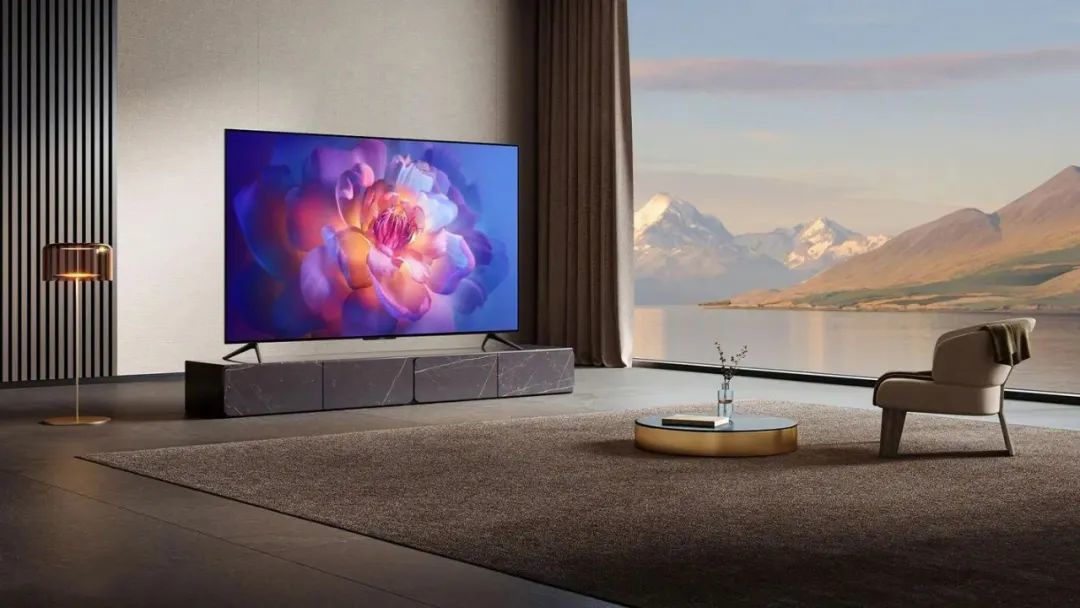
In the hearts of many consumers, Japanese and Korean TV brands are truly high-end. Sony and Samsung entered the industry early, with global leadership in patents and technologies and strong brand power. They have also gained higher premiums from it.

At that time, the technology of domestic brands was still growing, and foreign brands were "high and low", leaving a huge gap in the market.

With the launch of Xiaomi TV 2, Xiaomi TV sales exceeded 300,000 in 2014, entering people’s attention at a growth rate of 16 times. Xiaomi Internet + cost-effective play is suddenly enlightened.

Based on deep customization, MIUI TV transforms not only rice noodles, but the entire traditional TV client base, as well as the "Internet surfing" family.

Ambitious Xiaomi, a TV industry recruit with neither technical expertise nor strong brand appeal, has chosen its usual low-priced approach without suspense.

The first generation of Xiaomi TV has a 47-inch 8.4mm narrow frame, selling for only 2999 yuan. At the press conference, the Xiaomi-style slogan reappeared: "The first TV for young people"; perhaps it was consumers who waited and saw the new brand, which led to the first generation of Xiaomi TV’s listing being cold, while the second generation of Xiaomi TV pushed the price of the 40-inch ultra-narrow frame smart TV to 1999 yuan. This time, Lei Jun quickly made many friends.

In 2013, Internet TVs accounted for less than 1% of the domestic market. In an era when the Internet was developing rapidly and the smart TV industry had a market gap, Xiaomi TV used the Internet model to slash product prices.

The Internet ecosystem can become the main channel for Xiaomi’s TV profits, and the demand for hardware profits can be minimized, which almost replicates the way its mobile phones play and is also the model that Xiaomi is accustomed to.

Opponents have difficulty building an Internet ecosystem that can rival Xiaomi in a short period of time, and there is a relative lack of profit points other than hardware. The reason why first-tier domestic brands such as Hisense and TCL were able to successfully bring Changhong down lies in the great progress of exclusive technology until it surpasses. Xiaomi does not use technology to crush the market, but uses extremely low prices to drag opponents into unfamiliar battlefields.

The price is the appearance, and the support point is the Internet ecology. With Xiaomi TV becoming the domestic sales champion in 2019, the Xiaomi model has become the object of imitation in the industry, and the product price has become the focus of attention in the industry.

This has also indirectly led to an increasing number of peers prioritizing technological research and development over lowering product prices.

A team of domestic traditional TV brands began to make up for their shortcomings, each building a TV OS ecosystem based on it, increasing their profit points, and finally further reducing their hardware prices.

The price war is intensifying, consumers and brands are fixated on product prices, but fewer and fewer people pay for technology, craftsmanship and quality, and TV products are gradually "fast food".

At the same time, due to factors such as the relatively high cost of hardware due to brand identity and configuration of cutting-edge technologies, and the lack of profit points other than hardware in the Chinese market, foreign big-name TVs are gradually marginalized in the domestic low-end market.

According to Aowei Cloud Network data, only two foreign brands, Philips and Sony, ranked 8th and 10th among the top ten domestic TV sales in 2019, with sales of only a few million units, about one-tenth of Xiaomi’s.

Xiaomi TV has not only dragged domestic competitors into a price war, but also allowed foreign brands to further tilt their focus towards the high-end market in China.

With the traditional domestic TV brand Internet ecology, online channel construction and other shortcomings made up, no one has an absolute advantage in this price war, and some "micro-exercises" have begun to prevail. Real and fake 4K, old architecture towing new machines and other mixed industry chaos are frequent.

To some extent, this is a manifestation of manufacturers’ cost compression to the extreme.

In Q3 2022, Xiaomi’s internet service revenue was only 7.10 billion yuan, only about 10% of total revenue, and hovered between 7 billion yuan and 7.30 billion yuan for the sixth consecutive quarter, apparently not helped by hardware growth.

Internet revenue, as a fulcrum for Xiaomi TV to maintain low prices, may not be as strong as expected.

Once imitating the Xiaomi model, no one has succeeded in turning the Internet ecosystem into a revenue driver, while technology research and development has regained attention.

Consumption is under pressure, and brands that once pursued cost-effectiveness have seen an upward demand. The tide of high-end products has swept in, and low-end products have gradually become a painless spray.

Millet-style inner roll once triggered domestic peers to "actively go down", and the price melee undoubtedly solidified the "taste" of some users, and the brand was difficult to get out of trouble for a while.

Nowadays, brands that are proficient in going down have to consider how to go up.

Going high-end also means entering the home court of foreign brands.

Before 2016, Samsung also actively deployed low-end products in the Chinese market. However, as the price war intensified, domestic brand prices further declined, and online channels were already weak. Coupled with the lack of ecosystem in the Tizen system, Samsung TVs gradually fell short of their capabilities and completely withdrew from the price war stage. Since then, they have ranked last in the Chinese market for a long time.

The price war has squeezed Samsung and Sony out of the low-end market, and also stimulated them to completely move towards high-end. The industrial chain behind them also forms a virtuous circle around high-end.

The high premium of high-end products brings higher profits to the industrial chain. Theoretically, the investment in R & D can also be higher than the industry average to create cutting-edge technologies and consolidate high-end positioning. This is the logic of the industrial chain of high-end brands.

The Xiaomi model is completely different. By reducing the price of hardware to the extreme, the profit of the industrial chain is also reduced, which indirectly suppresses the technological progress of the industrial chain.

The cost-effective model is inherently unsustainable, prompting brands to rise; consumption is under pressure, the market is shrinking overall, and it has become more urgent for brands to raise demand.

Omdia data shows that global TV sales in the first three quarters of 2022 were 143 million units, down 4.4% year-on-year. TrendForce released data late last year, expecting global TV shipments to 202 million units last year, down 3.9% from 2021 and the lowest in nearly a decade.

The overall shrinkage of the TV industry has become a foregone conclusion, and domestic brands with an absolute share advantage in the domestic market have not shown a similar one-sided strong performance in the global market.

In the first three quarters of 2022, Xiaomi TV ranked fifth in the world with a 6.5% market share, and Samsung led the global TV sales list with an absolute advantage of over 20% market share.

Obviously, the "three-star model" is better.

The novelty brought to users by TV intelligence has long been gone, and Internet expansion has become a regular standard. As mentioned earlier, Xiaomi, which got up early, and the domestic brands that followed suit, failed to change the situation of low Internet revenue, but instead suffered brand damage in the price war.

Another drawback of the Xiaomi model is the potential for quality control after extreme price compression.

In May 2022, Xiaomi TV was exposed that the screen automatically fell off, and it was launched twice in three days, which once attracted widespread attention. In recent years, problems such as black screen and main board have also been complained by many Xiaomi TV users, and there is even a joke on the Internet: If it is over-insured, it will be bad.

Brands that have participated in the price melee have also frequently encountered similar quality control problems, but some brands can improve the problem to a certain extent by relying on their own production lines. In the fully OEM model, the quality control initiative is divided into two, and the extreme price compression will undoubtedly make things worse.

The frequent occurrence of quality control problems is extremely unfavorable for the brand to rise, and it relies heavily on the integration of third-party resources, and only "micro-innovation" to maintain fast-paced product iteration is not very helpful for technological development.

Comparing the data of the past four years, it is not difficult to find that although the market as a whole continues to shrink, the top ten rankings of global market share have hardly changed. In other words, relying on cost-effective tactics to kill the four parties in China, it is difficult to "eat all the sky in one move" in the global market.

Xiaomi TVs, which have often won sales in the domestic market in recent years, have been suppressed by TCL and Hisense in the global market. In the first three quarters of last year, TCL ranked third with a share of 11.7%, and Hisense ranked fourth with a share of 10.1%, continuing to lead Xiaomi.

The exclusive technological breakthrough has become a stepping stone to the high-end market of Hisense and TCL.

TCL has made technological breakthroughs in quantum dots, Mini LED, etc. to develop new display technologies; Hisense is also a major promoter of Mini LED, and it is a leader in the field of laser TV, accounting for 49.5% of the global laser TV market share in the first half of last year.

In terms of price, the flagship product of Hisense Laser TV is close to 100,000 yuan, the flagship of 8999 yuan flat-screen TV is "only" 85 inches, while the price of Xiaomi’s 86-inch flagship ES Pro is 7999 yuan, and Redmi’s 86-inch EA Pro is 5999 yuan.

The launch of Redmi has not allowed Xiaomi’s own brand to rise confidently, but has instead made Xiaomi’s TV product line slightly bloated and confused.

Redmi A, X, and MAX series are relatively easy to remember, while Xiaomi’s own brand TV models include Transparent, Master, Quantum Dot, Mural, Digital, EA, and ES series. This "machine sea tactic" reveals the chaotic product thinking of Xiaomi TV.

Users are easily confused when purchasing, and even if they recommend it to others, they are prone to misremember the model. It can be said that their ability to distinguish and remember is being tested.

The product line confusion is just a symptom of the Xiaomi model. At most, Xiaomi is not well-prepared to rise, which has limited impact on its high-end.
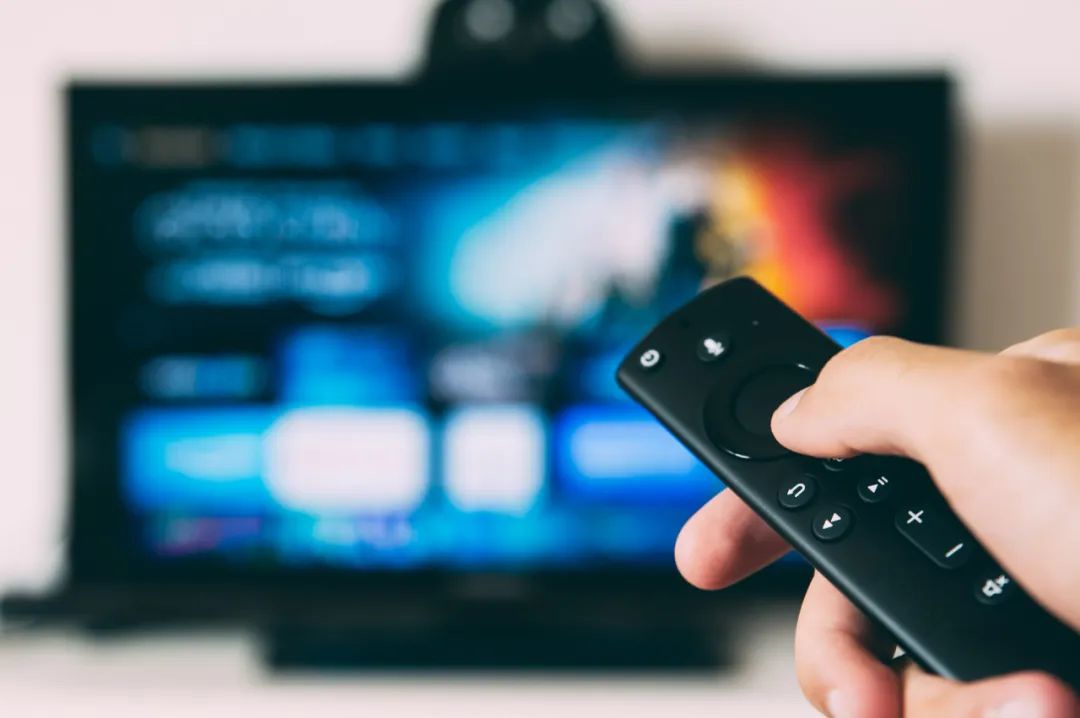
However, Xiaomi users’ perception of the brand’s value and the "Xiaomi model" that has long relied heavily on the supply chain have led to a relatively lack of exclusive technology, which may drag down the high-end process of Xiaomi TV for a long time.

The aftershocks of the price war have affected the high-end TV industry, which is not special. Manufacturers with comprehensive capabilities have always been the protagonists.

Compared with the "Xiaomi model", the "Samsung model" easily wins because of its advantages in technology, brand, global channels, and long-term important role in the upstream supply chain.

Similarly, domestic leading brands such as Hisense and TCL also place great emphasis on comprehensive development. The difference is that the price war has directly stimulated the traditional domestic brands to make up for the shortcomings of the Internet ecosystem. Their low-end product lines already have a strong cost-effective foundation, while brands with exclusive technical routes are undoubtedly more prominent.

The high and low ends are strong enough, and in the context of consumption pressure, it is undoubtedly a two-handed preparation. The "Hisense, TCL model" seems to be more sustainable.

As products move towards high-end, brand temperament also needs to keep up. Although controversial advertising slogans catch the eye, they run counter to high-end, which is not conducive to growth. In the past four years, global TV sales have been solidified, and domestic brands may need to put more thought into improving their overall strength.

Just like the way it came, it relies on step-by-step technological accumulation rather than loud slogans.

通过admin

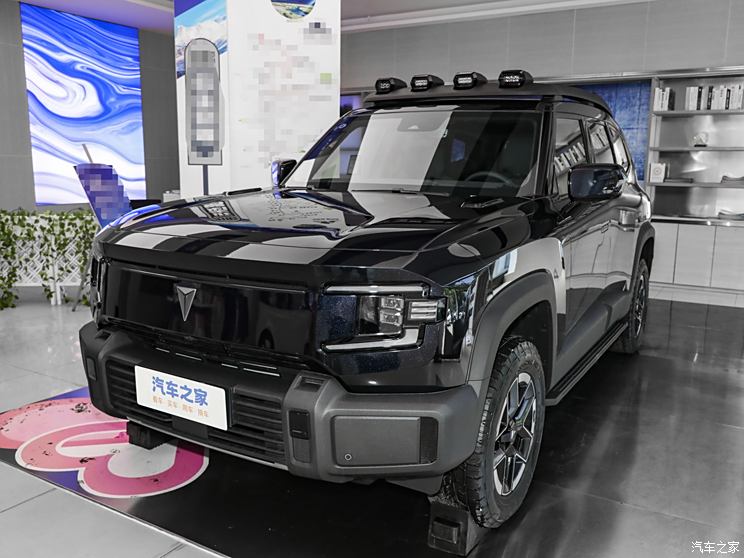
Rich off-road configuration, the dark blue G318 will be officially launched today

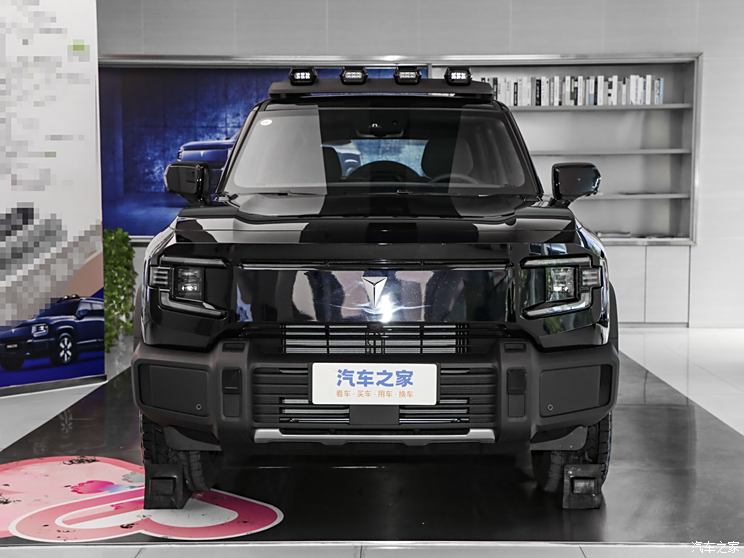
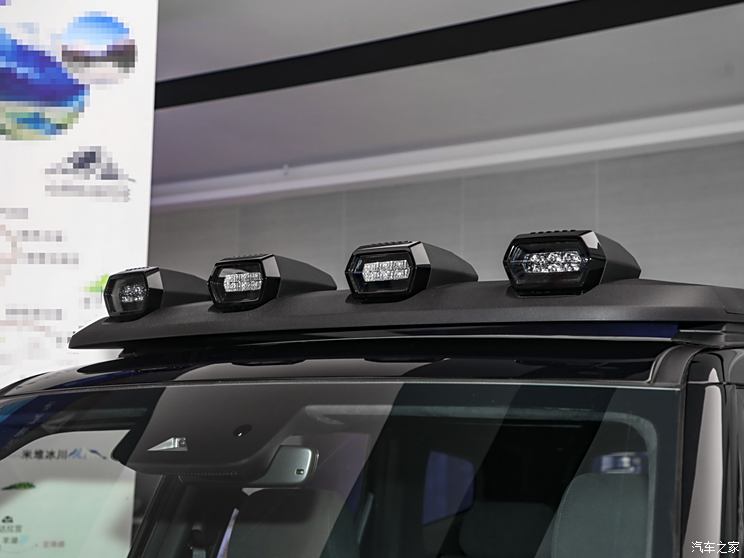
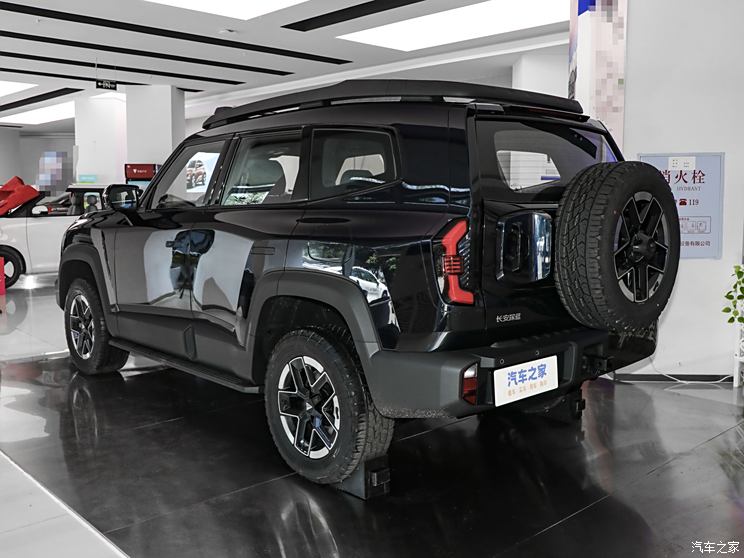
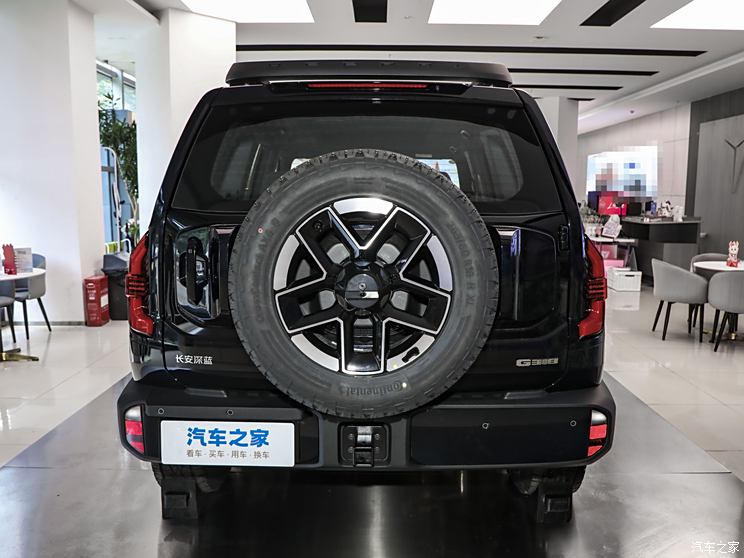
  [Autohome] information] A few days ago, we learned from the official,Dark Blue G318(parameter|inquiry) will be officially launched today (June 13). The car is positioned as a mid-to-large SUV, with a load-bearing body, extended range power, OurHours four-wheel drive system and double differential locks. The dark blue G318 also offers a wealth of original expansion parts, including luggage racks, spotlights, electric pedals, spare tires, and more.
Dark blue car, dark blue G318 2024, high-end version

Dark blue car, dark blue G318 2024, high-end version

Dark blue car, dark blue G318 2024, high-end version

Dark blue car, dark blue G318 2024, high-end version

Dark blue car, dark blue G318 2024, high-end version

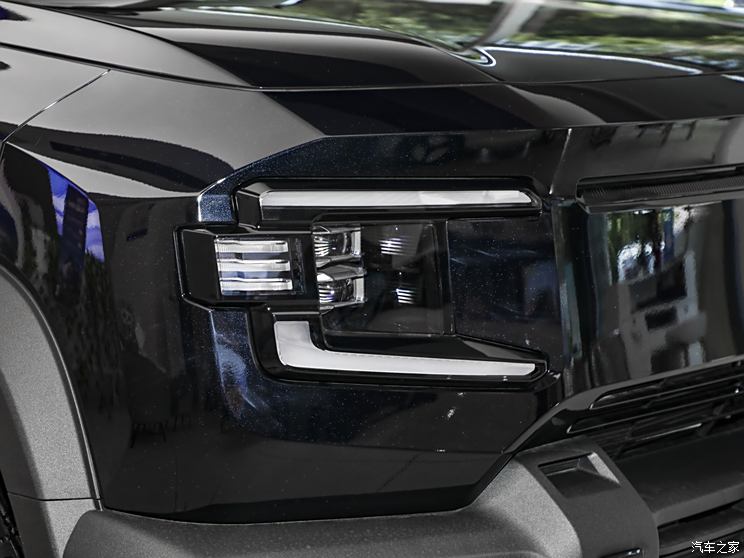
  In the exterior part, the car adopts a hard off-road square box shape, the front face is equipped with a generous front surround and an overall blackened design, and the C-shaped headlights on both sides are embellished to show a tough and sporty styling atmosphere. In addition, the dark blue G318 also has a roof searchlight, which can provide a 250m 2 illuminated area, and is combined with the luggage frame to reflect the refinement of the original accessories.

Dark blue car, dark blue G318 2024, high-end version

Dark blue car, dark blue G318 2024, high-end version

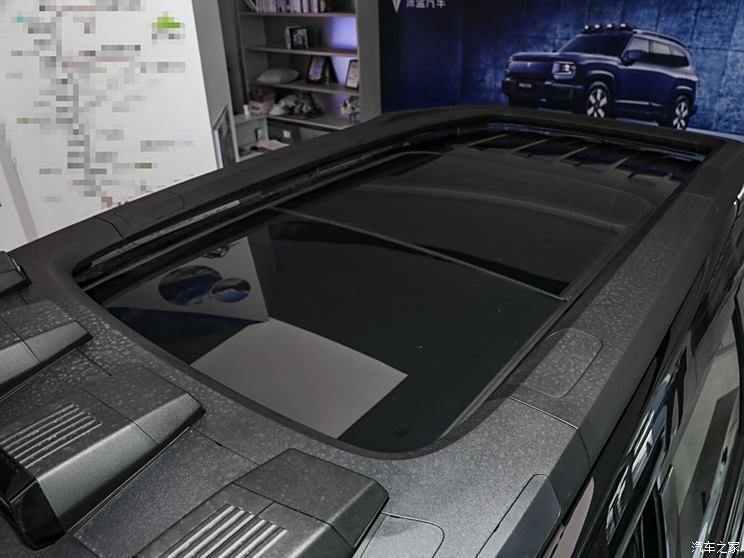
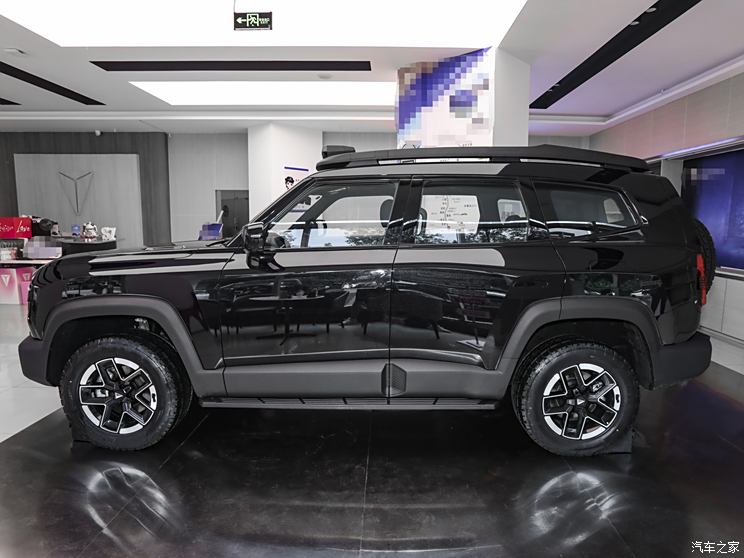
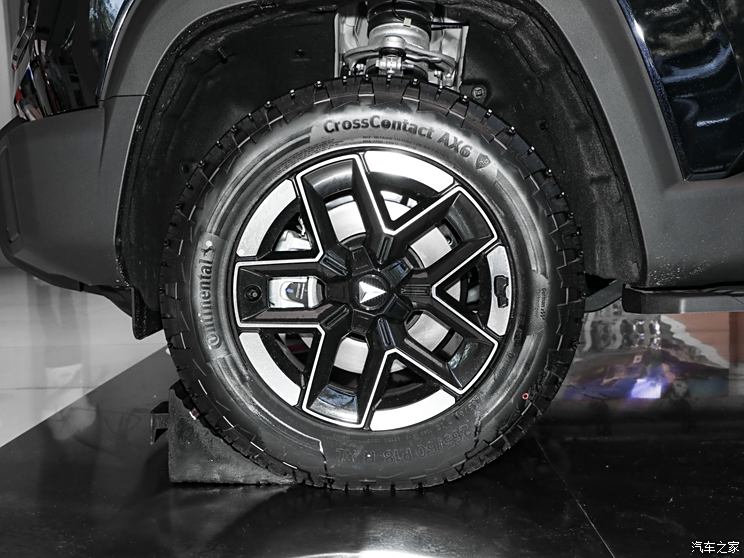
  On the side of the body, the new car still maintains the tough and straight line shape, and is equipped with widened off-road guards on the side skirts and front and rear wheel eyebrows of the vehicle. The dark blue G318 adopts the shape of 18-inch five-spoke rims, and the thick banner is similar to the anti-drop rims. According to the official, the dynamic load-bearing capacity of its roof rack can reach 80kg, and the static load-bearing capacity is up to 300kg. It can also be equipped with an optional roof tent to expand the upper and lower double-layer space to accommodate five people to rest.

Dark blue car, dark blue G318 2024, high-end version

Dark blue car, dark blue G318 2024, high-end version

  At the rear of the car, the dark blue G318 takes the theme of "Space Gate", and forms the main body through the rear window glass and the black parts below. At the same time, the two sides of the volume extend and intersect to form a lifting structure, forming a stable and powerful support for the tail. The solid and heavy surrounding shape is matched with a full-size external spare tire, which makes the vehicle attributes of hard off-road unique. In addition, the car will also be equipped with original trailer hooks and high brake lights to further ensure off-road driving safety. In terms of body size, the length, width and height of the car are 5010/1985/1960mm respectively, and the wheelbase is 2880mm.

Dark blue car, dark blue G318 2024, high-end version

Dark blue car, dark blue G318 2024, high-end version

Dark blue car, dark blue G318 2024, high-end version

Dark blue car, dark blue G318 2024, high-end version

Dark blue car, dark blue G318 2024, high-end version

Dark blue car, dark blue G318 2024, high-end version

Dark blue car, dark blue G318 2024, high-end version

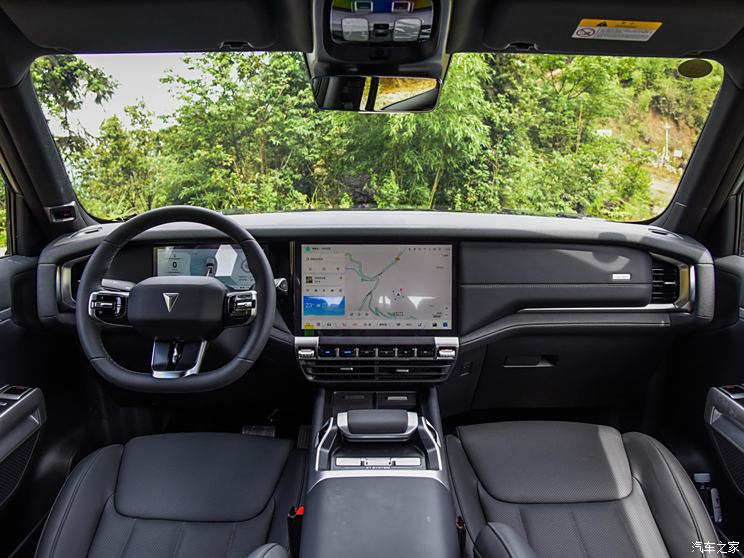
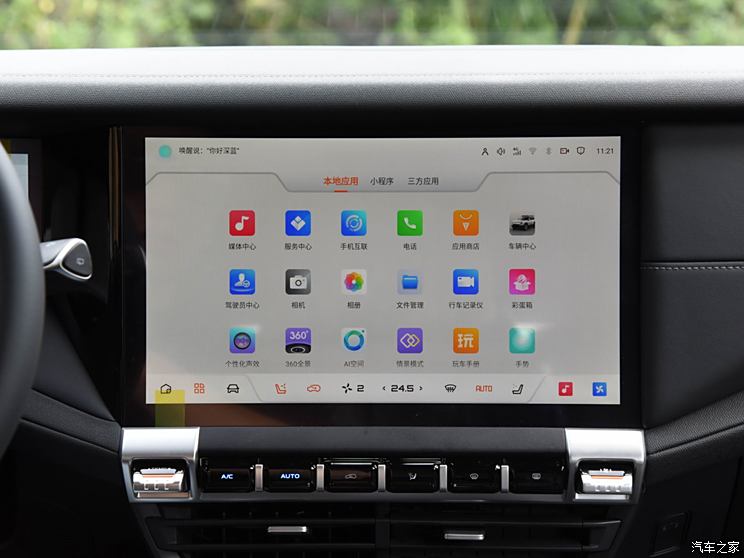
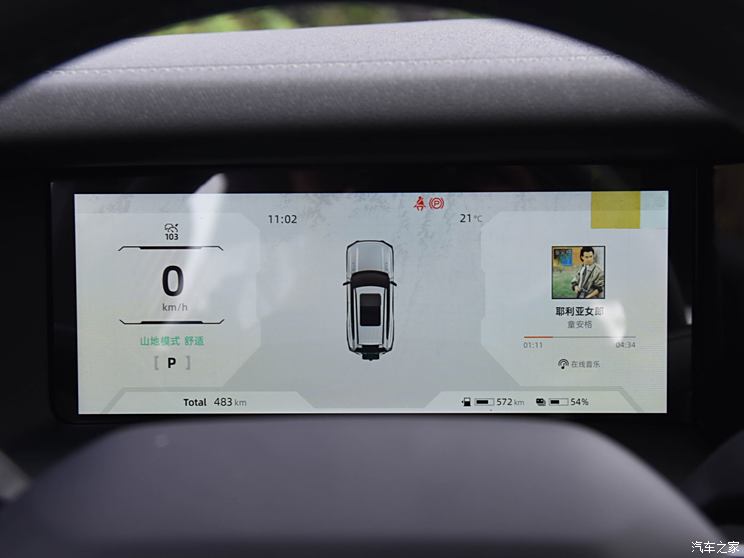
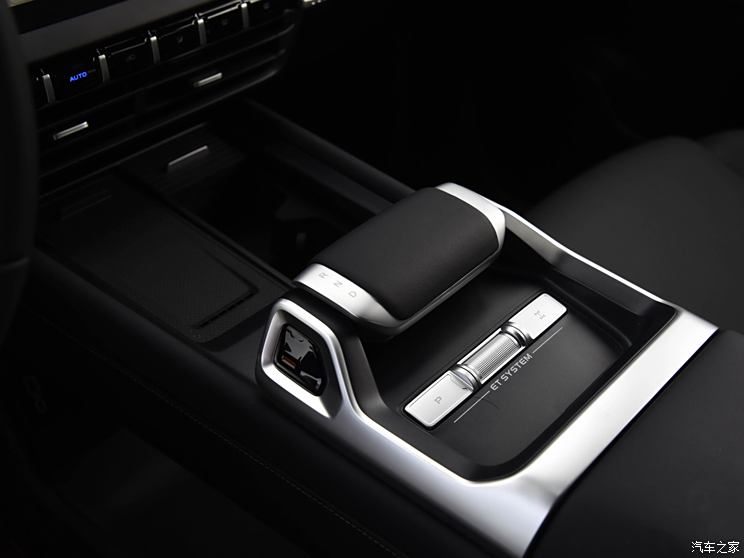
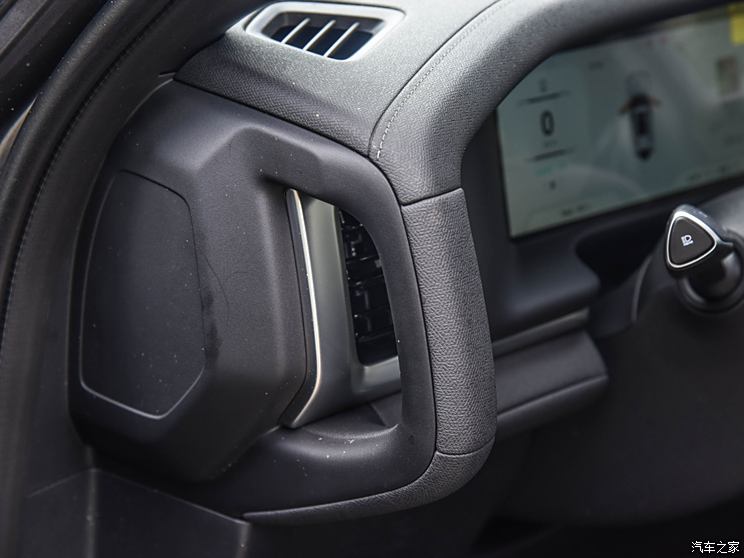
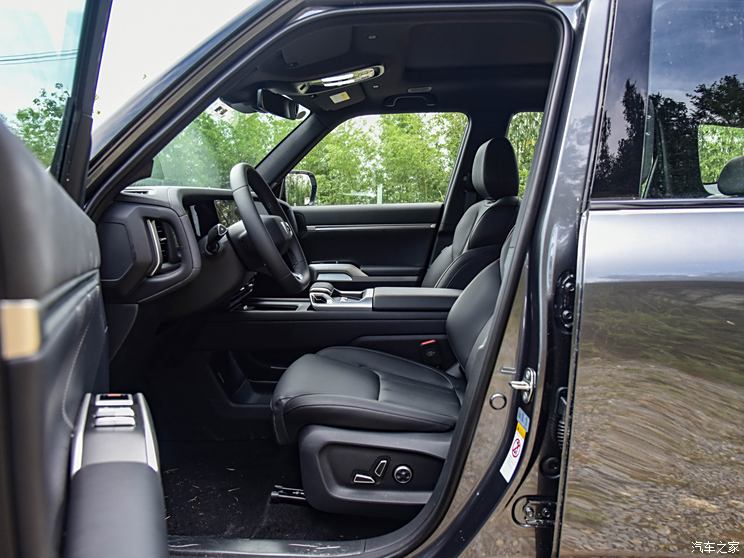
  In terms of interior design, the overall design concept follows the hard-edged off-road style, with a large area of square contour lines shaping a thick center console shape. With a large number of physical buttons, wide and thick stops, and hollow handrails, it is convenient to operate functions in various driving conditions and is also conducive to the safety of the car. In addition, the car is also equipped with a large-sized instrument screen and a 14.6-inch central control screen, creating a good sense of technology.

Dark blue car, dark blue G318 2024, high-end version

Autohome

Autohome

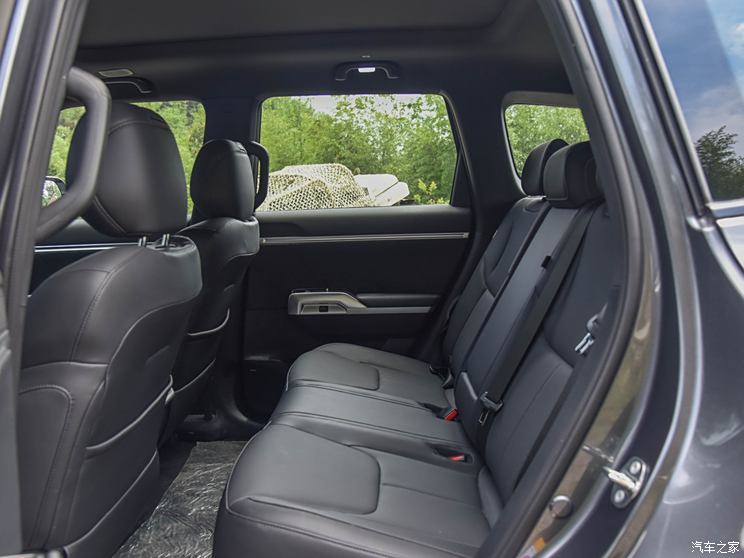
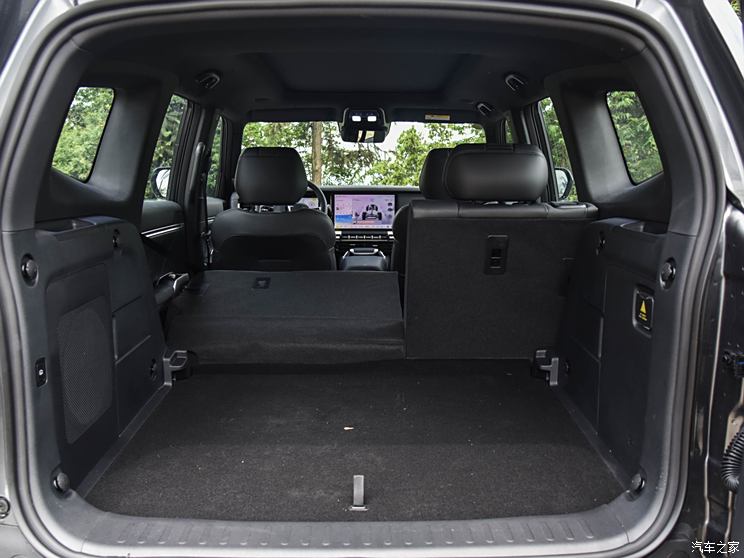
  It is worth mentioning that the car also offers a one-button flat seat design, the trunk volume can be expanded from 818L to 1747L, and 31 storage spaces are provided, providing strong flexibility and ductility in the car.

Autohome

Dark blue car, dark blue G318 2024, high-end version

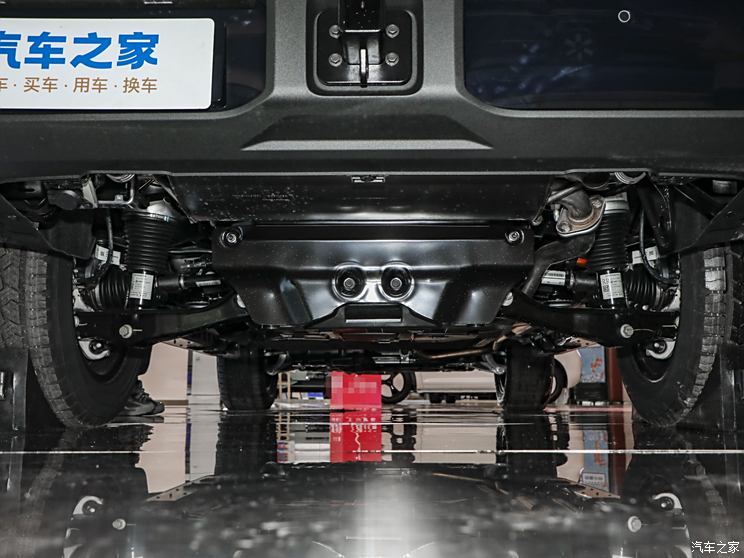
  In terms of power, the Deep Blue G318 will be equipped with an extended range power system. The 1.5T turbocharged engine can output a maximum power of 150 horsepower, and is divided into two versions: single motor and dual motor. The maximum power of the single motor version is 185kW; the front and rear dual motor four-wheel drive version models, the maximum power of the front motor is 131kW, the maximum power of the rear motor is 185kW, and the total power of the system is 316kW. The comprehensive battery life of the car reaches 1000km, and the pure electric battery life under CLTC conditions is 190km. It is reported that the fuel consumption of the vehicle can also be 6.7L/100km (CLTC) when the power is exhausted. In addition, the chassis of the car adopts a double fork arm + multi-link suspension system, and is equipped with OurHours four-wheel drive system and double differential lock, as well as 6kW external power discharge function. (Text/Autohome Yao Yu)

Rich off-road configuration, dark blue G318 will be officially launched today Autohome
Check out similar articles:
Electric car news
New car trailer
More exciting content:
Quick review/spicy review
Hot new car analysis
通过admin

Geely’s "New Strength National Coupe" Binrui COOL is officially listed

  On May 20, Geely Automobile’s "New Strength National Coupe" Binrui COOL was officially launched, and the new car launched a total of 3 models: Fengchi Edition, Electric Switch Edition and Thunder Edition. The official guide price is 94,800 yuan – 109,800 yuan.

Geely "new strength national coupe" Binrui COOL officially listed _fororder_image001 copy

  As Geely’s A-class sports coupe designed for young consumer groups, Binrui COOL has further established Geely’s leading advantage in the field of Chinese brand sports cars by virtue of its cool and stylish appearance, "fast, fierce and provincial" super power, and leapfrog and rich intelligent safety configuration, and has become a new benchmark in the A-class sports car market segment.

  At the same time as announcing the price, Geely Automobile also launched five "ruthless angle exclusive rights". All users who buy Geely Binrui COOL can enjoy five benefits such as "first enjoy and then pay package", "super double package", "strong financial package", "rejuvenation energy package" and "worry-free car package".

Geely "new strength national coupe" Binrui COOL officially listed _fororder_image002

  Adopt the racing storm design language to lead the new fashion of the A-class coupe

  As a "new strength national coupe" specially created by Geely Automobile for young people, Geely Bingrui COOL adopts the design language of "racing storm" based on the evolution of "energy storm", and integrates the sense of speed and sports into the body details, highlighting the "fierce" youthful trend atmosphere.

Geely "new strength national coupe" Binrui COOL officially listed _fororder_image003

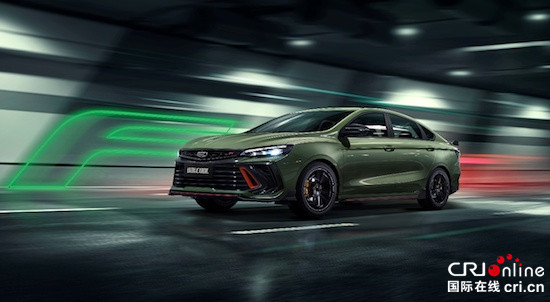
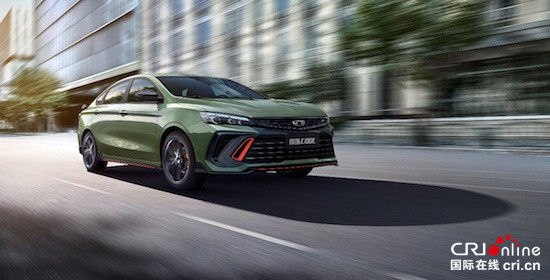
  In terms of appearance, Geely Binrui COOL has the iconic wide-body low-lying body posture, Fastback slip back shape, galloping high waist line and flying spoiler tailgate. The streamline of the roof follows the direction of the wind and presses down to the rear wing, bringing ultra-low wind resistance and more efficient air drainage, which is highly impactful in visual effect. In order to better fit the positioning of "ruthless car", Binrui COOL also adds wind-pulling performance elements such as a broken front tail, bilateral real exhaust, blackened wind-chasing wheels and yellow performance calipers, which are more in line with the individual preferences of young users. In the body color scheme, Geely Binrui COOL fully considered the attitude expression of young consumer groups, and launched five bold and escape-free exclusive color schemes such as ruthless green, energetic lemon, hunting red, racing gray and chasing white.

Geely "new strength national coupe" Binrui COOL officially listed _fororder_image004

  In terms of interior, Geely Binrui COOL adopts the design concept of "Energy Awakening Cockpit", and the variable contrasting color design of Phantom Orange, Storm Grey and Hard Green echoes the young and sporty body color scheme. The center console of the new car adopts a suede-like contrasting color trim, and the front door guard is integrated with a 72-color streamer ambient light. Users can set the scene mode in the car according to their preferences. The 10.25-inch full LCD instrument and 12.3-inch central control screen are combined to form a super-sensory suspension dual screen. It adopts a suspended three-dimensional design. The central channel comes with a variety of storage space. Hundreds of different combinations can be realized in 10 slots for 3 inserts, which can meet the needs of item placement in an all-round way. The volume of storage space in 6 sub-dashboards reaches 15.3L.

  In terms of details, Geely Binrui COOL has adopted a ring-shaped competitive seat and a newly upgraded racing electronic gear lever, presenting a strong sports competitive atmosphere that instantly ignites the driver’s driving passion.

  Geely Galaxy OS system, L2-level intelligent driving blessing, leading the industry in intelligent safety configuration

  In terms of intelligent interconnection and driving control safety, Geely Binrui COOL is also "ruthless". The new car is equipped with Bosch ESP9.3 body stability control system, Geely Galaxy OS system, electric anti-clip sunroof, etc., which brings users a leapfrog consumer experience.

Geely "new strength national coupe" Binrui COOL officially listed _fororder_image005

  In terms of smart technology, Geely Binrui COOL has fully considered the needs of young consumers for intelligent interaction and technological convenience. It is equipped with a 12.3-inch HD high definition touch screen with a resolution of 1920 × 720, and is equipped with Geely Galaxy OS system. It adopts E02 chip, industry-leading 12nm advanced process technology, 8-core CPU, 6G memory, 64G storage, to achieve smooth and convenient operation like a mobile phone. Geely Galaxy OS system integrates intelligent AI voice control, mobile phone smart Bluetooth key, APP remote vehicle control, 4G WiFi high-speed Internet access, Autonavi map and many other functions into daily car scenes. In the future, more ecological applications will be introduced through FOTA global upgrade to further enrich and expand the application experience.

Geely "new strength national coupe" Binrui COOL officially listed _fororder_image006

  In terms of driving safety, Geely Binrui COOL is equipped with a "ten-in-one" Bosch ESP 9.3 body stability control system, which provides users with a faster response to corrections in emergency situations and more accurate body dynamic control, providing driving safety. At the same time, the new car is equipped with L2-level intelligent driving assistance, which includes functions such as ICC intelligent pilot system, ACC S & G start-stop full-speed adaptive cruise system, TJA traffic congestion assistance system, and LKA lane departure assistance system, which can achieve lane keeping and automatic following within 0-150km/h, which can effectively relieve driver fatigue; ELK emergency lane keeping assistance, TSR traffic sign intelligent recognition, IHBC far and near light adaptive system and other active safety configurations, which integrate camera and navigation information, can recognize speed limit signs, automatically adjust far and near light, and ensure the safety of drivers and passengers at all times; AEB-P/C urban pre-collision safety system can automatically identify vehicles, pedestrians, and two-wheeled bicycles, timely warning and intelligent braking, effectively avoiding vehicle accidents. With 540 ° panoramic image + transparent chassis, real-time look around the car to avoid scratches, dynamic route assistance, easy to deal with daily car scenes such as reversing and outbound.

Geely "new strength national coupe" Binrui COOL officially listed _fororder_image007

  In terms of comfort configuration, Geely Binrui COOL is equipped with an antibacterial steering wheel, an electric anti-pinch sunroof, a fully automatic constant temperature air conditioner, a new discharge trend, an active cockpit air cleaning system, an AQS air quality management system, and an ION negative ion generator. With the car-grade CN95 air conditioner filter element, it creates a safe and comfortable driving space.

  The first Geely Jinqing 1.5TD high-efficiency power system, the power level leapfrogging

  In terms of power, Geely Binrui COOL is the first to ride Geely Jinqing 1.5TD high-efficiency power system, with a zero-hundred acceleration of 7.1s, a starting response of only 0.2s, and a 100-kilometer fuel consumption (WLTC) as low as 5.9L. It has three core advantages of "fast, fierce and provincial". The power level leaps ahead, interpreting the "ruthless car" style of the A-class sports coupe leader.

Geely "new strength national coupe" Binrui COOL officially listed _fororder_image008

  The Geely new generation of Jinqing 1.5TD high-pressure direct injection engine equipped by Binrui COOL has a maximum power of 133kW and a maximum torque of 290N · m. Its power performance exceeds the mainstream 1.8T and is comparable to the low-power 2.0T engine. Thanks to 13 key component technologies and 9 low-friction technologies, Binrui COOL has the best high-efficiency fuel-saving technology in the same class, with a fuel consumption of only 5.9L per hundred kilometers (WLTC). In order to provide users with faster and more extreme power response, this 1.5TD high-pressure direct injection engine adopts "black technology" such as "Geely Ailos" combustion system, 350Bar mid-mounted high-pressure direct injection system and small inertia electronically controlled supercharger, which brings the fastest 0.2s fast start response in the same class. In the blink of an eye, people and vehicles can be integrated and the car can move at will.

Geely "new strength national coupe" Binrui COOL officially listed _fororder_image009

  In terms of transmission system, the new generation of 7-speed wet dual-clutch transmission equipped by Binrui COOL has a maximum transmission efficiency of 98% and a comprehensive transmission efficiency of 95.5%. Compared with the mainstream wet dual-clutch transmission in the industry, the transmission efficiency is increased by 3 to 7%, which effectively improves the power performance of Binrui COOL in the initial stage. Thanks to the efficient heat dissipation system, the transmission can support a maximum torque output of 300N · m at peak, and the gear shift is precise and smooth. In addition, this transmission is also the first transmission developed in China according to the AUTOSAR system architecture and complies with the ISO26262 international safety standard. It has higher transmission efficiency, better NVH performance and higher manufacturing accuracy.

Geely "new strength national coupe" Binrui COOL officially listed _fororder_image010

  As one of the representative works of Geely’s young car, Binrui COOL aims to provide a super-combustible, interesting and enjoyable driving experience for young consumers in China. At present, the domestic A-class sports car market is the "new blue ocean" of the car category. The listing of Binrui COOL will reshape the market standard of this segment, lower the threshold of the coupe market, and lead China’s performance car from the niche to the masses, so that every young person has the opportunity to drive a "coupe". In addition, Binrui COOL will further enhance the competitiveness of Chinese auto brands in the 100,000-class sports car market with its leapfrog product power and super quality-price ratio, and compete head-on with joint venture sports cars such as Civic. (Geely Automobile, photo)