
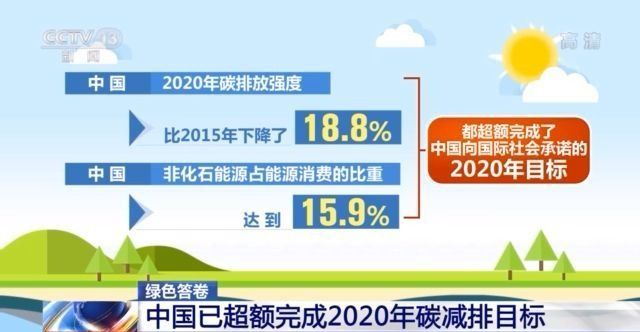
Tomorrow (June 5th) will be the 50th World Environment Day. According to the Ministry of Ecology and Environment, the carbon emission intensity of China in 2020 decreased by 18.8% compared with that of 2015, exceeding the binding target of the 13th Five-Year Plan, while China’s non-fossil energy accounts for 15.9% of energy consumption.Exceeded the 2020 goal promised by China to the international community..
In September 2020, China made a solemn commitment to the world that it would strive to achieve peak carbon dioxide emissions by 2030 and carbon neutrality by 2060. In the "Tenth Five-Year Plan" and the outline of the long-term goal in 2035, it has also become an important content to form a green production lifestyle and to stabilize and decrease carbon emissions after they reach the peak.
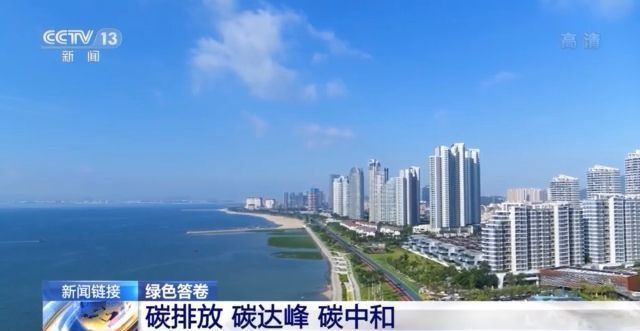
Carbon Emission peak carbon dioxide emissions Carbon Neutralization
Carbon emission is a process in which human beings emit greenhouse gases, including carbon dioxide and methane, into nature in their production and life. A great deal of scientific evidence shows that greenhouse gases produced by human activities, especially a large number of greenhouse gases emitted since the industrial revolution, are the important reasons for the current global climate anomalies.
According to the report of the United Nations Intergovernmental Panel on Climate Change, the current global average temperature has risen by about 1℃ compared with that before the industrial revolution. Continued temperature rise will cause a series of adverse effects such as climate anomaly and sea level rise. In the Paris Agreement on Climate Change signed by the United Nations in 2016, it is clearly stipulated that by the end of this century, the global average temperature increase will be controlled within 2℃ compared with the pre-industrial revolution level, and the increase will be controlled within 1.5℃. In order to achieve this goal, China has put forward its own peak carbon dioxide emissions and carbon neutrality goals, and will strive to achieve peak carbon dioxide emissions by 2030 and carbon neutrality by 2060.
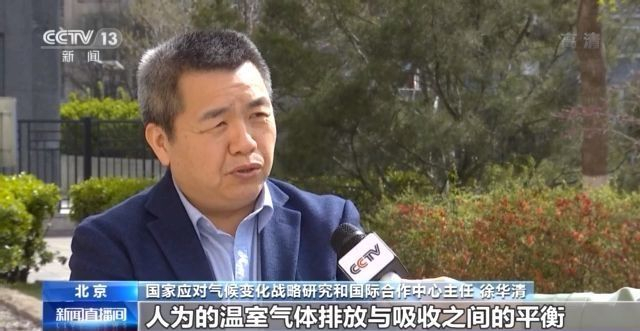
Xu Huaqing, Director of the National Center for Strategic Research and International Cooperation on Climate Change:To put it simply, peak carbon dioxide emissions means that our carbon dioxide emissions reach the highest value, thus entering the downward channel, and the relationship between economic activities and carbon dioxide emissions is gradually decoupled. Carbon neutralization focuses more on achieving the balance between man-made greenhouse gas emission and absorption, that is, achieving near zero emission of greenhouse gases.
Expert Interpretation: Difficulties and Methods of Carbon Emission Reduction in China
According to experts, compared with developed countries, China has a tight time and a heavy task to reduce carbon emissions. How to achieve low-carbon transformation of economic and social development while maintaining rapid economic growth will be a big test. What are the difficulties in saving energy and reducing carbon in China at present? What does carbon reduction have to do with our lives?
Wang Jinnan, Vice President of china environmental science Research Institute:One of the main difficulties is the adjustment of the industrial structure of the whole economy, and we may have to adjust in the direction of green and low carbon. The second is to adjust the current high fossil energy structure in the direction of low carbon or even zero carbon from the perspective of supply side, and use renewable energy to replace fossil energy. The third is from the consumer side (adjustment), which requires us to establish green and low-carbon consumption in an all-round way.
According to experts, it is difficult to promote energy conservation and carbon reduction in China, but there are many ways. Accelerating the construction of a green and low-carbon energy system, implementing pollution reduction and carbon reduction in key industries, and establishing a carbon emission trading market are all important ways to effectively reduce carbon emissions in China. And we, the public, can also contribute.
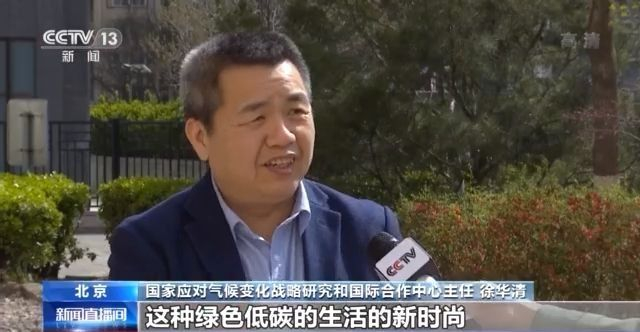
Xu Huaqing, Director of the National Center for Strategic Research and International Cooperation on Climate Change:In fact, peak carbon dioxide emissions and carbon neutrality are closely related to our lifestyle and consumption patterns. In particular, we have implemented the general secretary’s repeated emphasis on opposing waste, implementing CD-ROM action, advocating green and low-carbon travel, and developing this new green and low-carbon lifestyle of garbage sorting, which is closely related to the lifestyle and consumption patterns of our people. Only by further enhancing our green and low-carbon awareness and green and low-carbon behavior in this respect can we effectively lead the optimization of energy structure and the adjustment of industrial structure.
The problem of developing new energy technology is breaking through.
New energy refers to unconventional energy sources other than conventional energy sources such as fossil energy, including wind energy, solar energy and geothermal energy. It is the most important thing for China to realize carbon emission reduction, vigorously develop new energy sources such as wind energy and solar energy, and adjust the energy structure. However, the forms of energy such as wind and light are erratic, and the generated electricity is both difficult to store and unstable, and even dubbed as "garbage electricity". To cross this threshold, we need a breakthrough in new technologies.
Not long ago, the world’s largest pumped storage power station — — Hebei Fengning Pumped Storage Power Station successfully completed the hoisting operation of the rotor of the first unit. Compared with ordinary hydropower stations, this unit has an obvious difference, that is, it can choose forward or reverse rotation according to the needs of the task. This is determined by the original design intention of pumped storage power station.

Wu Peizhi, Deputy General Manager of Fengning Pumped Storage Power Station in Hebei Province:Pumped storage power station has two different working conditions: pumping and power generation. When pumping water, it can store the redundant electricity such as wind power and solar energy and turn it into the potential energy of water. At the peak of electricity consumption, the potential energy of water can be converted into electric energy, which is our power generation state. So our pumped storage power station is a giant charging treasure in our power system.

Fengning Pumped Storage Power Station is close to the new energy base in Zhangbei, Hebei Province, with abundant wind energy and solar energy resources. The total installed capacity of the power station is 3.6 million kilowatts, and the annual designed power generation is 6.612 billion kWh. It realizes seamless switching between electric energy and solar energy, wind energy and water potential energy, with no pollution and little loss. As a power guarantee project for the 2022 Beijing Winter Olympics, the first unit of the power station will be officially put into operation at the end of this year.

Wu Peizhi, Deputy General Manager of Fengning Pumped Storage Power Station in Hebei Province:The power station plays the role of regulator in Zhangbei flexible DC power grid, which can save 480,000 tons of coal and reduce 1.2 million tons of carbon dioxide emissions every year. It can help this Olympic Games become an Olympic Games that uses 100% green electricity in history.

If Fengning Pumped Storage Power Station solves the problem that new energy and electric energy cannot be stored, then the "water-light complementary" power station in Longyangxia, Qinghai Province solves the problem of stable output of electric energy. As the largest "water-light complementary" power generation project in the world, the 850,000 kW Longyangxia water-light complementary photovoltaic power generation project in Qinghai Province covers an area of about 54 square kilometers.

This photovoltaic power station and Longyangxia Hydropower Station, more than 30 kilometers away, jointly undertake the power generation function and complement each other. When the sunlight is strong, use photovoltaic to generate electricity and stop using water and electricity. When the weather changes or enters the night, it is automatically adjusted to hydropower generation through the power grid dispatching system, so as to obtain stable and reliable electric energy.
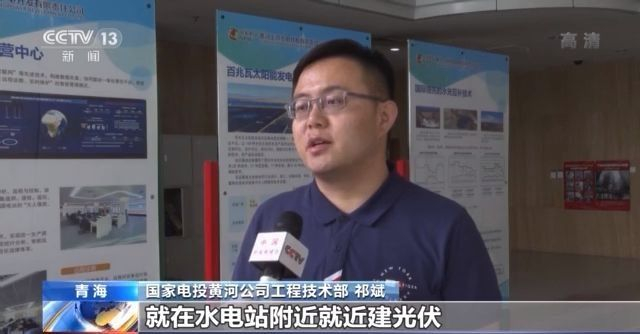
Qi Bin, Engineering Department of National Power Investment Yellow River Company:Photovoltaic power generation has uncertainty and fluctuation, and the whole power generation curve sometimes presents a sawtooth shape. So, photovoltaic power generation characteristics show a smooth power output by building it near the hydropower station.
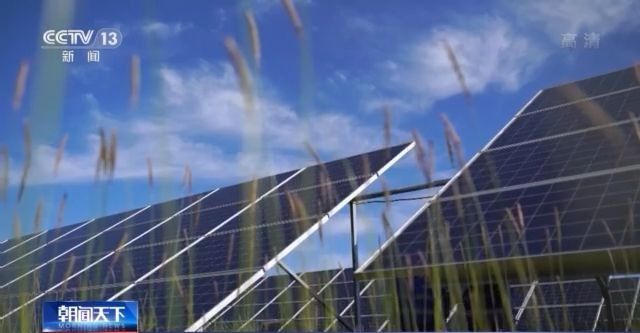
It is understood that this power generation technology not only does not affect the peak-shaving and frequency-regulating capacity of Longyangxia Hydropower Station, but improves the utilization hours of the hydropower station. Longyangxia Hydro-Photovoltaic Power Station can generate 1.494 billion kWh a year, which is equivalent to saving 464,600 tons of standard coal for thermal power generation and reducing carbon dioxide emissions by about 1,226,600 tons a year.

关于作者