
Up to now, the Assassin’s Creed series has produced 12 orthodox works, from Damascus during the Crusade to Italy during the Renaissance, and then to the legend of the Vikings in the 9th century. Following the dispute between the assassin’s organization and the Templar and its predecessor, we have been accompanying this series for 14 years in the world where video games and real history meet.
In these 14 years, Assassin’s Creed has created a magical world outlook based on real history, with the above ancient civilizations as clues, supplemented by bold fantasies. This world view not only includes the development and collision of different civilizations, but also is constantly interspersed with the intricate struggle of two secret associations.
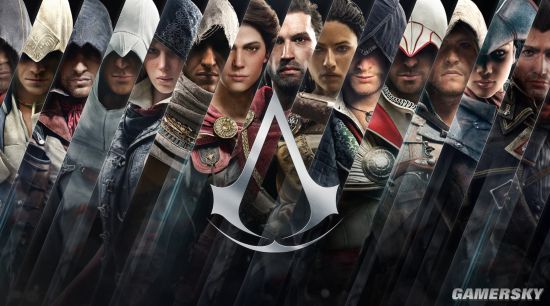
At the same time, around 12 true stories, Ubisoft has also enriched this imaginary world with a large number of rumored games, novels, comics, movies and radio dramas.
Previously, we had glimpsed some China elements in "Assassin’s Creed Universe" in the background story of the game and the rumored work "Assassin’s Creed Chronicles: China".
In fact, Ubisoft has never given up adding more Chinese culture and historical elements to this unique world view. Earlier, we got news from the government that Ubisoft is about to jointly produce a series of Chinese local publications of Assassin’s Creed with a large number of China writers and creators.
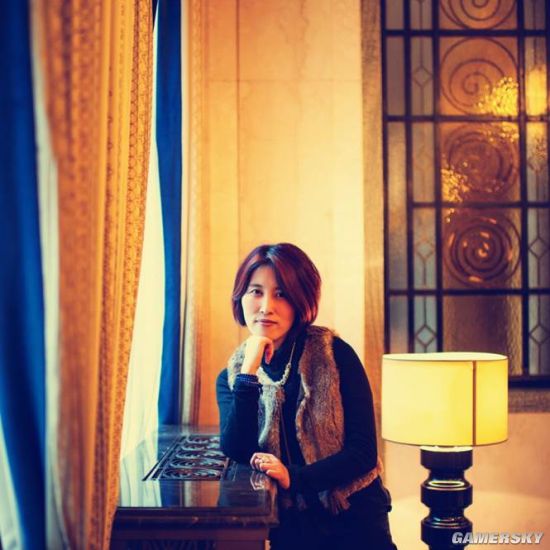
Today, we had the honor to interview the storyteller, the editor of the whole project, and the author of two novels, Chu Xiyao and Gravel, and chatted with them about the derivative novels of Assassin’s Creed and China that are being created, as well as their "Assassin’s Creed".
The following is the complete interview content:
Q: What kind of games do you usually play? What games are you playing recently?
Gravel: I’m an old gamer. I’ve played many games over the years. Of course, my favorite games are action games and strategy games. Recently, I have been playing an antique hand tour, and StarCraft has remained unchanged for 20 years.
Chu Xidao: I play more RPG games. Since 1997, I have been playing all the way from the "Three Swords", and other types such as Age of Empires and Warcraft have also been played long ago. Ubisoft’s games "Lehman" and "Crazy Rabbit" are also very fond of them, but their hands are disabled, so they all watch others play. Recently, I’m mainly playing some antique mobile games on my mobile phone.
Q: Which Assassin’s Creed series games have you played? What’s your favorite work? Why?
Gravel: I started playing Assassin’s Creed: Apocalypse, but because I’m a crippled party, I went to see someone else after playing for about half. Later, I played Origin and Odyssey. My personal favorite was Odyssey, because its ancient Greek background attracted me, especially its painting style, which made me feel amazing.
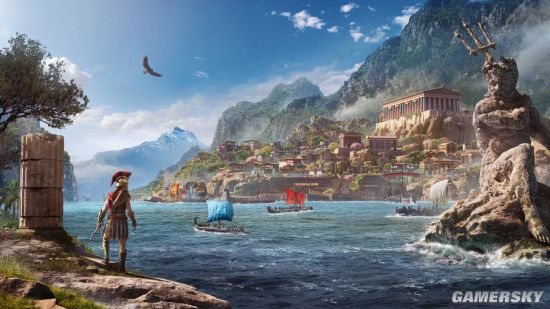
Chu Xidao: My words are "Assassin’s Creed: The Revolution". The scenery in Paris attracts me very much, but because I have a broken hand, I mainly watch my son play. The others are basically cloud players, watching the process videos played by others.
Storyteller: Personally, I prefer Assassin’s Creed: Lean, which is a little industrial. The overall style and background of the game are very attractive to me. However, it is also a disabled party. I often can’t get through the raiders, so I finally have to go to the "cloud" game.
Q: What do you think of the IP of Assassin’s Creed? What is your overall impression or cognition of Assassin’s Creed?
Gravel: I think the IP of Assassin’s Creed is a very broad concept and a very specific description. Because of the word "Assassin’s Creed", people can easily enter a preset scene including darkness, secrecy, mystery, fighting, fantasy and so on. Moreover, I think this IP can reflect this feature from games to novels, and it can make people have different sensory experiences regardless of Chinese and western, ancient and modern.
Chu Xidao: I think it develops the route of scientific crossing to some extent, and combines real history with virtual stories. In addition, Assassin’s Creed’s worldview is also wide-open, which means that many events in history are explained from the perspective of science fiction, and different nationalities and cultures can be combined, and a lot of history can be learned in the game. Especially some we may have seen in history books, but we don’t have much impression in our daily life. It should be much more interesting to experience these histories in the game than to watch a simple documentary.
Storyteller: Actually, the most surprising thing about Assassin’s Creed is that when I first came into contact with this game, I thought it was a historical game. As a result, after I played it deeply, I found that it actually had the underlying settings of grand science fiction. In fact, the fantasy literature genre of "secret history" is still quite popular abroad. On the surface, many things seem to have happened in history, which are given a new explanation by this school in the new logic, and behind them are all kinds of mysterious organizations and secret associations. These secret histories are very legendary.
This is also the biggest surprise of the series Assassin’s Creed. In a story that everyone is used to, they found and excavated unprecedented novel elements.
Q: What is the experience when creating an extended work with the world view of Assassin’s Creed as the background? Will this experience be different from previous creations?
Gravel: It should be said that it is very different. Because it is a combination of science fiction and martial arts, a fusion of real history and overhead history.
Even though I’ve written martial arts and science fiction myself, it’s the first time I’ve tried to combine the two. And because Assassin’s Creed itself has many derivative works. Therefore, when creating, it is more like the feeling of putting a specific label on a masterpiece that spans the past and the present. This is a completely different experience from previous creations.
Chu Xidao: For me, some experiences are similar to my previous creations. For example, Kyushu Series is also written in the existing world outlook, and it is always necessary to understand the world outlook before starting to play. But Assassin’s Creed is different from science fiction, and there will be more modern thinking in it.
Another interesting point is that many mysteries left in history can now be explained by Assassin’s Creed’s worldview.
Storyteller: I think about this problem more from the perspective of editing.
In fact, people in Jianghu are a marginal group in real history, but Assassin’s Creed can describe these things in a broader context. For example, the book "The Prophecy of the King of the Tang Dynasty and Qin Dynasty" written by the teacher Gravel is actually about the influence of political changes in the era of Wu Zetian.
The work of Teacher Chu Xiedao is the change of these worldly affairs and interpersonal relationships during the Sui and Tang Dynasties, thus putting this group of marginal figures who were originally confined to the rivers and lakes under a grand historical trend and giving everyone more fresh feelings. In addition, Assassin’s Creed provides two secret associations, namely, the long-term struggle between the assassin’s organization and the Templars, so that the fate of the characters can be directly linked to historical events, rather than being limited to Jianghu grievances.
Q: Storyteller, you are the editor of this project. How do you coordinate the contents of various works and make them reasonably unified under the world view of Assassin’s Creed?
Storyteller: Actually, all our Chinese series of Assassin’s Creed were first created under the official guidance. However, because this time it is based on a brand-new linguistic scene in the eastern world, it is also relatively independent.
In fact, the official setting, the essence is very emphasis on religious sense, in fact, the temple and the assassin are sectarian organizations in the final analysis. The struggle between them, such as light and darkness, or order and freedom, is not suitable in the context of China, because China has never had such an absolute binary opposition concept since ancient times.
We use more "destiny" to string the clues of various novels. In the series of Assassin’s Creed novels we planned, the most important thing is who the "destiny" is.
"Being ordered by heaven, we will live forever", which is one of the key clues in our whole series. Whether it is the Wu Zetian period, the struggle between the Wu family and the Li family; It is still the Ding Ge in the Sui and Tang Dynasties, the heroes in the world, and the gathering of the clouds. In fact, they are all in the changes of these dynasties. This is a main thread that we string together all the stories of Assassin’s Creed and China that we are writing. We hope to bring more historical weight and sci-fi grand narrative to these stories.

Q: Without spoilers, would you please tell us about the stories that will be created and what are their biggest features?
Gravel: At present, the story I created has been finished. It tells the early process of power transfer from the Li family to the Wu family during the period of Tang Gaozong and Wu Zetian. Of course, there is also a particularly big point, that is, the TuiBei Map, which was widely circulated at that time. Its background lies in the fact that we can introduce some typical contradictions of the assassin IP into China’s classical regime change and political struggle to show their respective ideas. Of course, many historical figures will be involved, which will be explored by everyone in the future.
Chu Xidao: Because the gravel wrote about the Tang Dynasty, and then I am also very interested in the Tang Dynasty, but I don’t want to write about the repeated times with him. At that time, I asked my son, and I said, how about writing about the Tang Dynasty? He said you might as well write about the Sui Dynasty.
I think that during the Sui and Tang Dynasties, the most famous one was actually the Hong Fu girl in the legendary "Biography of the Campus Guest" in the Tang Dynasty. In fact, history has always said that she has a unique vision and can boldly go to the person she likes. I think the story of Hong Fu’s daughter is not limited to this, and I hope I can continue to dig down, so I wrote her story. And because she belongs to Yang Su’s family, there are well-known allusions like "second time around".
Of course, these are all based on Assassin’s Creed’s worldview and made some new interpretations.

关于作者